A legend lost, a teacher leaves and chilling questions for ICE
Alaska lost one of the best to ever put ink to paper.


It's Friday, Alaska.
In this edition: Alaska lost one of the best to ever put ink to paper. Legislators are trying to learn more about the shocking arrest of a kindergartener and his family by ICE agents last week, and while there are still more questions than answers, the questions are troubling. The Department of Corrections' continually escalating budget is getting some renewed scrutiny – especially as other critical services are getting starved. That lack of investment is why one of the state's top teachers is leaving, as he outlined in a gut-punch of an editorial. An anti-CSAM bill is advancing in the wake of a legislative staffer being arrested for, among other things, possessing CSAM, but not without a muddying anti-porn message. The state's decision to hand over the voter rolls to the feds is likely illegal, but the cat's already out of the bag. And the health care "transformation" fund isn't all that it's cracked up to be. Also, the reading list and weekend watching.
Current mood: 😢
Correction: As several people pointed out in the last edition, that photo of the pipeline with what is very clearly a highway and mountains behind it was not, in fact, taken from the village of Nuiqsut, which is about 60 miles away from TAPS and about 100 miles away from the mountains. Turns out captions from stock art services aren't always 100% correct, but the highway should have been a hint.
Programming note: This is a longer post, so email clients may choose to abbreviate it. You can always click "View entire message" at the bottom or see this post in full on akmemo.com. Thanks!
RIP, Rich

The Anchorage Daily News reported today that longtime reporter Richard Mauer, one of the great, curmudgeony reporters that I ever worked alongside, has died at the age of 76. Seeing first-hand his contempt for the powerful and comfortable was a vital lesson covering politics, as demonstrated in one of my favorite things I've ever seen in print: His coverage of legislators' juvenile antics on the night they passed a bill advancing the gas pipeline (gosh, some things never change).
 Richard Mauer
The late-night session was most notable for the Republican outrage over then-Rep. Scott Kawasaki making a face to a friend while the Gavel Alaska cameras rolled – complete with a sheepish apology from the Fairbanks Democrat – but Mauer threw all the pearl-clutching outrage into stark relief by pointing out all the fart and butt jokes they had been making that night because, you know, gas.
"Meanwhile, the bill itself cruised toward passage – the only real consequence to all the hoopla being the loss of dignity by all – Kawasaki, the Republicans and the press corps, which spent most of Tuesday chasing the story."
His display of a strong moral compass honed by experience, with a dash of hardly masked scorn for the bullshiters, ought to be a model for many.
More: ADN
'Are we about to see more children detained?'

Like many Alaskans, legislators this week are trying to get answers on ICE’s shocking arrest and deportation of a 5-year-old kindergartener, his mother and two siblings. Was due process fully provided to the Arriaga family? Was the 1997 Flores Settlement followed to ensure they minimized trauma to children? Did they have adequate legal counsel and care?
And most chillingly, as Anchorage Democratic Rep. Andrew Gray stated at the outset of Monday’s House Judiciary Committee meeting, “Is Alaska about to see more children detained?”
While answers were short thanks to the feds not participating in the hearing, the meeting underscored the alarm over what has been seen as a harsh escalation of ICE’s tactics. Instead, lawmakers heard from several faith leaders who raised the alarm on the detention and deportation, some state officials and attorneys who work with children in detention. But perhaps the most affecting testimony came from the mother of a student who shared a classroom with 5-year-old Matias.
“He was working so hard. He was following my instructions and sounding out his words. I could tell how proud he felt,” Allison Flack said about her last interaction with the kindergartener while volunteering in her daughter’s classroom and the ensuing shock that they felt when they saw a family had been detained. “I knew that they had our boy. Not only was I surprised to see ICE activity in my state, but that they would involve children, and that action was truly shocking to me.”
Her words reflected not only the outrage over ICE's treatment of the Arriaga family but the damage it has done to the rule of law. What are the supposed to tell kids when masked feds in unmarked cars are whisking away their classmates?
Matias wasn’t a criminal, she said, but a young boy trying his best to learn to read.
“I used to feel like we knew how to keep our children and our community members safe,” she said. “We knew the laws. We could trust that our leadership would follow those laws. We were told that only the worst of the worst were going to be deported. That was clearly a lie.”
More: The Alaska Current, Alaska Beacon, ADN, KDLL
Follow the thread: House Judiciary's hearing on ICE tactics in Alaska
2,200 hours
That’s at least how much overtime two employees of Alaska’s Department of Corrections racked up in 2025, the equivalent of working a full-time job on top of a full-time job. The numbers are part of the state’s staggering $24 million ask for additional funding to cover the current budget year for the prison system, which regularly runs more expensive than legislators have budgeted for and has been one of the biggest growth areas in the state budget since Dunleavy took office.
The Department of Corrections' runaway budget is driven in large part by rigid staffing benchmarks that aren't shared in other areas where you'd think maintaining manageable staffing ratios would be a priority (ahem, schools). And with several hundred vacant positions in the department, those ratios are maintained through mandatory overtime. Getting the state's prison budget under control is proving difficult because, as state officials said, the size of the prison population is largely driven by decisions in prosecutors' and police offices.
“I just hope you understand how incredibly challenging this is when we realize that something as important as education has none of the safeguards that we insist must be in place for public safety and corrections,” Rep. Ky Holland, an Anchorage independent, told the prison's commissioner at a recent hearing.
More: ADN, Alaska Beacon
“Goodbye and thanks for all the fish.”
That Douglas Adams quote is how 2018 Alaska State Teacher of the Year Ben Walker closed a particularly swift gut-punch of an editorial about his family's decision to leave Alaska for greener pastures. Where he once pitched the state to other teachers, he said it's simply no longer a great place to teach because of a broad erosion of support, both financially and politically, from the state. He takes aim at "the most anti-public education governor in the history of Alaska" in Gov. Mike Dunleavy and at legislators who treat public employees like expendable trash, whether it be through their denigration of public servants or, more materially, through their opposition to affording teachers and public workers with the security and basic dignity to dedicate their careers to helping the public.
His op-ed touches on just about every facet of the deep-rooted challenges facing Alaska's educators and, by extension, the next generation of Alaskans, warning that the state's deference to wealthy companies is selling out its residents. You can see why he was a good teacher and why his departure will be such a loss to young people, and the worst part is that his story is far from unique.
We are the products of Alaska public schools and eagerly enrolled our kids in Anchorage public schools. All we have ever wanted, and all any of the thousands of families we have worked with over the years have ever wanted, is a robust public school experience for our children like we had growing up — one in which they have teachers who are experienced, feel supported and want to stay their entire career in one community and retire with security; schools with electives like art and music; and extracurriculars like sports, theater and clubs. Buildings that are safe and well maintained. At the same time, as community members, Alaskans deserve all public services to be well-funded and maintained and public sector workers to be compensated and taken care of after a lifetime of service to Alaskans. As adults and parents, we have been front-row witnesses to the callous degradation of the quality of life in Alaska, where corporate interests come before residents, where we choose companies over sustainability, and out-of-state workers and tourists over our children. The criminal underfunding of education may be the canary, but unless Alaskans wake up and vote to retake control from corporations and those in power who do their bidding, Alaska as so many of us have known it growing up will no longer exist.
Read: We were honored as Alaska Teachers of the Year. Now we can no longer stay.
Anti-CSAM bill advances with anti-porn message
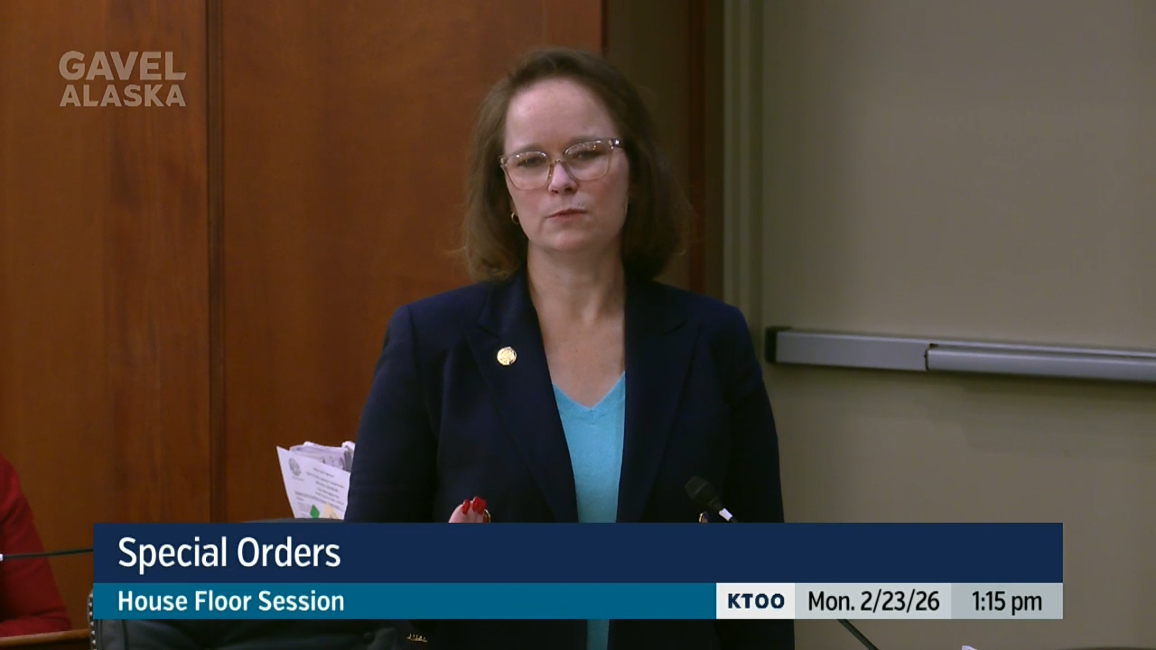
The news of the feds' arrest of "compulsive child exploitation offender" Craig Scott Valdez, a now-former Republican staffer, has rocked the Legislature and sent Republicans scrambling to save face. That included Rep. Sarah Vance, R-Homer, attempting to force the discharge of her bill updating the criminal laws to better tackle computer-generated child sexual abuse material (which, to be clear, wasn't what Valdez was arrested for) from the House Rules Committee to the House floor on Monday.
It was a largely performative move that one observer said sure looked like an attempt to make their problem into another "it's the majority's problem here" kind of move, and was ultimately blocked, but not before several Republicans took the opportunity to make clear that they're a No on pedophilia.
"Anyone who commits an act like this should be hung from the nearest tree," said Rep. Frank Tomaszewski, R-Fairbanks.
Rep. Kevin McCabe, R-Big Lake, lamented the arrest, which stems from an October incident where Valdez lured a 15-year-old to his Anchorage home, had legislators feeling "like a little fly under a microscope," and said passing the bill without delay would send a clear message.
House Rules Committee Chair Rep. Louise Stutes, R-Kodiak, noted that the bill was already on deck for a floor vote and that the concern over appearances hadn't been raised until that moment. The bill would ultimately be taken up on Wednesday, where it picked up an amendment adding age verification for social media, before it passed unanimously today.
Still, Vance followed up the dust-up over discharging the bill with a special order complaining about how one of the root problems is Americans' consumption of pornography, which she argued is a tool to prime people for CSAM.
"I looked up the consumption of pornography in the nation, and it is estimated to be anywhere from 65 to 75% of adult men admit to viewing at least monthly, and 35 to 45 of adult women report monthly use as well," she said, adding, "It's highly addictive, and it is in our communities, and people are bearing this secret in shame, and there's a lot of people who didn't have a choice, like my friend who was introduced to it as a child as a teaching tool by her abuser, and it became an addiction that she couldn't bear."
She even lamented that the "Free Speech platform" (Elon Musk's X) got a little too free-speech-y when "the pendulum swung too far, and now there's AI-generated, I guess, porn, is the lack of a better word for what's happening."
(The term would be CSAM).
Why are you bringing this up at all?
Likening pornography to child sexual abuse material does a disservice to both the seriousness of CSAM, which is a crime, and to consenting adult actors creating adult material, which is not a crime. It's why there's been a major effort to move away from calling CSAM "child pornography" in the first place, in large part because it diminishes the seriousness of the crime. There's nothing about CSAM that is or should be considered pornography; it is, without exception, one of the most vile forms of abuse against children.
On the flip side, the stigma created by treating pornography as just as immoral and problematic as CSAM plays into the ineffective puritanical abstinence-only ways of teaching young people about sexuality. This insistence that all things related to sex are bad leaves young people uninformed and ill-suited to set critical boundaries and identify abuse in their personal lives, making them vulnerable to the very harmful relationships they're claiming to protect them from.
So, please, watch your language.
'Can't unring that bell.'
The Alaska Division of Elections' agreement to turn over the state's voter rolls to the Trump administration and invite them to dictate who is and isn't eligible to vote was probably illegal, according to a legal memo by the Legislative Legal Affairs that was released this week by Anchorage Rep. Zack Fields. The memo outlines that the Department of Justice's "novel interpretation" of various voting laws used to demand the confidential information is likely not legitimate, noting that similar requests have been blocked in three state district courts.
The memo notes that handing over the information likely violated the two provisions governing the state's sharing of confidential voter data with federal agencies: that the request complies with federal law and that the information can only be used for authorized governmental purposes. The rulings in other states show that neither ground was likely met, with some noting the request appears to be based more on unauthorized partisan purposes than on a legitimate reason.
"If those findings are found to be true, and the DOJ is not using Alaska's voter registration list for 'governmental purposes authorized under law,' then disclosure of the confidential data under AS 15.07.195(c)(1) was improper," the memo says.
But, as the memo concludes, the cat's already out of the bag. Regardless of whether the disclosure complied with state rules, everyone's confidential voter information is already in the Department of Justice's hands.
"Because Alaska already gave its voters' data to the DOJ, it is too late to block disclosure," explains the memo. "Our office can draft a bill that strengthens the confidentiality provision of (state law) to prevent a similar disclosure from happening in the future, but this is a bell that cannot be unrung – the DOJ
already obtained the confidential data it sought."
'Sick and comical at the same time.'
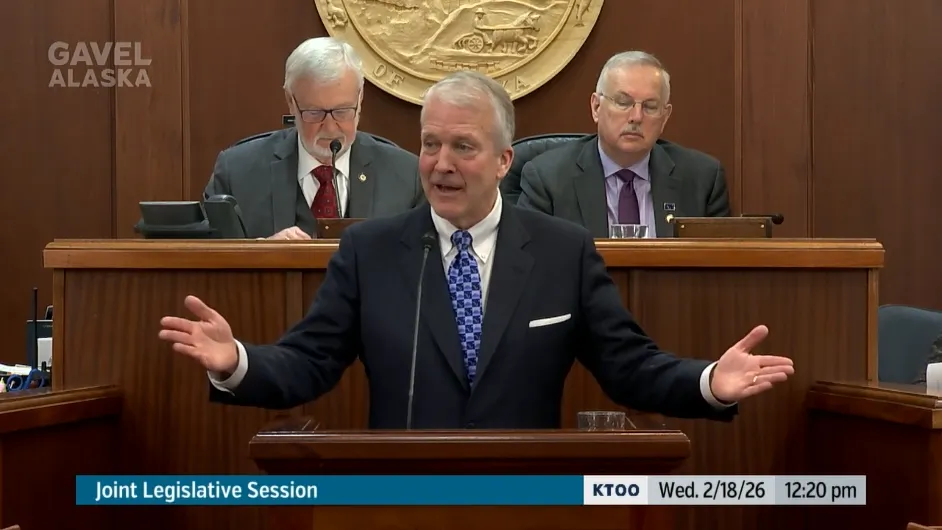
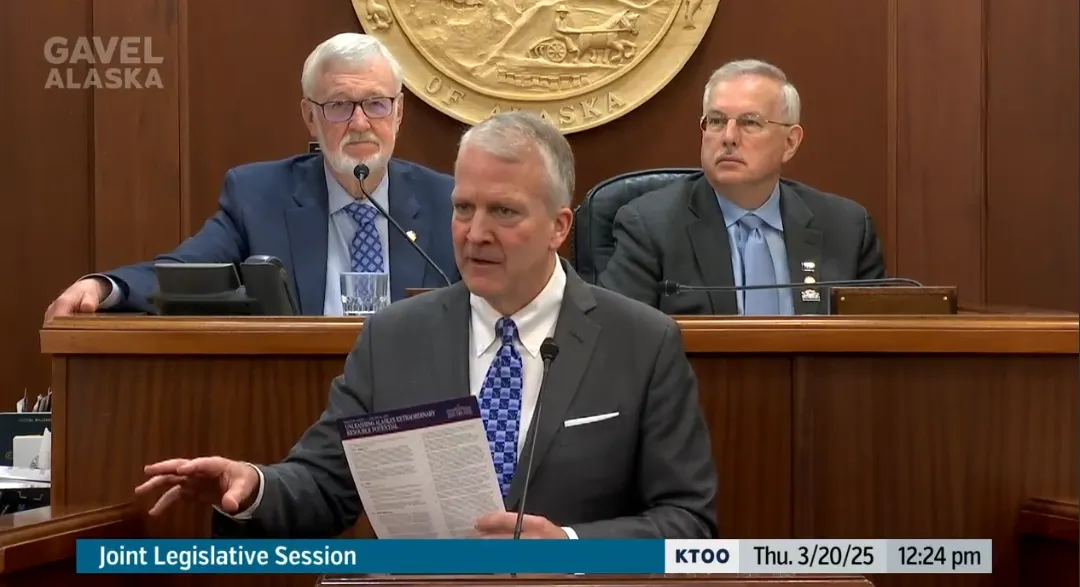
When confronted with escalating health care costs and forecasts that thousands of Alaskans will lose health coverage under Trump’s Big, Beautiful Bill — or, as U.S. Sen. Dan Sullivan called it some 15 times during his annual address last week, the “Working Families Tax Cuts Act” — Republicans have furiously gestured at a multi-billion-dollar pot of money that he insists will “transform” the state’s health care system. Alaska's slated to be one of the top recipients of that money, to the tune of about $274 million a year for five years.
But as lawmakers are working to unpack just what the money can and will be used for, they’re running into a mountain of limitations and strings that suggest the fund won’t be quite as world-changing as Sullivan and his allies claim. The money can’t be used to help self-employed people afford health insurance, can’t be used to pay for costly basics like broadband or expanding facilities, can’t be used to pay or retain frontline health care system workers, can’t be used to build much-needed housing for health care workers, and can’t use it to build up the state’s capacity for the new Medicaid work requirements.
“You fought for H.R. 1, and you helped shape the Rural Health Transformation Program funds,” asked Rep. Genevieve Mina, the Anchorage Democrat who chairs the House Health and Social Services Committee, during an abbreviated question-and-answer session with Sen. Sullivan last week. “Why are these funds so difficult for us to use to address Alaska's core issues? And how will this finite fund help address the thousands of Alaskans who will lose their health insurance?”
“Well, look,” Sullivan said. “This is not going to be a panacea that solves everything.”
Like many things, he told legislators to contact his office with their concerns and he'd see what he could do.
That’s what the Legislature is now in the process of doing with House Joint Resolution 32, which was heard on Tuesday in the House Health and Social Services Committee. At the hearing, lawmakers heard about the massive legislative and regulatory changes the state needs to make in the next year to be eligible for the money. That, in broad terms, includes six independent law and regulatory changes that could take as long as a year each to implement. The resolution outlines those concerns, urging the federal government to maximize flexibility in how the money can be used to expand health care access in the state and to delay the state's deadlines to meet the fund’s requirements.
Whether Sullivan and the Alaska Delegation can actually deliver that flexibility has yet to be seen, and Anchorage Democratic Rep. Zack Fields said they should keep in mind who they’re ultimately dealing with.
“The Trump administration telling us what to do about health care policy is, frankly, sick and comical at the same time,” he said. “You know, we could pass all these bills, and they might reduce our funding because they didn't like something that Lisa Murkowski did two days ago, or Dan Sullivan did the day before. We might fail to pass any of them. They might give us more money because, you know what, Alaska was their favorite state of the week. … Let's not delude ourselves that this is a rational or fair administration in any way.”
More: The Alaska Current, ADN, Alaska Public
Follow the thread: House Health and Social Services hears HJ3 32
Reading list
 Corinne Smith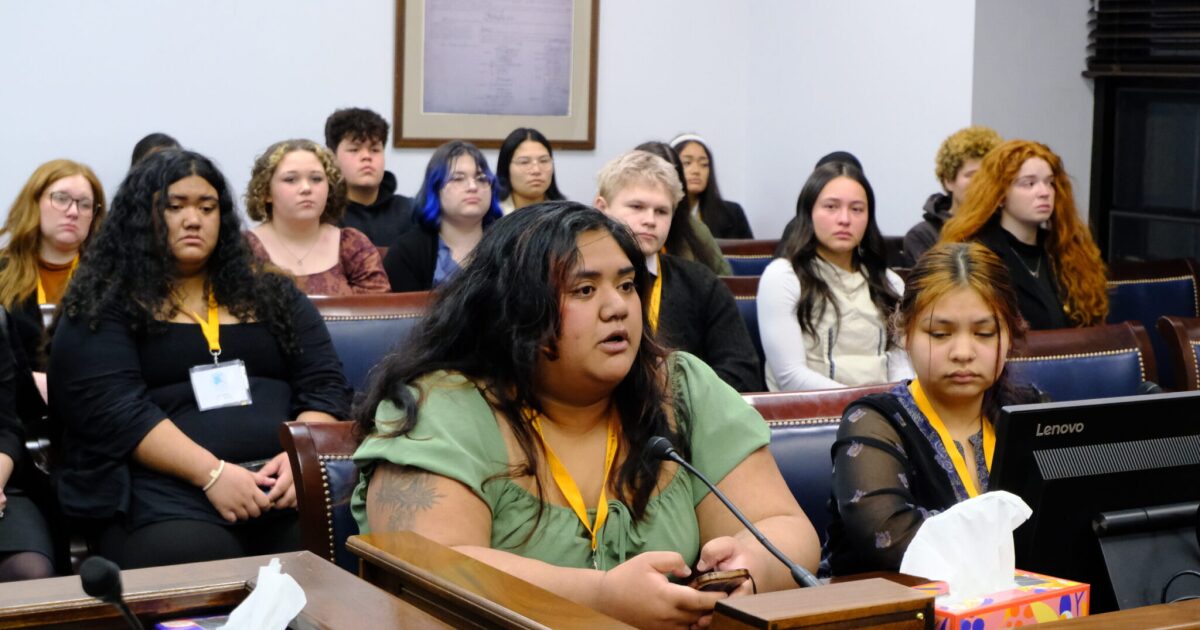
 Claire Stremple, Alaska Beacon
 Matt Acuña Buxton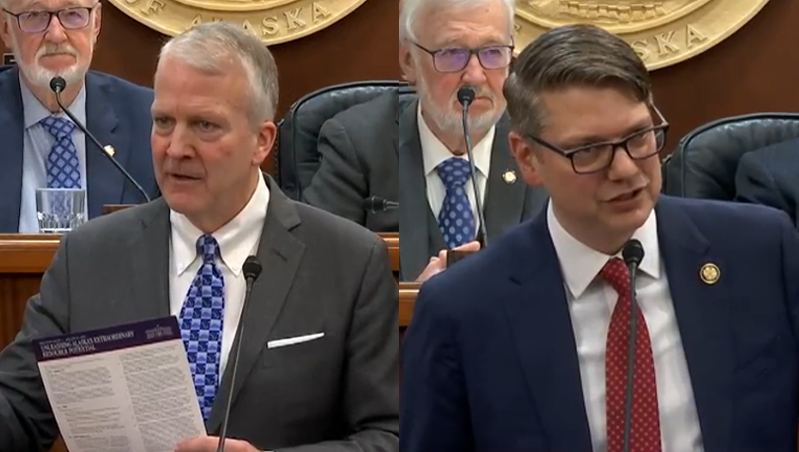
 Hannah Flor
 Ashlyn O’Hara
 Michelle Theriault Boots
Weekend watching
Ever dreamed of slinging a buzzer on Jeopardy? Well, if you haven't already lived the dream (you know who you are), here's some fun insight on what it's like to be on the show.
Have a nice weekend, y'all, and stay warm.

The Alaska Memo Newsletter
Join the newsletter to receive the latest updates in your inbox.