
On post-election prognostications
Let's dig into what the numbers say, and don't say about, about how Alaska's elections are shaping up.


Happy Friday, Alaska!
In this edition: Let's talk about everyone's favorite post-election activity, trying to divine the election results while we all wait around for the actual results, and why Democrats have to be feeling pretty good about the state's big-ticket races. Also, a look at how the Legislature is coming together under ranked-choice voting. And some long-overdue weekend watching.
Current mood: 😴
On post-election prognostications

We’re solidly into the phase of Alaska’s election where the absence of meaningful updates makes way for DIY prognostications about outstanding ballots and rankings data in an effort to divine the results of the state’s key races.
As someone who’s covered 15 years of Alaska elections, I'm no stranger to the need to fill the time as Alaska's slow-by-design vote-counting process plays out. I've put together more than my fair share of Rube Goldberg-like spreadsheets, but I've also been finding it less and less of an attractive timesink with each election.
This is because, in large part, the trends tend to play out the same way: Election-day voting is more conservative, while pretty much every other form of voting, which also happens to make up the bulk of later-counted ballots, leans away from conservatives.
In practice, that means as more ballots are counted, Alaska’s election results typically shift toward Democrats, independents and progressive causes. That means, generally, that Republicans and their causes need to finish out Election Day with a solid lead if they have any hope of outlasting the later-counted ballots.
Obviously, that all depends on the number of outstanding ballots and where they come from, but given the basic outlay of this year's election, it's why Democrats are feeling pretty confident that there’ll be a new Democratic governor and new Democratic US Senator by the time all the votes are counted.
There are more ballots left to count from districts that have already been favoring Democrat Mary Peltola, as compared to ballots left from districts that favor Dan S. Sullivan (Registered Republican) Incumbent.
I’ve seen estimates that count on Peltola’s 600-vote lead growing by some 10,000 votes by the time all the votes are counted, which might end up being enough for her to lock down the race with an outright majority and avoid the ranked-choice tabulation altogether.
(Speaking of which, Alaska is almost guaranteed to be keeping the ranked-choice system. In 2024, the repeal effort started out leading in initial votes, only to fall 700 short by the final count. This time, it’s already trailing by nearly 8,000 votes.)
The fact that we're still at the beginning of the vote-counting process—the state hasn't updated the count since Nov. 4 and isn't expected to post another update until early next week—is probably the strongest signal of confidence in outright wins for Peltola and Democratic gubernatorial candidate Jonathan Kreiss-Tomkins. That would spare them from the uncertainty around the ranked-choice voting tabulation, which has dominated much of the speculation this election.
This year, the state’s putting out the records needed to peek into how the rankings will play out ahead of the state’s official tabulation on Nov. 18. And if the RCV tabulation were held according to the Nov. 4 update, there would be just enough crossovers from the third- (Republican Gerald Heikes) and fourth-place candidates (Daniel J. Sullivan, Jr.) in the race to put Sullivan over the top.
Before everyone trots out the doom and gloom, caveats come with that analysis.
First, there are some 50-60,000 ballots left to be tallied. In addition, a decent chunk of the already-counted ballots isn’t included in the aforementioned ranked-choice records because they come from small precincts without electronic ballot scanners.
With so many caveats, the whole exercise feels a bit like saying “If we stopped counting any more ballots, then the results would be this…” with more steps.
Of course the race will look different if you don’t count about a fifth of the votes…and those ballots will be counted.
Still, for that grousing, I don’t think that it’s a worthless exercise.
I’ve seen some great visualizations of the data, outlining the frankly fascinating variety of ways that Alaskans approach ranking their ballots. It’s a good reminder that Alaska voters are, broadly speaking, an odd bunch, who will rank in ways that may not make a whole lot of sense if you view various groups of voters as monolithic.
I was desperately curious as to what ranking choices Alaskans made in the senate race, so I pulled the Cast Vote Record from this morning's 2AM count and asked Claude to make a preference schedule. It's bananas, y'all. NOTE lots of ballots haven't been counted/included yet! #alaskasky #akleg
— Leah Berman Williams (@leahwrenn.bsky.social) 2026-11-05T02:00:05.490Z
It was also through these visualizations that I learned there are exactly 65 combinations of votes in a four-way race where you can rank as many or as few candidates as you want.
In the governor’s race, US Senate and US House, every combination got at least 30 votes, including the least-popular combinations:
- There were 32 Alaskans whose ranking went Republican Gerald Heikes, Daniel J. Sullivan, Jr., and then Mary Peltola in the US Senate race
- 45 whose rankings went Republican Treg Taylor, Democrat Jonathan Kreiss-Tomkins, then Republican Bernadette Wilson in the race for governor
- Another 32 whose rankings went to Libertarian Jim McDermott, Democrat Eric Hafner and Republican Rep. Nick Begich in the race for US House.
Interestingly, in the race for governor, it appears the “Rank Everyone But JKT” messaging for conservative voters worked—to a degree. There, you have to reach past the top 30 ranking combinations to find a group of voters who ranked a Republican first and Kreiss-Tomkins second. In that case, there are about 500 voters whose first choice was Dave Bronson, the former Anchorage mayor who has tried on a more moderate-sounding tone in the last few weeks, who ranked Kreiss-Tomkins second, and ranked no one else.
These rankings also show that understanding the results of ranked-choice voting is far more complicated than just adding together the first votes of the like-minded candidates. If it were that easy, Republicans would have the edge in the race. Instead, Republican candidates spent a lot of time arguing that they alone were the best choice to be Alaska's next governor, and it's reflected in the rankings.
While there is a lot of consolidation between the Republican candidates, 5% of ballots ranked only Bronson, and another 2.4% ranked only Taylor.
That gap alone will likely put Kreiss-Tomkins over the top into an outright majority—even if they were to stop counting ballots today.
The Alaska Legislature
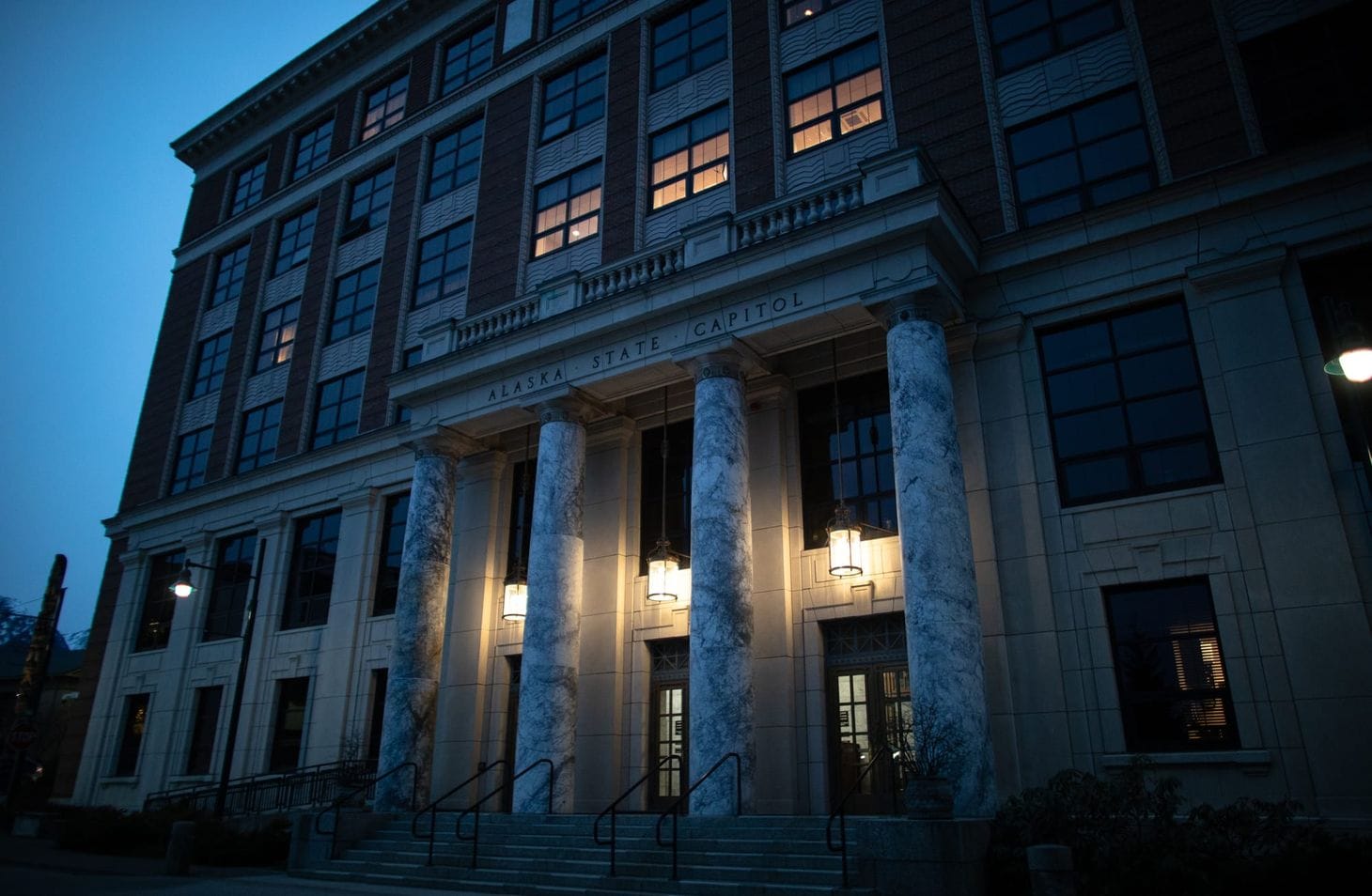
While there’s still a lot of dust to settle on the election, bipartisan-minded lawmakers have seen enough to lay claim to the majorities in both the House and Senate under House Speaker Calvin Schrage (I-Anchorage) and Senate President Cathy Giessel (R-Anchorage).
With the near-certainty that Kreiss-Tomkins will be Alaska’s next governor, that means the governor’s office, House and Senate will be under a trifecta of bipartisan-minded lawmakers in modern memory. It puts things like education funding, election reform and, of course, e-bikes—I mean, public pensions—into play when session starts in January.
In the Senate, Giessel makes her return to the Senate President’s office after six years and plenty of growth from her first stint with the gavel under a Republican majority in 2019. As Senate president under Dunleavy’s first two years as governor, Giessel often found herself on the outside looking in to the Dunleavy burn-it-down approach to politics. For her, that’s opened the door to a more results- and evidence-based approach to legislating.
She has notably been one of the key proponents of restoring a pension system for public employees in Alaska, arguing that the benefit of maintaining an experienced workforce far outweighs the cost of the changes.
And while the broad strokes of the legislative races have become clear, there’s plenty of intrigue in several safely Republican legislative districts.
In many of those races, you have a situation where two Republicans are in the lead, with few enough votes separating them that it’ll come down to how voters for the Democratic and independent candidates in those races ranked down their ballot.
At least two incumbents in those situations—Big Lake Republican Rep. Kevin McCabe and Wasilla Republican Sen. Cathy Tilton, who is facing troubling accusations of sexually grooming a teenager—could be in big trouble. Both currently hold narrow leads over their leading Republican opponent, and the margins are close enough that they could be in trouble come ranked-choice tabulation day.
According to the Alaska Beacon’s review of the rankings so far, both McCabe and Tilton would be expected to lose their seats once the votes from ballots that backed the third- and fourth-place candidates are redistributed.
In both cases, it’s an excellent encapsulation of the argument I’ve long made about ranked-choice voting’s impact in local legislative races: Wasilla’s not going to elect a Democrat anytime soon, but residents might not be as embarrassed by their representation.
And it also probably goes a long way to explaining why lawmakers like McCabe seemed eager to shoehorn criticism of the state’s election system into just about everything lately.
It’s a lot harder to keep your job when the entire district—not just the plugged-in primary voters in the old semi-closed primaries of the past—is involved in deciding who represents them.
Weekend watching
Thanks to everyone who tuned into Hello Alaska's election-night hangout live stream, a first for me and co-host Pat Race. We had a ton of fun, and it was great to connect on an election night that wasn't full of existential dread. And special thanks to Marian Call and Josh Fortenbery for letting us use their protest song.
Have a nice weekend, y'all.


The Alaska Memo Newsletter
Join the newsletter to receive the latest updates in your inbox.