Day 3: With Dunleavy's sales tax looming, GOP votes down corporate tax bill
The fact that the governor is leading with a broad-based tax that would definitely raise costs for Alaskans was a point many supporters of the bill didn't let slide.

Good afternoon, Alaska. It's Day 3 of the legislative session.
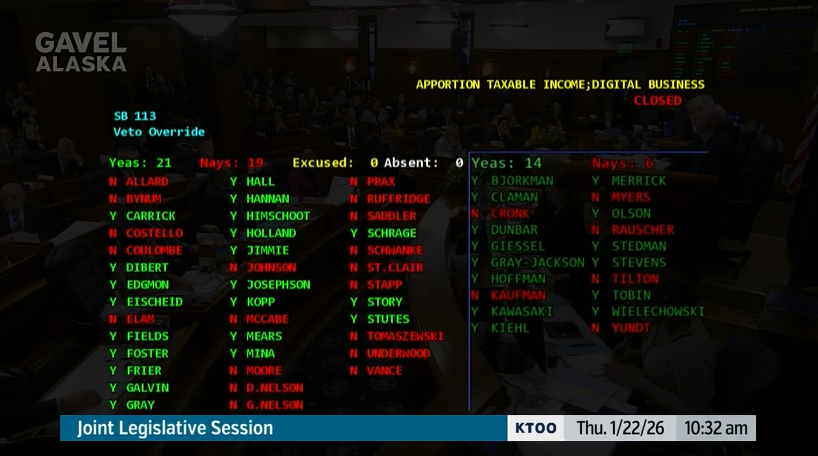
In this edition: Republican Gov. Mike Dunleavy's State of the State address is tonight, where he's expected to roll out a sprawling fiscal plan for the state with a "temporary, seasonal sales tax" at its center. The proposal would be the first state-wide sales tax in the state's history, and there's surely to be concerns about the equitability of a tax that largely falls on middle- and lower-income families, a point that several Democrats pointed out during this morning's joint session, where legislators failed to muster the votes to override the governor's veto of a bill that would have shifted corporate income taxes from other states to fund the state's reading program and vocational education programs.
Current mood: 🙄
With Dunleavy's sales tax proposal on the horizon, GOP votes down corporate tax bill
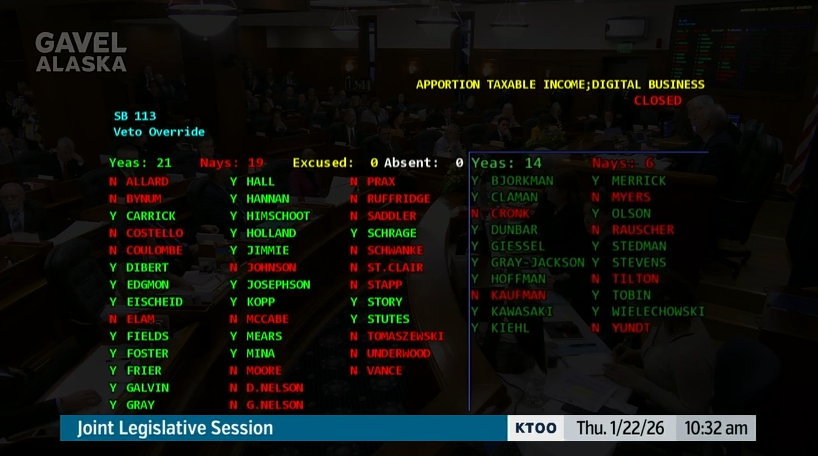
Citing a litany of worries that definitely didn't come right from corporate lobbying groups, legislators from the House and Senate Republican minorities voted en masse to uphold Gov. Mike Dunleavy's veto of a bill that would have shifted some $25 million to $65 million in annual corporate taxes generated from business done in Alaska from other states to Alaska's coffers. The opposition groups said they'd sue over it, and we wouldn't want that, one said. The state doesn't have enough time to implement the regulations, several others said. It's going to raise prices in Alaska, others added, especially in rural communities. Others continued to insist that the state has a spending problem, equating the state's dismal finances to a household that simply needs to tighten its belt after the breadwinner loses their job. A similar bill, another claimed, raised the price of Netflix in Maine!
Ultimately, the measure to enact Senate Bill 113 fell well short of the 45 votes needed to reach the override, with a caucus-line vote of 35-25.
Supporters of the measure argued that it was one of the few pain-free levers they could pull to generate new revenue for a cash-strapped state. It would have entered the state into a multi-state compact that allows states to collect corporate income taxes from online businesses based in other states. Currently, online businesses and shippers don't pay corporate income tax in Alaska, while brick-and-mortar businesses based in the state do.
"It doesn't change the burden on the corporation," said Juneau Democratic Rep. Sara Hannan. "It is not a tax that would trickle down to Alaskan consumers because the corporate income tax is already being paid, but it's not being paid to Alaska. I want the money that is paid by Alaskans to be taxed and benefit Alaska. ... I could see why Washington state would like us not to join the compact. They have a very large internet-based business. Washington state is happy to accept tax revenue that should come to Alaska and keep it in their home state."
While it's unconstitutional to forever dedicate funding to spending, the measure would have earmarked the money to support the state's reading improvement program, which has faced underfunding issues from the get-go, and vocational and technical education.
In a particularly fiery speech, Anchorage Sen. Bill Wielechowski furiously debunked many of his Republican colleagues' "wildly inaccurate" claims. He said his office looked up the price to buy and ship a snow shovel to Alaska and found it was precisely the same as in high-tax states like California and Minnesota.
"We know California has high taxes, right? Wow. The same price. It's the same exact price to ship it to California, Los Angeles, $26.99. I said, 'What about Minnesota?' Minnesota has the highest corporate income tax in the United States. Surely it's more in Minnesota, right? Surely, it's more. Surely they're adding on 9.8%," he said. "Well, guess what? $26.99 in Minnesota, $26.99 in Dallas, Texas."
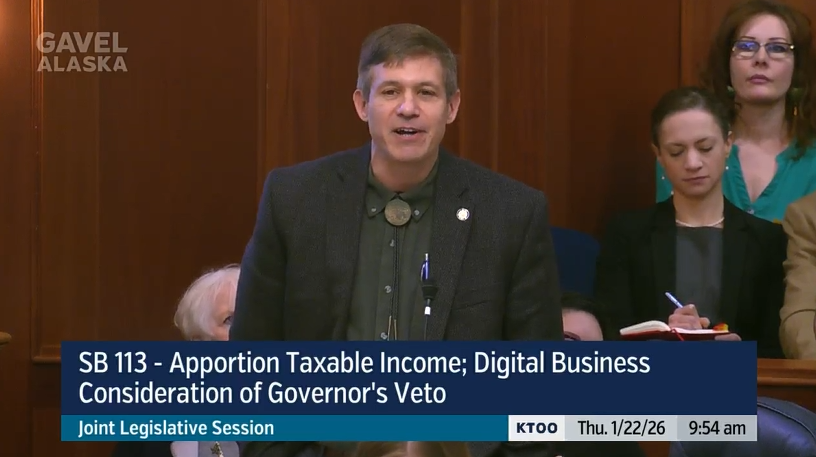
He also pointed out that the claimed Netflix price hike in Maine wasn't at all due to the state joining the online corporate tax compact, but rather the implementation of a sales tax, just like what Gov. Dunleavy is expected to roll out tonight.
During a frankly bizarre, Trump-ish cabinet meeting – complete with effusive praise from commissioners about how great Dunleavy has been for the state – he outlined a "temporary, seasonal sales tax," essentially aimed at bridging the state until all the oil and gas start flowing again. The proposal – as well as other elements of the plan – are expected to be further outlined during his State of the State address tonight.
But the fact that the governor is leading with a broad-based tax that would definitely raise costs for Alaskans – disproportionately hitting middle- and lower-income households that spend a greater portion of their income – while simultaneously opposing a shift in corporate income taxes was a point many supporters of the bill didn't let slide.
"We've got a state to run. We have constitutional obligations to pay for our government," Wielechowski said. "And when we let Outsiders, tech billionaires, slip by and pay nothing, and how dare we go to Alaskans and say, 'We want to tax you.' We want to take your dividend before we're going to collect revenue from tech billionaires. Really? Is that where we're going with this?"
And in a series of statements reminiscent of the talk over the first failed override of the BSA in 2024, when 17 Republicans flip-flopped on the bill, claiming that they'd definitely come up with a more reasonable solution (they did not), several Republicans who had backed SB 113 last year said they still supported it.
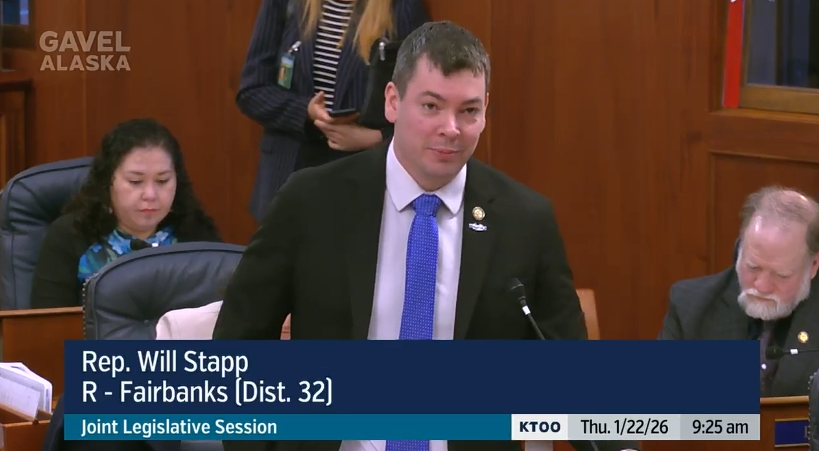
"I actually like this bill a lot," said Fairbanks Republican Rep. Will Stapp, one of the seven Republicans to flip-flop on Senate Bill 113, "If this veto doesn't get over in today, I plan to reintroduce this bill, fixing all those things, or at least attempting to try to figure out all those things."
Wasilla Republican Sen. Robert Yundt, though, delivered perhaps the most confounding opposition to the measure of the day. While he gave a long explanation of why corporate income taxes get paid one way or another and it'd be better spent by Alaskans than in Washington, D.C., he stayed in line with fellow Republicans and voted down the measure,
"I was a proud supporter of this bill, and I am still a proud supporter of the concept," he said. "I do want to see this back as soon as possible."
Stay tuned.
Reading list
 Iris Samuels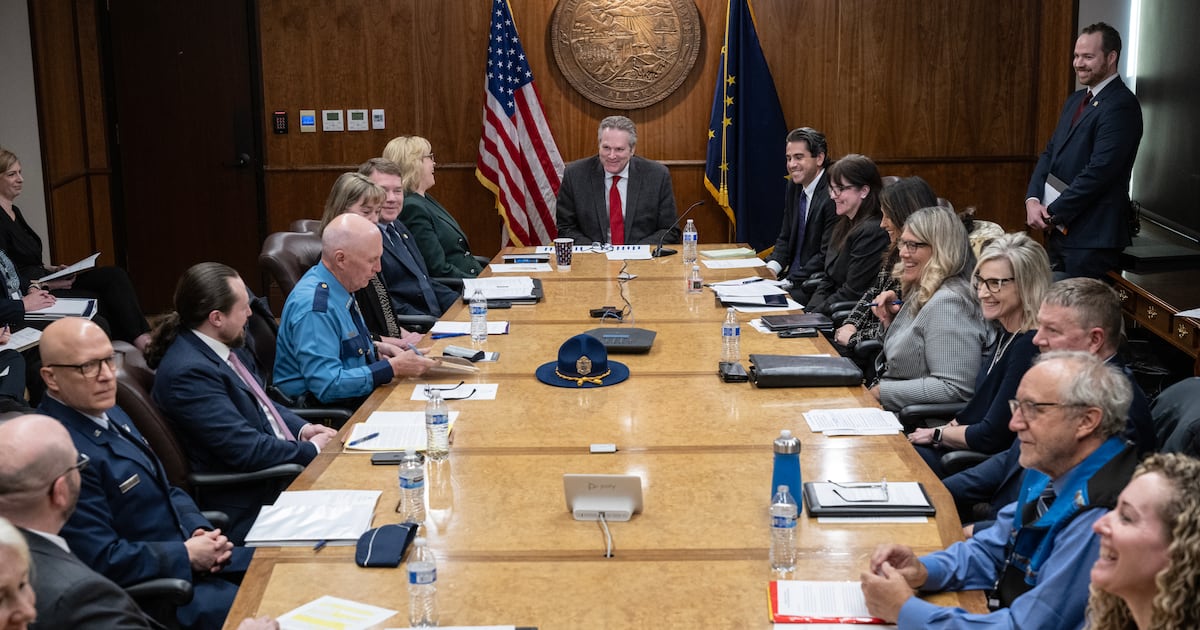
 Eric Stone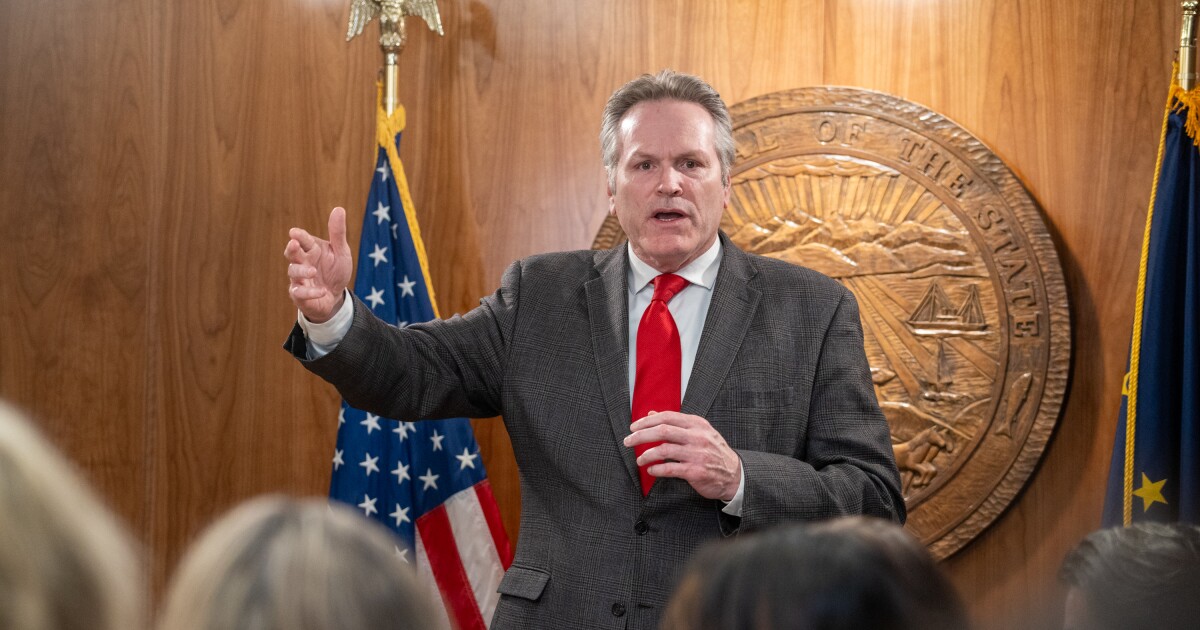
 Ava White
 Matt Acuña Buxton
 KYUK | By Evan Erickson

The Alaska Memo Newsletter
Join the newsletter to receive the latest updates in your inbox.