
Help for Mt. Edgecumbe and a S-corp tax fix passes Senate amid 'chloroform' warning
Help for Mt. Edgecumbe may be on the way, while Republicans are lashing out over the passage of an amendment that would close the "S-Corp loophole."

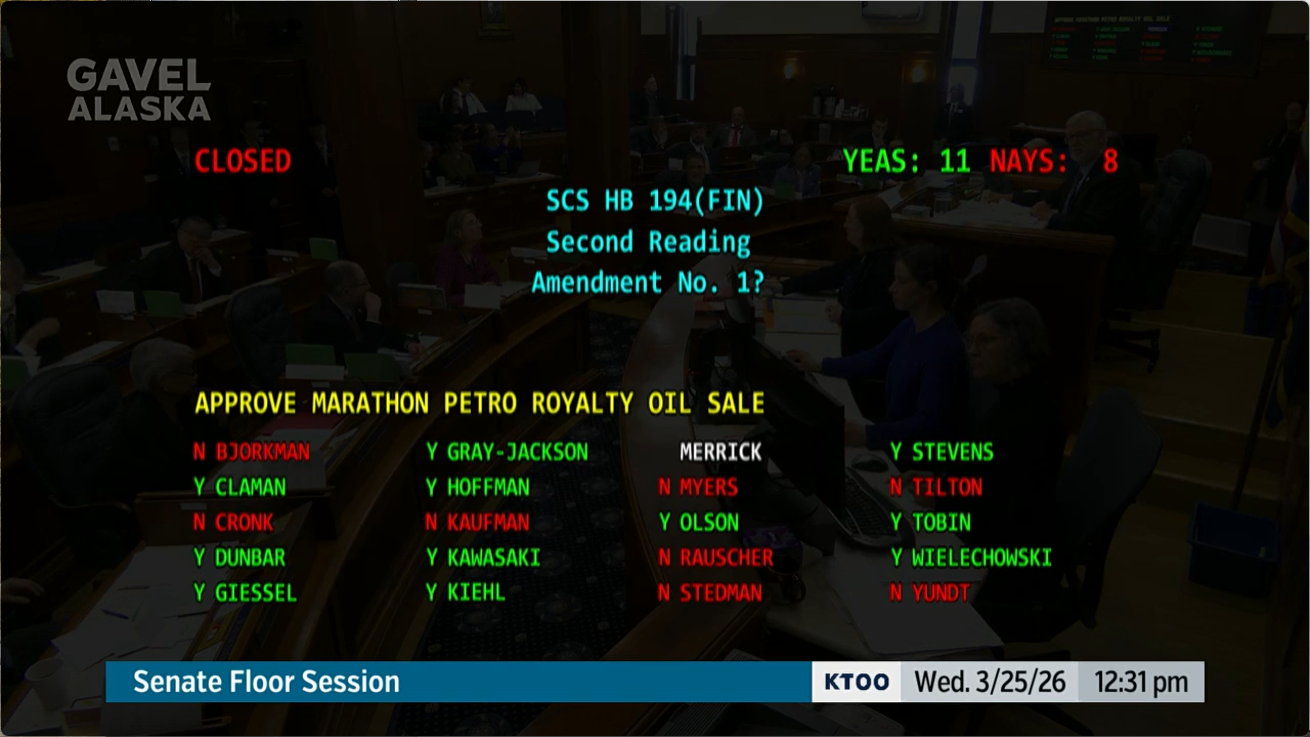
Hello, Alaska! It's Day 66 of the session. Man, it's sunny out!
In this edition: Legislators are taking another crack at making it a little easier to address the woeful conditions at the state's boarding school, advancing a slimmed-down proposal from the one they passed last year – and GOP Gov. Mike Dunleavy vetoed, because of course. Meanwhile, the long-fretted-about "S-Corp loophole" that has seen about $100 million in corporate income taxes leave the state since Hilcorp took over on the North Slope slipped through as a floor amendment in the Senate on Wednesday, riding on another bill that one Republican said was effectively killed by the change. And the reading list.
Current mood: ☀️
Legislators take another go at helping Mt. Edgecumbe maintain its 80-year-old buildings
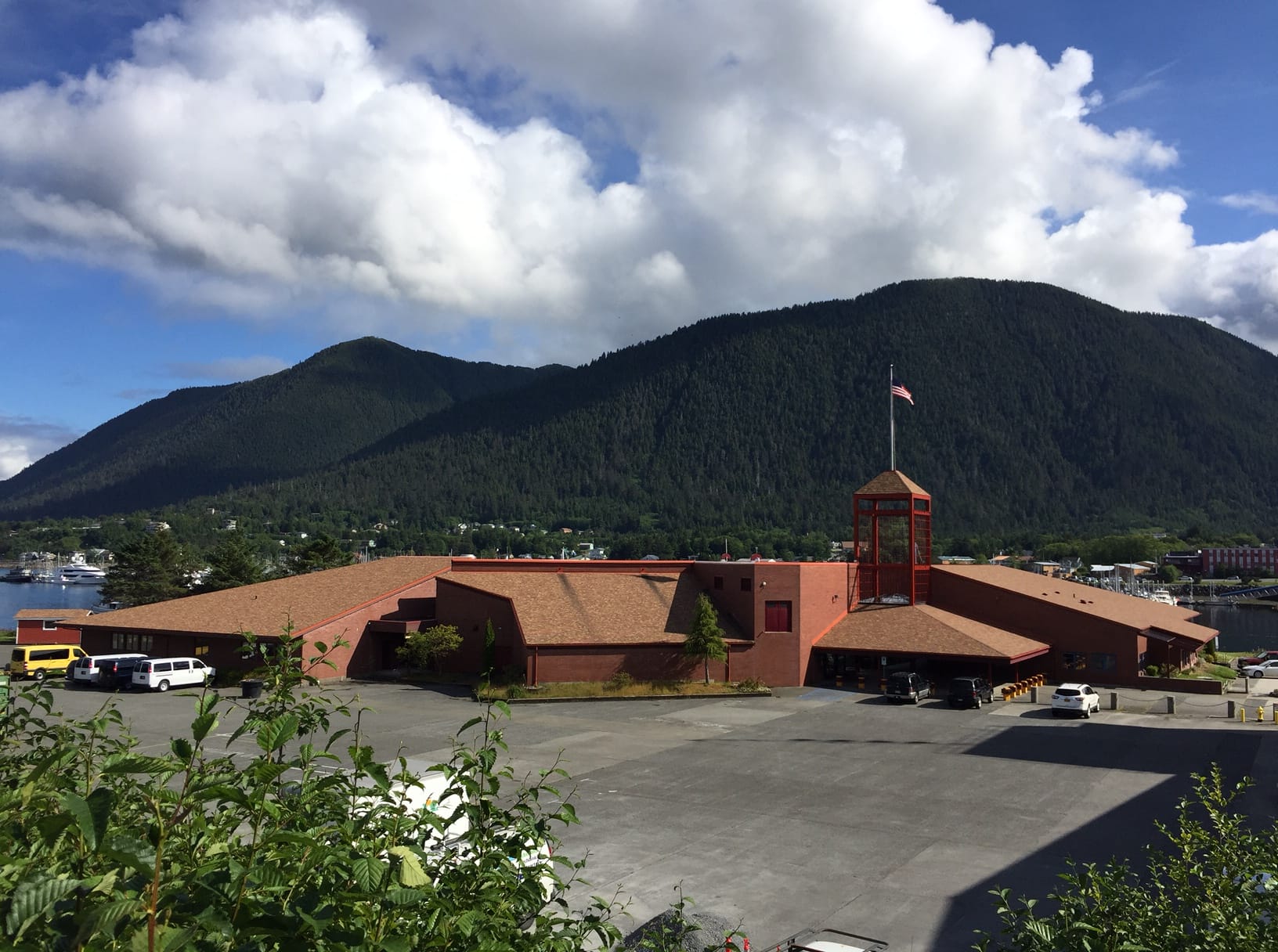
One of the most impactful stories from this year's legislative session has been the status of the state-run boarding school, Mt. Edgecumbe High School. The boarding school that predominantly serves Alaska Native students from rural communities – and counts several prominent state leaders, including Utqiagvik Rep. Robyn Frier, as alumni – has seen about a quarter of students disenroll since the beginning of the year. It prompted a rare in-session field trip for several lawmakers, who returned with few good things to say about the state of the school.
Photos of leaky roofs, drafty windows, cluttered spaces and a grubby kitchen headlined hearings earlier this year, along with an admonishment from Bethel Democratic Sen. Lyman Hoffman, a titan in Alaska politics, that he wouldn't let his children attend a school in such poor conditions. The state of the boarding school became a flashpoint for what one lawmaker called the "benign neglect" of schools throughout the state, particularly in rural communities, as extensively documented in Emily Schwing's excellent reporting with ProPublica (who recently talked about her experience covering the story).
The underlying cause of that "benign neglect" can most charitably be explained as a product of the state's budget woes, but the fact that these problems have persisted through the boom years is a sign that the problem goes deeper.
And as the only boarding school wholly within the state's control, its maintenance and operations have largely been left to the political whims of the state. Mt. Edgecumbe doesn't have a local school board or tax base to compete for state school maintenance funding, nor is it eligible to compete for funding for rural schools. Both of those programs, ostensibly, are meant to insulate schools from politics and favoritism – a cause they appear to be failing at – which is important given legislative attempts to provide the school with piecemeal funding have routinely been vetoed by Gov. Mike Dunleavy.
That includes a bill last year that would have made Mt. Edgecumbe eligible to compete for the Regional Education Attendance Area and Small Municipal School District School Fund (the REAA fund). It would also have extended the fund's use to teacher housing, a critical issue that several districts have told legislators contributes to teacher recruitment and retention problems.
Dunleavy vetoed the bill, complaining that it would dilute the amount of funding available for the existing schools, a point that would be a little more justifiable if he was not also the main impediment to increasing said funding.
Legislators, led by Rep. Frier, who sponsored the now-vetoed HB 174, are making another push on the issue this year.
On Thursday, she introduced SB 146, a copy of her bill that the Senate passed earlier this session, to the House Finance Committee. She told lawmakers that after further talks with the state governor's legislative office, she had agreed to drop the teacher housing portion from the bill.
"I still believe that maintaining rural teacher housing is important and necessary for addressing Alaska's shortage of teachers equitably, and I still believe that the state of Alaska should have a role in that maintenance," she said. "But I hope that removing this language from Senate Bill 146 is taken as a good show of faith to the governor, that we can avoid another veto of this bill."
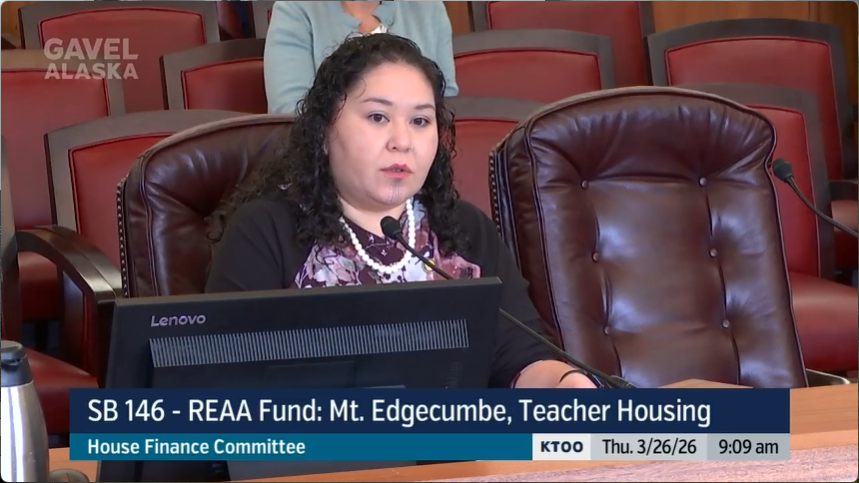
The hearing focused largely on technical questions about how the bill would work and how much it would cost the state. State officials told lawmakers the new version of the bill will be cheaper because they no longer need to hire housing specialists, as would be necessary if teacher housing were part of the equation. That said, they said they didn't believe the dorms – converted military barracks – would be eligible under the new version of the bill because they're housing and not technically part of teaching students.
A new version of the bill is expected to be taken up on Friday, setting the bill up to be heard on the House floor in the coming weeks.
Stay tuned.
Follow the thread: The House Finance Committee hearing on SB 146
As legislators eye higher taxes on some oil companies, Republicans warn it’ll ‘chloroform’ other priorities
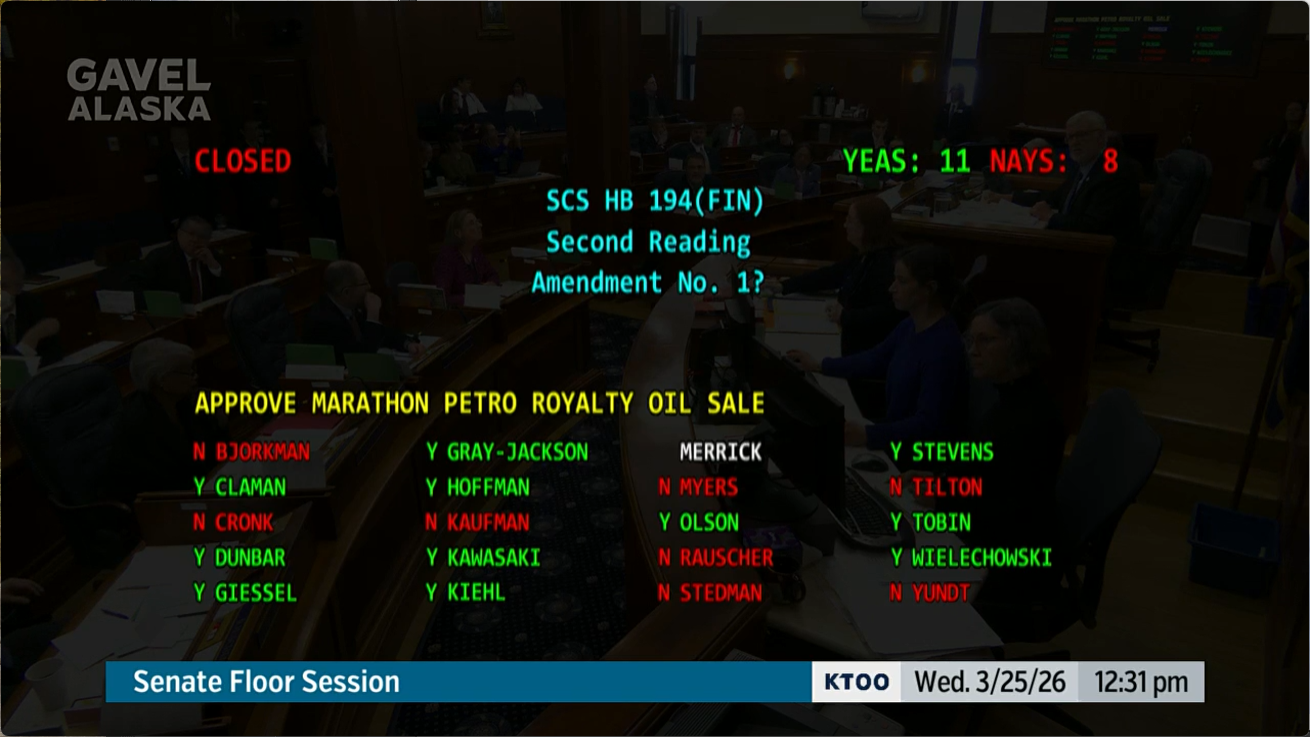
Senators narrowly approved a change to extend the state’s corporate income tax to oil and gas companies like the privately held Hilcorp, a path that could see the state generate about $100 million in new annual revenue.
And most oil-friendly Republicans are having none of it.
The changes were tacked on as an amendment to HB 194, dealing with the sale of Alaska’s royalty oil to the Kenai-based Marathon Petroleum refinery on Wednesday, and would address an issue that’s been on the table since Hilcorp bought BP’s Alaska operations in 2019. Because Hilcorp is organized as a passthrough S corporation, its profits are taxed at the personal income tax level, which Alaska does not have.
That means the corporate income taxes that BP paid — and that are paid by most other large operators in the state — aren’t paid by Hilcorp or its billionaire owner, Jeffery Hildebrand.
“This technical difference in the oil and gas sector is now costing us, by some estimates, more than $100 million a year,” said Sen. Forrest Dunbar, D-Anchorage, while pitching the amendment on the Senate floor. “If you go back and listen to the debates and discussions at the time … they expected that we would fix this technicality. I believe they are shocked, perhaps amused, perhaps laughing at us behind closed doors that we have not yet done so. We have lost hundreds of millions of dollars they expected to pay for no good policy reason.”

And while legislators have been buoyed by high oil prices stemming from Trump’s war on Iran, they say the state needs more dependable, predictable revenue sources, such as corporate income taxes. Several supportive legislators framed the extension of the corporate income tax to Hilcorp and other large passthrough corporations as fulfilling the Alaska Constitution’s mandate that legislators develop the state’s resources to the maximum benefit of the people.
Most pointed to the state of the state’s K-12 education system, which has been rife with headlines of school closures, ballooning class sizes and dwindling opportunities as schools continue to struggle with funding shortfalls.
“We are fortunate today that the war exists because, again, it is bailing us out,” said Sen. Lyman Hoffman, the Bethel Democrat who co-chairs the Senate Finance Committee. “We have school districts and schools in my district that are falling apart. We have classrooms that are way too large throughout the state of Alaska. … Even if this is passed, we’re going to be facing an additional need for another half a billion dollars.”
Hoffman, who has announced his plans to retire from the Legislature, has one of the longest careers in the Legislature, and he stressed that Republican Gov. Mike Dunleavy is one of the most conservative governors he’s worked with. He said that if Dunleavy’s proposing supplemental budgets that ask for $500 million in spending rather than more cuts, then something has to give.
“That tells me that we’ve nowhere else to cut,” he said during the Finance Committee hearing on Wednesday morning. “We’ve hit the bottom.”
Others pointed out that when Hilcorp officials were seeking legislative approval to enter Alaska’s oil industry, they said they anticipated legislators would enact the tax changes and that they would pay them without protest.
Still, opponents of the measure echoed many of the talking points we’ve heard from an oil and gas industry that has long opposed taxes while making sweeping, largely detail-free claims that it would decimate investment, jobs and the overall state economy. Those claims of broad economic benefit are starting to carry less weight, especially in light of a significant number of jobs going to Outside workers.
Sen. Jesse Bjorkman, whose district includes the refinery that was the subject of the underlying bill, railed against the changes, arguing they needed to carefully model the changes so they don’t decimate investment, jobs and the overall state economy.
“Some folks might say we have to act now, but I think it’s very apparent that acting right now in this way could be problematic,” he said, noting that the changes would likely “chloroform the underlying bill.”

The insistence that changes to oil and gas taxes need to be studied ad nauseam is getting less and less traction as legislators run up against oil company stonewalling. Legislators have frequently complained that the rampant secrecy — especially the Dunleavy administration’s handling of oil taxes — leaves them unable to properly vet the proposed changes.
Of course, they argue, oil companies will oppose taxes by any means necessary, including using catastrophic terms. Why wouldn’t they?
Even Bjorkman seemed to concede that it’s a delay tactic, noting that legislators may eventually be right to act in the face of the continued lack of information.
“There will come a time, I believe, that we don’t have enough information, or there has not been substantial modeling, where that won’t be an acceptable answer or excuse to not take action anymore,” he said. “That will happen, but I’m a no vote on this amendment because we do need a legitimate plan.”
But what that legitimate plan is, or how they will actually ever arrive at it, is an open question and one that many Republicans have refused to meaningfully engage on, instead insisting that everything needs to be done all at once, and no single part to address the state’s fiscal crisis can proceed until then.

For Sen. Hoffman, it’s been a maddening impediment to progress.
“We need recurring revenue,” he said, pleading with his fellow legislators to take even a baby step toward solving the state’s deficit. “If not this – if you want to vote no – tell me what you’re going to do to assist the state and to help your constituents get their students educated, have adequate police protection and public safety. I don’t see a solution.”
Sen. Cathy Giessel, a moderate Anchorage Republican who’s one of the few Republicans to openly support increasing taxes on the oil and gas industry, said following the vote that the underlying idea has already been studied and modeled at great length. She stressed that it’s time for lawmakers to get serious about making meaningful investments in the future, pointing to simple things like help for abused children or early childhood education that legislators will soon struggle to fund.
“There’s a saying out there, Our children are the message we send to a future that we ourselves will never see,” she said. “We need to think about that. What are we funding for the next generation?”

While both the amendment and the underlying bill passed the Senate, Republicans blocked the supermajority votes needed to change the bill’s title to include the tax, an issue that could increase the chances the bill doesn’t become law.
Still, given that any legislation will still need to make it through the House and be signed into law by the governor, who has gone as far as vetoing a tax on vapes to be consistent about his opposition to any and all taxes, the failure of the procedural vote won’t likely matter in the long run.
The change, as with any new tax, will likely have to wait until Alaska has a new governor.
This story was edited with help from Victoria Petersen and The Alaska Current. Everything else, including the typos, is mine.
Follow the thread: The Senate debates and votes to close the S-Corp loophole
More from The Alaska Current
 Emily Sullivan
 Emily Sullivan
The Reading List
 Michelle Theriault Boots


The Alaska Memo Newsletter
Join the newsletter to receive the latest updates in your inbox.