
'It's cold out here.' Students, teachers warn of an education system in crisis
Teachers and students decry larger classes, fewer opportunities and "deplorable" conditions.

Good afternoon, Alaska. It's Day 22 of the legislative session.
In this edition: Last year's boost to public education funding was widely hailed as a momentous win and a stinging rebuke of the state's tightwad governor, but it was just barely making up for a decade of near-stagnant funding. Over a series of hearings this week, that's bearing out with the return of massive multimillion-dollar budget deficits and a fresh set of personal stories of anguish over a system that's struggling to keep the lights on. And nowhere is it felt more acutely than at the state's boarding school, which legislators said was in "deplorable" condition when they visited last week. Legislators are listening, but just what can be done with the budget and this governor is less clear. Also, the reading list.
Something fun: Fairbanks violinist featured in Bad Bunny’s Super Bowl halftime show
'It's cold out here.' Students, teachers warn of an education system in crisis
Lawmakers and education advocates notched a big win last year when they successfully enacted a permanent increase to baseline school funding over Republican Gov. Mike Dunleavy’s objections. But, advocates say funding problems still haunt the state’s schools. In a series of hearings this week, lawmakers have heard from schools, students and education groups that they’re facing sizeable budget deficits and tough decisions that will ultimately lead to larger class sizes and fewer opportunities for students. Some also said they’re struggling with aging buildings — including broken pipes, chilly classrooms and other unsafe conditions — as the state’s troublesome maintenance backlog continues to grow.
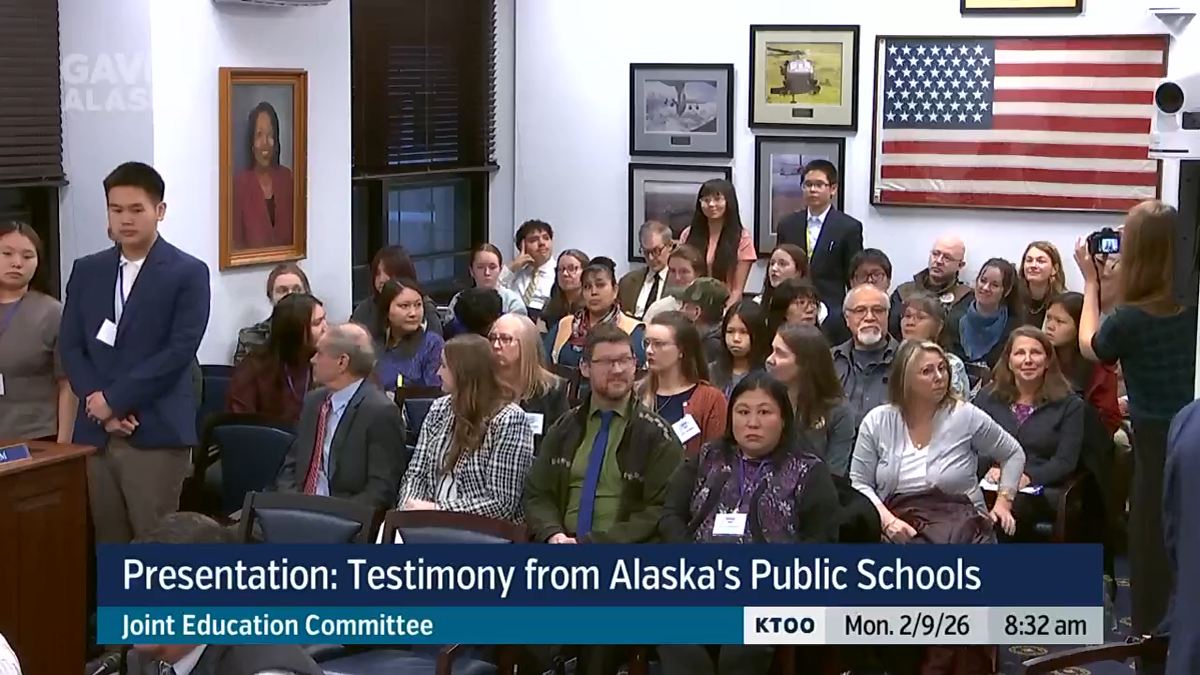
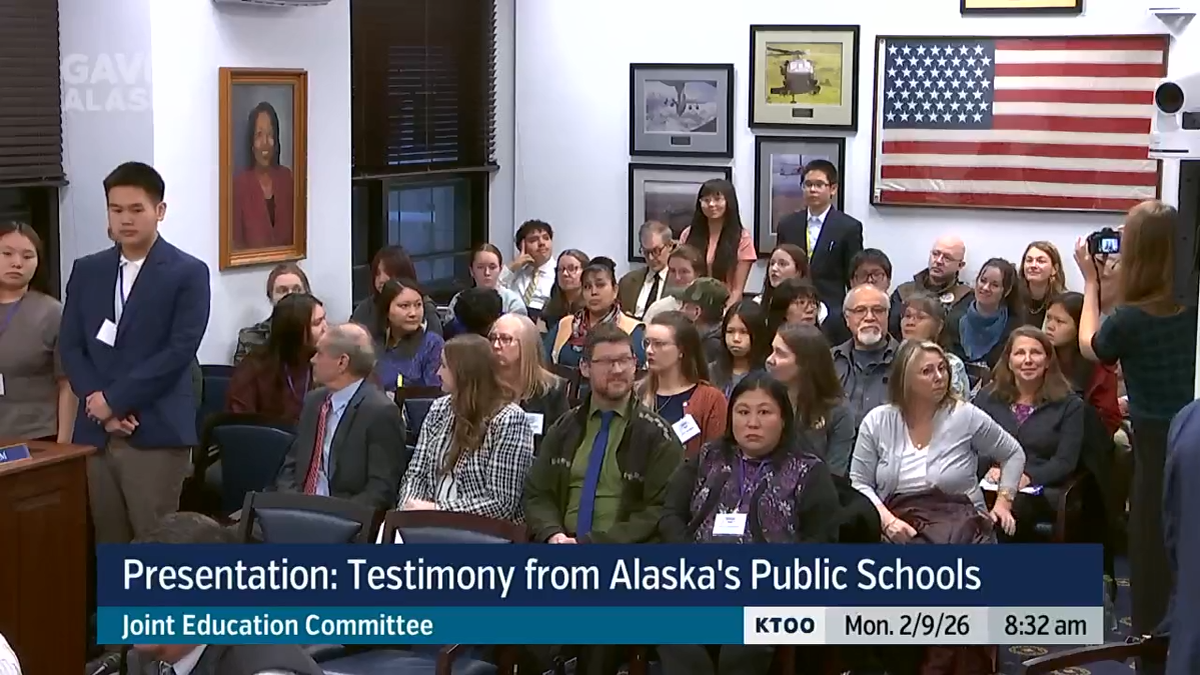
At a hearing with the joint House and Senate education committees on Monday, several teachers testified that they’re struggling to teach in facilities that are essentially falling apart. The supposed compromise between students’ needs and the budget, they say, isn’t working.
“How are we supposed to compromise on our failing generator? How are we supposed to compromise on our broken water boilers? How can we compromise? We are retreating to our core functions, and those core functions are also failing,” said Hoonah High School history teacher Nathan Fonts. “What am I supposed to say when my students are cold?”
Rhonda Pitka, a board member of the Yukon Flats School District, agreed that schools are struggling with maintenance amid ongoing funding shortfalls and that the shoestring budgets aren't covering it anymore.
“Holding together a 45-year-old school with duct tape and wire and one guy and whatever little tools he has has become a serious problem,” she said.
Last year’s funding increase, while historically large, came after nearly a decade of essentially flat funding and rising inflation costs. And while it was an increase to baseline funding, it replaced a one-time funding boost, meaning that the budget was nearly flat from year to year. Even at the time, many warned the increase wasn’t keeping pace with needs, and that’s borne out this year, with just about every major school district grappling with multimillion-dollar deficits.
Students testified about many issues, but a common thread was frustration with the lack of funding for electives that are so important to a well-rounded education.
"Every day, we see the impact of not having enough resources for our education. One of the biggest challenges we face is a lack of funding for our students' elective classes," said Melina Pangiak, a student from Chevak. "Elective classes are more than just extra courses. They are where we discover what excites us and where we find talents, and when we can discover our future paths."
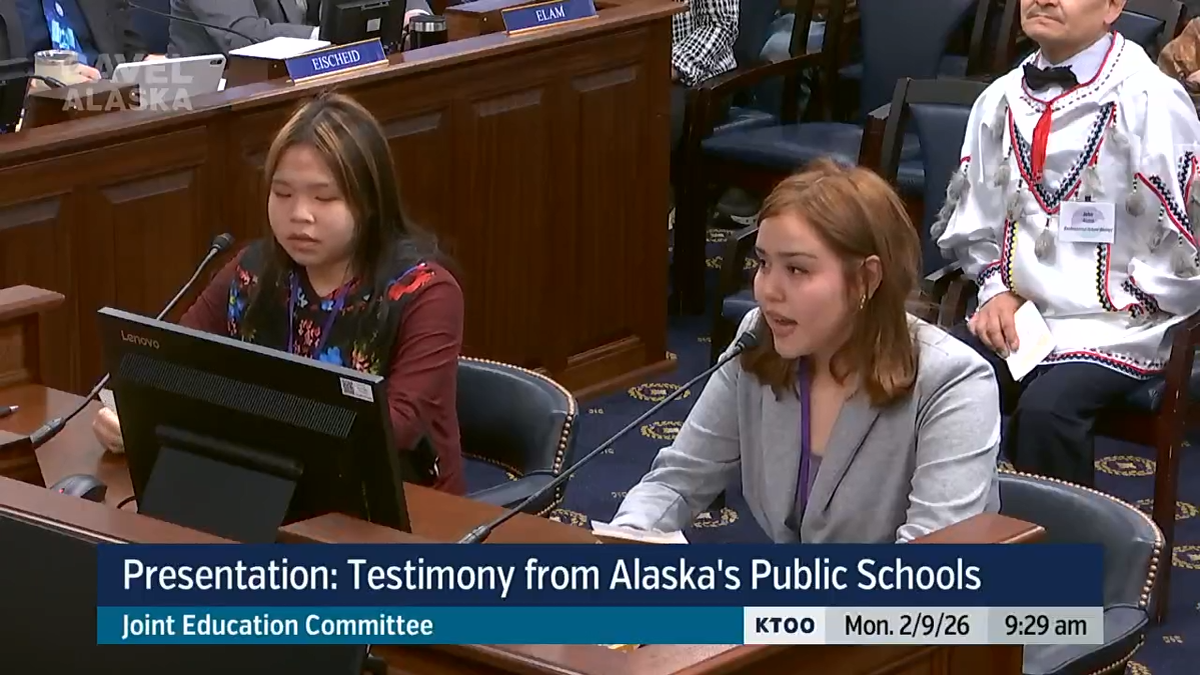
Pangiak's fellow classmate, Lucia Patrick, agreed on the impact.
“When these classes are cut or limited, it feels like doors are being closed on our potential,” she said.
And on top of insufficient funding for day-to-day operations, several testifiers warned that infrastructure needs are dire throughout the state, particularly severe for rural Alaska. A report last year found students in many rural communities were forced to attend classes in buildings with raw sewage, black mold, bats and other structural issues. In January, Aniak closed its junior and senior high school due to structural concerns with the gym’s roof.
Legislators have tried to increase funding for school construction and maintenance in recent years, including several projects specifically targeted at the state-run boarding school, Mt. Edgecumbe High School, but most have been vetoed by Dunleavy. Things have become so dire at Mt. Edgecumbe that legislators visited the school last week to tour the facilities after about a quarter of the school's 400 students left since the start of the year. Legislators called conditions at the school “deplorable" and have held and plan to hold several hearings on the status of the school this week.
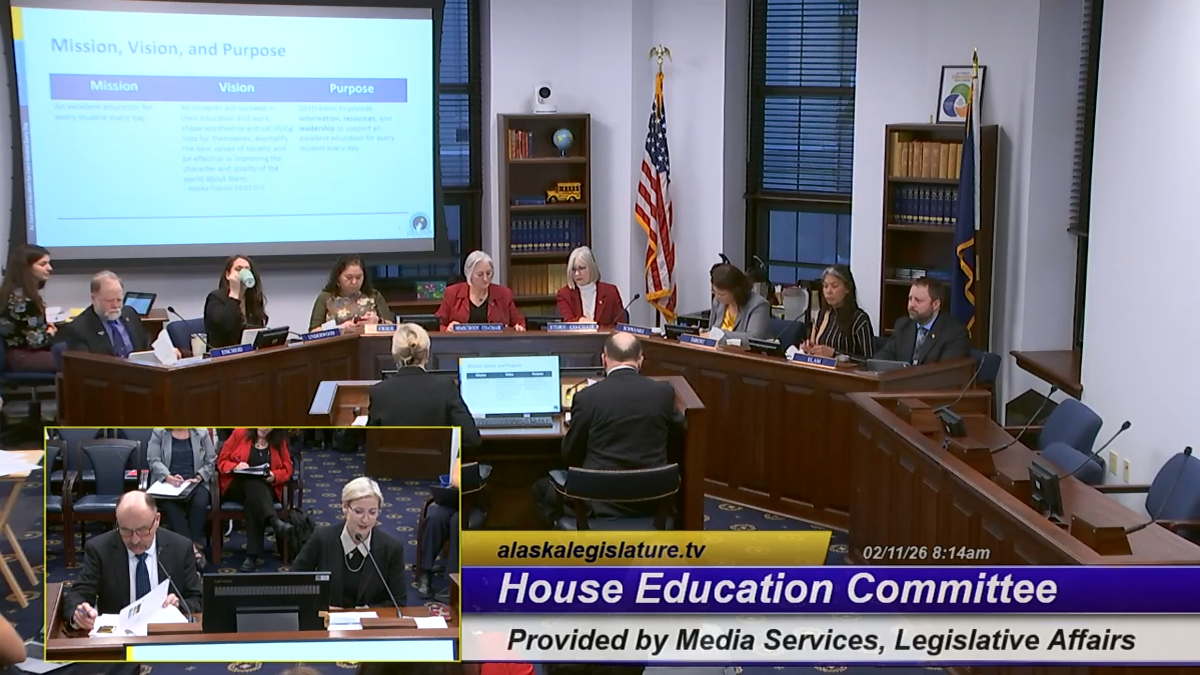
At a House Education Committee meeting this morning, MEHS Superintendent David Langford, who is doing double duty as the superintendent of the Chatham School District, chalked up the conditions to budget problems. He said complaints about everything from the quality of the food and the loss of some activities to the oversight and condition of the dorms were a result of the limited budget.
"I had no input over the budget that I inherited on July 1. My job is your budget, and you are to stay within it," he said, calling the whole process of cutting the boarding school's budget a "great opportunity" to "remake Mt. Edgecumbe."
Education Commissioner Deena "AI Did My Homework" Bishop said the school's finances were troubled and that they had to take drastic action to "right-size" the school, a common conservative refrain used to sugarcoat what are simply cuts. Bishop, unsurprisingly, glossed over the fact that much of the purported financial problems at MEHS arose under the Dunleavy administration, or the impact that the administration's continued reluctance to fund education has had in pushing the system to where it is now. Also missing was any recognition of the irony that the administration is fumbling the one school it directly oversees, while Dunleavy and his allies have routinely blamed local districts for their budget problems.
"We are here to support your school," said House Education Committee Chair Rep. Rebecca Himschoot, I-Sikta, of the Legislature's attempts to fund critical needs at the school, "but it's going to take all of us to get that done."
And as much as teachers, school officials and legislators say they’re working to insulate students from harm, students are noticing.
“I have never had the opportunity to learn in a classroom that was funded enough to have materials for everyone since elementary school,” testified Juneau student Maddie Bass.
Others from rural communities complained that broken plumbing in schools made the water unsafe to drink and made students sick from the smell.
“It’s cold out here for the students,” said Sylvia Oguk, a student in the Northwest Arctic Borough School District. “Now that it’s freezing outside our door, rusty pipes keep bursting and leaving us without water. It’s impossible to focus on our classes.”
While legislators have broadly said they’d like to increase funding for school districts, there’s less clarity about what the state can actually afford and what, if anything, Dunleavy might allow to become law. Legislators have considered reworking state funding mechanisms so that declining enrollment doesn’t result in steep budget cliffs – a change that would put an estimated $70 million into schools – as well as other measures to create automatic inflation adjustments.
In the big picture, educators warned that balancing the budget on students' backs was bad policy that sold the state’s future short.
“I think we got it a little, pardon my language, bass ackwards as far as funding our schools and it’s really hurting us in the long run. Our children are not getting the education that they need, basically because of the way the paper shuffles,” said Jack Strong, a member of the Chatham School District. “I don’t know where the state is going to save all kinds of money by not educating our children the way they should be educated… We need funding in schools, otherwise we’re giving up on our future.”
Stay tuned.
Follow the thread: House Education's hearing on MEHS
The reading list
 Amy Bushatz
Speaking of an overreliance on AI by education officials...
 Rachel Levy
 KYUK | By Samantha Watson
 Evan Erickson
 Alena Naiden


The Alaska Memo Newsletter
Join the newsletter to receive the latest updates in your inbox.