
State's penny-wise handling of Mt. Edgecumbe shows the folly of running schools like a business


It's Friday, Alaska.
In this edition: If we needed an example of why the Dunleavy administration's top-down, run-it-like-a-business approach to everything isn't well-suited for the state's public education system, then look no further than the only school the state's directly responsible for: Mt. Edgecumbe High School. The boarding school dominated several hearings this week after news that 25% of the student body had disenrolled after a slate of budget-cutting measures enacted by the state under the guise of "right-sizing" the program. Also, the reading list and weekend watching.
Current mood: 😠
"Do you want to be right in how it's done, or do you want to do the right thing?" - Rep. Louise Stutes, R-Kodiak, on minority Republicans' objections to extending the disaster declaration for western Alaska this week.
State's penny-wise handling of Mt. Edgecumbe shows the folly of running schools like a business

The state Drama, Debate and Forensics championships will be a little emptier when they take place in Anchorage later this month, thanks to the state of Alaska’s efforts to “right-size” the state-run boarding school.
Mt. Edgecumbe High School typically sends about 30 students and chaperones to compete and cheer one another on for the tournament in Anchorage, but that delegation will be far smaller this year after state officials "commandeered" the budget to tackle a $1.6 million deficit they insist snuck up on them. That “right-sizing” effort has included cutting just about everything from travel to electives to support for live-in volunteers.
“We had to narrow that to who was competing in the state meet, and we had to narrow it down to the competitors,” Department of Education Commissioner Deena Bishop told the Senate Finance Committee on Thursday, “So, instead of the over $50,000 ask, we asked Could you reconsider the students who should really be there?”
Bishop, who has insisted that the school's financial problems snuck up on the state, said the school was in deep need of a "strong business background" after the pandemic-era relief money that papered over the state's lackluster funding ran out.

The cut is just one of many examples of rapid change at the Sitka boarding school, which serves mostly Alaska Native students from rural communities throughout the state, after Bishop took a more hands-on role in overseeing it last year. And while she’s largely framed it as a well-meaning effort to live within the budget – calling the changes with the debate team an example of keeping the essentials – the changes have also coincided with a mass exodus of students since the start of the year, as well as the departure of many longtime staffers.
After beginning the year with more than 400 students, about a quarter have left, leaving the current enrollment at 311. While the state argues there’s no common thread behind the departures, reporting by the Sitka Sentinel suggests the sharp cutbacks in extracurriculars, stricter enforcement of rules by new contractors, and mental health struggles have been key factors. At a December state Education Board meeting, a nurse-practitioner who has worked with MEHS students for 14 years told them that eight students were admitted to the hospital in a 15-day period in November for suicidal ideation.
Some of the cuts have been shockingly penny-wise and pound-foolish.
That includes cutting funding for four live-in volunteers through the AmeriCorps and another program, at about $18,500 apiece. Their primary role was to spend unstructured time with the students, overseeing activities such as playing games, taking walks on the beach, or getting a ride into town. MEHS Superintendent David Langford, who was hired last summer as part of the shake-up (at the recommendation of former Wasilla Sen. Mike Shower...), admitted that the loss of the volunteers was a “huge impact” on the quality of life for the students and likely a contributor to the student exodus.
Langford said once he saw the impact, he tried to change course.
“I contacted AmeriCorps, and we tried to squeeze in a way that we could hire them, but it’s too late. There are no volunteers, and we tried this January again, but they still don’t have any volunteers,” he said, promising that he’d try to find funding in next year’s budget, so the kids wouldn't be so cooped up.
The reports have sparked a particularly strong reaction from legislators – several of whom are either graduates of MEHS or have children who attend – who took a rare in-session trip to the school last week to see the facility first-hand.
Sen. Lyman Hoffman, D-Bethel, returned aghast at the condition of the facilities, which he called “deplorable.” Leaky roofs, ancient appliances, a dilapidated kitchen and a resident rat who lives in a corner of the gym – named Twinkletoes by the students – don’t instill much confidence that parents should be trusting the school with their kids, he said.

"If I were a parent. I wouldn't let my child go to school there,” he said to Bishop. “The condition of that school speaks for itself and is one of the underlying problems that I see, and hopefully you see that as well.”
While the state has framed the cutbacks as an opportunity to “remake Mt. Edgecumbe” with the same kind of energy as the "We just have to do more with less" crowd, legislators have been far less convinced.
"I don't believe that you're right-sizing the ship,” Hoffman said, after noting that the washing machines were the same units that a fellow legislator had used when she attended the school 17 years ago. “In my view, this ship is not upright, and those are reasons people might not want to go back to Mt. Edgecumbe."
And while Bishop and Langford have chalked up the budget woes – which, again, amount to a paltry $1.6 million deficit – as a simple fact of life, legislators have been quick to bring up that the funding problems have one key thing in common: Republican Gov. Mike Dunleavy.

He’s vetoed a slew of projects funded by the Legislature meant specifically to improve conditions at the school, and that's not to mention the ongoing battle over baseline education funding. That includes cancelling $1.1 million in funding for pool operations and maintenance, $250,000 for the aquatic center, $7.8 million for capital repairs, $1 million for dorm repairs, $500,000 for student support services, and $2.7 million to replace dorm windows.
“We continue to advocate for school repairs and to address school infrastructure across the state, and it seems that we do not have a governor who wishes to lead,” Education Committee Chair Sen. Löki Tobin said at this week’s Senate Majority news conference. “It is incredibly frustrating, not only for our students at Mt. Edgecumbe, but it's also especially incredibly frustrating for students across Alaska.”
And the underlying shortfall in the operating budget isn’t unique, but mirrors the experience of nearly every other school district in the state that’s struggled with largely status quo funding and rising inflation costs. Bishop and the rest of the Dunleavy administration have frequently pointed the finger at local school districts for their budget woes, arguing that better management is needed rather than additional funding. The fact that the only school the state directly oversees is also facing budget issues is telling.
The administration’s penny-pinching mentality toward schools also stands in stark contrast to the largely unrestrained spending in the state’s prison system, which spent tens of millions of dollars beyond its budget, expecting legislators to cover the expenses.
But perhaps the most telling exchange was between Hoffman and Bishop at the tail end of the hearing, when Hoffman asked what, if anything, she had done to advocate for MEHS when Dunleavy was considering these vetoes.
“I believe that's a function of (the Office of Management and Budget),” she said. “I have not participated in that activity.”
In other words, that’s not her job.
Stay tuned.
Follow the threads: House Education, Senate Finance
More coverage: ADN, KCAW, KTUU, Alaska Beacon, Sitka Sentinel
Reading list
From the Beacon: Alaska permits federal government to purge individual Alaskans from voter list
 Alex DeMarban
 James Brooks
 Liz Ruskin
 Eric Stone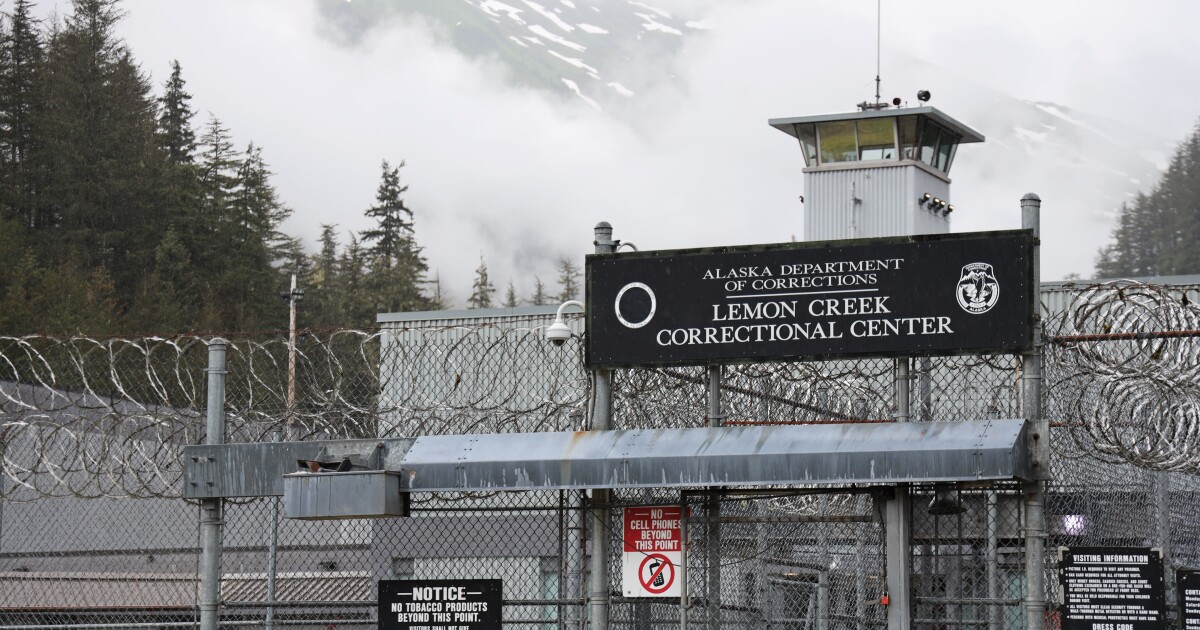
 Iris Samuels
 Mark Sabbatini
Weekend watching
For a bit of escapism, here's a fun bit on the history of one of cinema's most recognizable sounds.
Have a nice weekend, y'all.


The Alaska Memo Newsletter
Join the newsletter to receive the latest updates in your inbox.