Sullivan's safe space, sales tax dumped and PFD panic
A time crunch or a convenient excuse? A fix for a flailing bill. And is the PFD really going away?

It's Wednesday, Alaska.
In this edition: U.S. Sen. Dan Sullivan is set to give his annual address to the Alaska Legislature today, and it sure sounds like he's got a plan to deal with the mean questions legislators dared to ask last year. The Senate Resources Committee rewrote the governor's tax bill, dumping the sales tax and wishful thinking, in a move that improves a bill that still has no chances of becoming law. And the brouhaha over the size of the PFD is much ado about nothing, but it also highlights the cost of the status quo.
Current mood: ⛷️
Sullivan's safe space
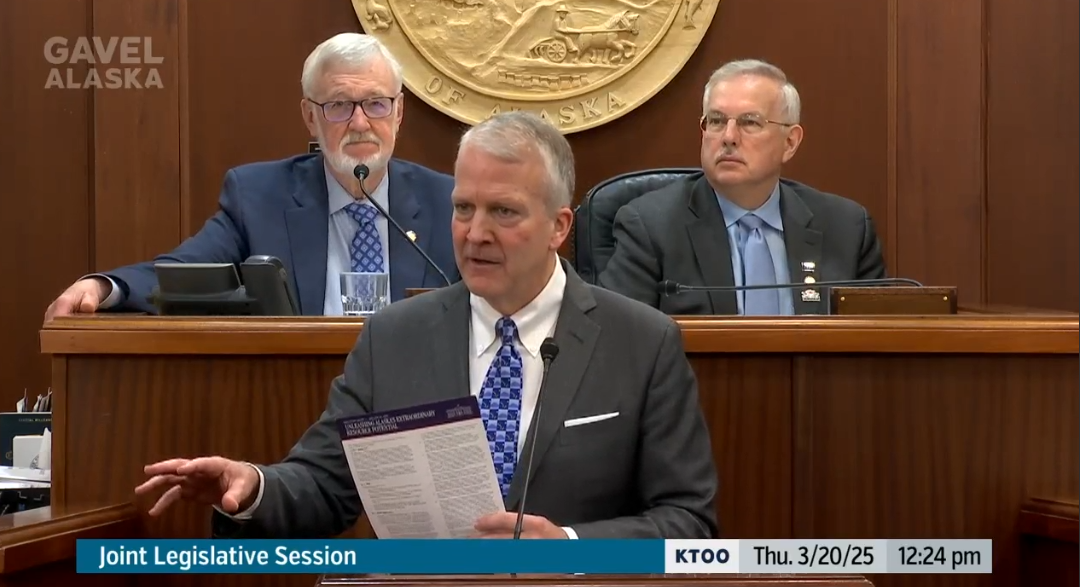
Last year's question-and-answer session between legislators and Republican U.S. Sen. Dan Sullivan, following his annual address to the Legislature, featured such brutal questions – like Would he commit to protecting Medicaid? (No), Would he stand up to Trump's softball handling of Russia? (Obama's worse), What was he doing about the indiscriminate cuts made by federal DOGE goons thousands of miles away from Alaska? (Here's a form) – that House Minority Republicans went out of their way to pen an apology letter to the junior senator.
“The tone and manner of certain inquiries — preceded by what can only be described as unnecessary grilling and regrettable rhetoric — fell far short of the respect and decorum you deserve as a United States Senator who graciously accepted our invitation to speak," read the painfully obsequious letter signed without apparent shame or irony by all 19 Republicans. "To say we were merely disappointed would understate the depth of our dismay."
And Sullivan's office would later claim that the questions, which essentially boiled down How are you going to protect Alaska's most vulnerable?, were planted by nefarious leftist groups. Democratic legislators, the reasoning went, couldn't possibly be concerned about Trump on their own. It had to be a setup!
Well, those House Republicans won't have to shield their eyes and ears for as long this year because Sullivan has reportedly set a strict limit on questions for this year's address, which is set to happen at 11 a.m., with one question from each caucus. I've heard grumblings from legislators about the issue, but the official line is that Sullivan's time in Juneau is limited, so he'd love to take more questions, but, gosh, he has places to be.
For a senator who has famously dodged critical audiences and tough questions about his unabashed support for everything Trump, cutting legislators short is just more of the same, but it's also getting harder and harder for him to brush off the bad press. Heading into what's expected to be a stiff challenge from a well-liked former U.S. Rep. Mary Peltola, Sullivan's approval numbers are in the tank as the state is feeling the fallout from Trump's policies. His milquetoast "But what about the oil and gas development!" attempts to sell Big, Beautiful Bill to Alaskans have largely fallen flat as he's stuck mostly to already-friendly crowds.
For many Alaskans, what is happening domestically under Trump – particularly around ICE and its terrorizing of America (they just grabbed a mother and her three children, including a five-year-old, in Soldotna) – is soul-crushingly wrong, and we'd just like to know why Sullivan, as a person purportedly sworn to uphold the Constitution, is OK with it. But, dang, we'll probably never know.
There's a Dan Sullivan event next door. Wanted to welcome him to the neighborhood.
— Pat Race (@pat.alaskarobotics.com) 2026-02-18T01:45:30.172Z
Sales tax dumped
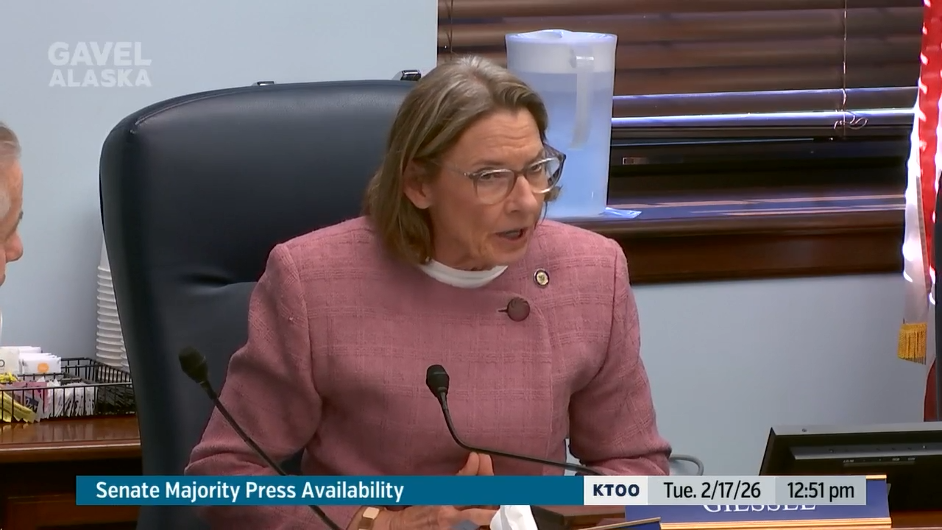
After the bruising tour through the House Finance Committee, where legislators, the public and local governments all trashed the sales tax proposal, it was pretty clear that the measure wasn't going anywhere. But leave it to hard-working Anchorage Republican Sen. Cathy Giessel and the Senate Resources Committee to give it an honest go at making a bad bill better.
 Matt Acuña Buxton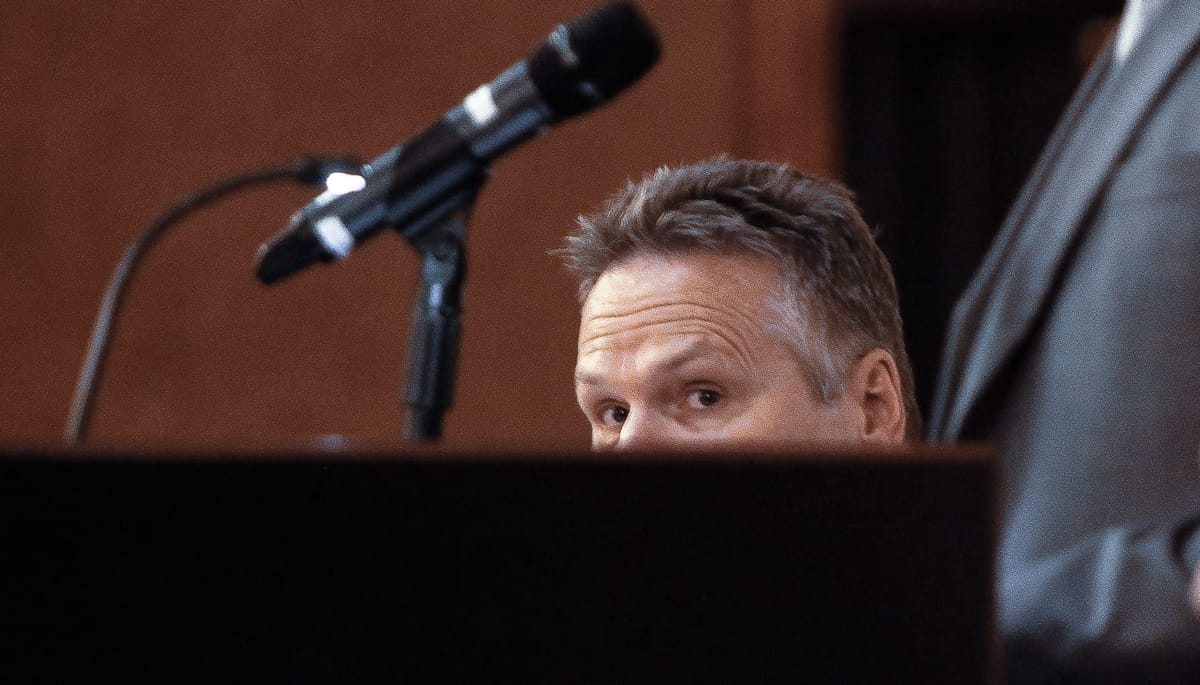
In a slate of changes rolled out on Monday afternoon, the committee has dropped the sales tax provision and the governor's proposed phase-out of the corporate income tax. In its place, the measure hardens the state's minimum tax on oil, closes the S-Corp loophole (where they escape the corporate income tax because their profits are taxed at the personal income level) and institutes the online business tax that Dunleavy vetoed. The measure includes a teeny tiny head tax on workers that would be penciled in to support education, collecting between $10 and $30 a year, depending on your income level.
The measure also ditches all the contingency language Dunleavy included, which would have barred the measure from becoming law unless a whole bunch of other pieces of legislation, including a constitutional amendment guaranteeing a large PFD, had become law. Legislative Legal raised some constitutional issues with the measure, noting that such expansive contingency language could violate the Alaska Constitution's single-subject rule (though they conceded it was an open question in untested legal waters).
While it's a well-meaning effort at crafting a less disruptive and more workable tax policy for the state, it's frankly about as dead in the water as the bill was before the changes. Even if it were to somehow clear both chambers – a tall order when it's an election year, and you have the reluctant-to-change Senate Finance Committee as the next stop – Dunleavy really doesn't like changes to his bills and is almost guaranteed to veto anything that doesn't give him everything he wants.
Also: In another telling exchange between legislators and the Department of Revenue, the state admitted that there wasn't really any reasoning behind a 15-cent per barrel tax to maintain the Dalton Highway beyond that being the number Dunleavy landed on. The tax would be estimated to generate about a third of the $75 million in expected annual maintenance, leaving Alaskans to pick up the rest. When asked about this gap, the answer was essentially that it's Dunleavy's call.
"So what we did is we provided a range of modeling to the governor," said state economist Dan Stickel. "We provided the ability to model any number of different levers and rates on the different fees, and this was part of the comprehensive plan that he chose as the as his best option."
PFD zero but not out
There's been much politically opportunistic gnashing of teeth over the House Finance Committee's move to zero out the dividend in the current budget. For the conservative media machine, it's the latest sign that nefarious legislators are stealing your hard-earned mineral wealth. The angst even seemed to flow into House Republicans' opposition to extending the disaster declaration for Western Alaska, with Rep. Kevin McCabe linking the two before getting a chiding during the floor debate last week.
So is the PFD really going away, or is it the latest bit of hyperventilating over the complicated process of crafting a state budget when you have a structural budget deficit? (Spoiler: It's the latter.)
First, the move is an attempt by House Finance leadership to sidestep the uncomfortable votes later in the process of reducing the PFD from the governor's it-was-never-gonna-happen level to the more status quo level of around $1,000. Last year, they left the larger dividend in the budget until it hit the floor, leaving the House Majority scrambling to remove it later in the process and forcing some of its pro-PFD members in an unpleasant spot (which, unsurprisingly, also drew outrage from Republicans).
But secondly, in the big picture, the move reflects the state's lack of progress on getting its fiscal house in order. With steadfast opposition to raising new revenue as evidenced by Republicans' opposition to overriding the governor's veto of the online tax bill and a lack of political will to make the deep cuts needed to actually make things balance with a large dividend, there are few levers easier logistically and politically to pull than the size of the PFD (and no amount of tapping the "PFD cuts are the most regressive form of taxataion possible" sign will change that).
"It's absolute nonsense," said Senate Finance Committee co-chair Sen. Bert Stedman, R-Sitka, of the brouhaha over the PFD. "What we're trying to do is get a budget together. If you have a dividend in there, like last year, with no way that it was possible for us to pay it. It just made a big budgetary mess."
Then he also laid out what has become the Legislature's de facto policy on the dividend: essentially, whatever is left over from balancing the budget.
"The dividend is not going to be zero," he said. "I would not take any credence in this dividend is zero. ... You'll see the dividend amount with more clarity at the very end of the session, and my expectation is this year is very similar to last year. To get the ends to meet, the dividend will probably be somewhere right around $1,000."
But he added an interesting wrinkle:
"If oil goes to $60 or $55, it's going to be less," he said, "because we have to make ends meet."
Stay tuned.

The Alaska Memo Newsletter
Join the newsletter to receive the latest updates in your inbox.