Sullivan Sullivans and the Senate advances Mount Edgecumbe bill
The handful of questions he did permit made it pretty clear why he doesn't take many outside his carefully curated sphere of safety

Good morning, Alaska. It's Day 31 of the Alaska legislative session.
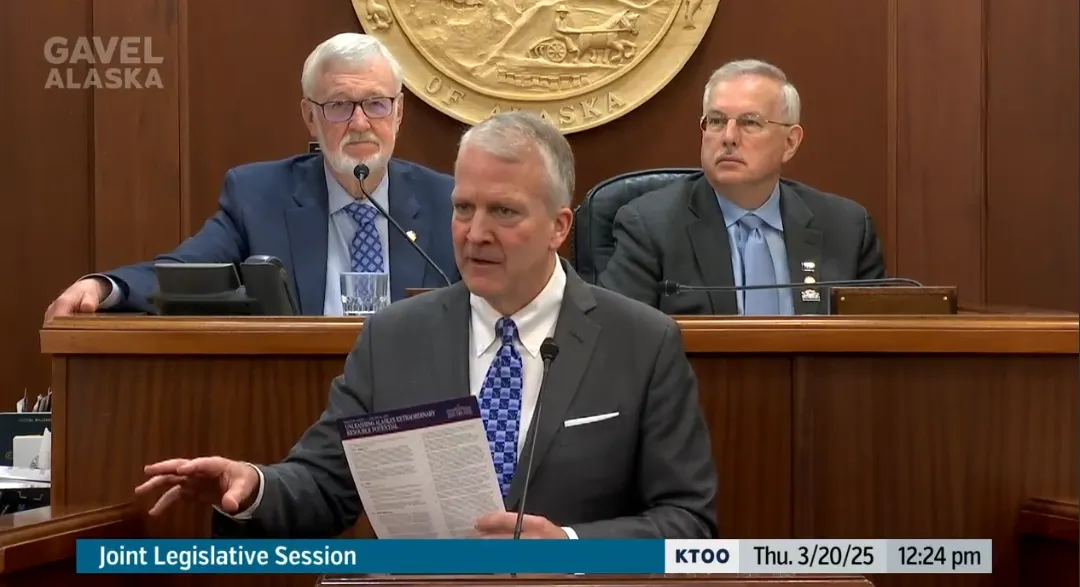
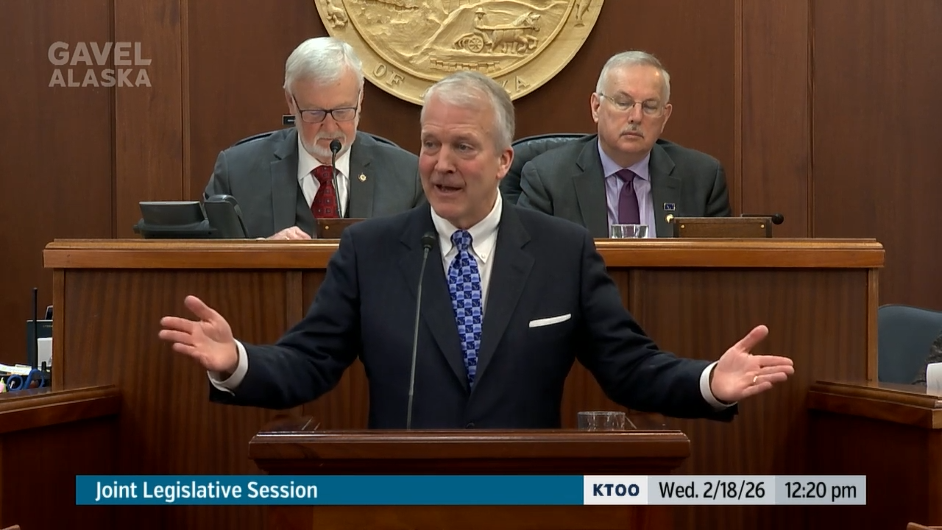
In this edition: U.S. Sen. Dan Sullivan delivered his annual address to the Alaska Legislature, armed with the same pro-Trump, anti-Democrat message that he's been perfecting for years. And the handful of questions he did permit made it pretty clear why he doesn't take many outside his carefully curated sphere of safety. Meanwhile, the Senate pushed ahead with a redo of a bill aimed at helping the state's ailing boarding school not get lost in the shuffle.
Current mood: 🥇
"We need to eat and encourage Americans to eat Alaska freedom fish, not Russian and Chinese communist fish." - U.S. Sen. Dan Sullivan
Sullivan Sullivans
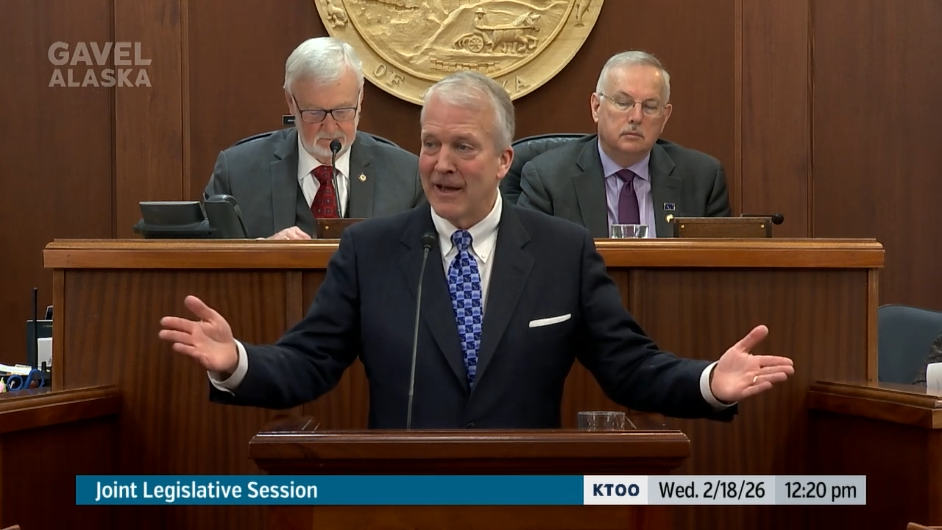
Sullivan, verb: to weave partisan grievance into the blame game
In a par-for-the-course address to the Alaska Legislature on Wednesday, U.S. Sen. Dan Sullivan continued his full-throated defense of the Trump administration and increasingly tired schtick of blaming Democrats – particularly Senate Minority Leader Chuck Schumer – for doing everything in their power to "shut down Alaska," specifically the resource extraction industries, which he insisted is a "core principle" for the opposition.
"Now, I'm not being partisan here. These are just the facts," Sullivan said. "And Alaskans should know who wants to help us and who wants to hurt us."
As was the case with last year's address, Sullivan argued Trump's return to office has meant nothing but non-stop wins for Alaska – an "Alaska comeback," if you will – on everything from oil and gas drilling to logging to the buildup of the state's military presence. Sure, health care costs are still expensive and getting worse, but that's the Democrats' fault! Sure, the Big, Beautiful Bill – or, as he reminded us, the "Working Families Tax Cuts Act" – doesn't insulate Alaska from the social safety net cuts, but that's the Democrats' fault! Sure, ICE is brutalizing Americans in its mission to brutalize immigrants, but it's the Democrats' fault that there are immigrants here in the first place!
And, hooboy, did he have the handouts to make his case.
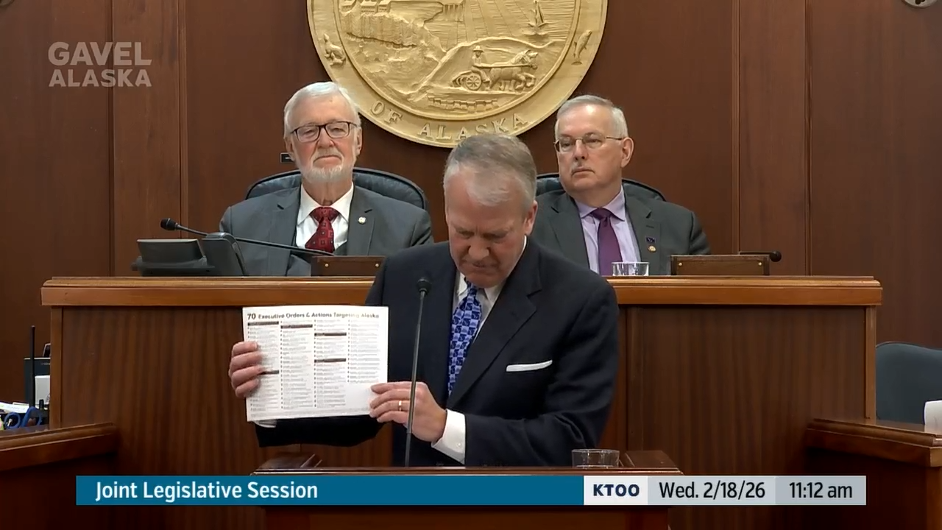
That said, the rumored lockdown on questions wasn't quite as strict as feared. In total, I counted seven questions asked. A few even seemed to get under his skin.
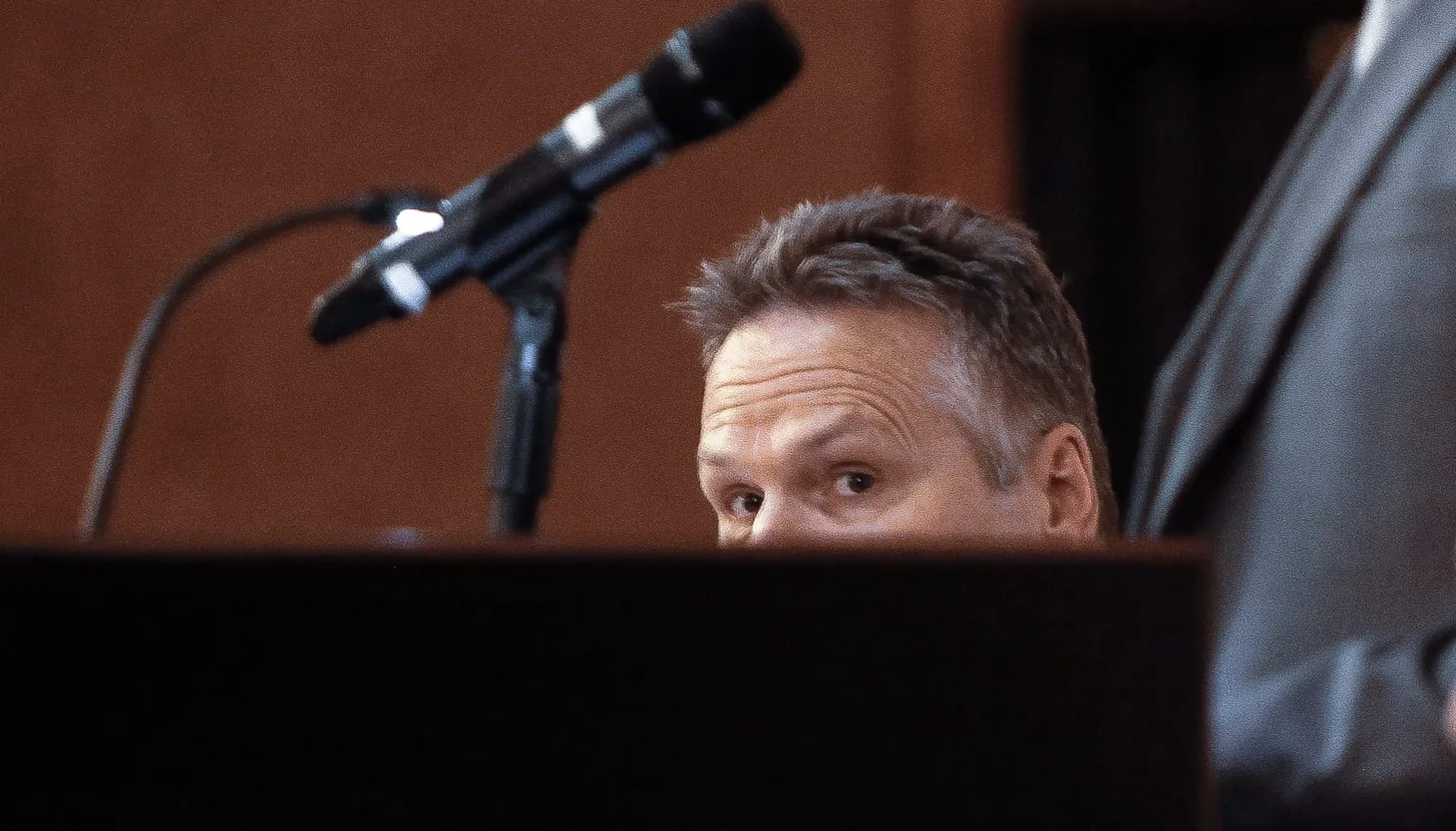
“You've said yes to Trump many times. I'm wondering if you're willing to say no,” said Anchorage Democratic Sen. Forrest Dunbar, who noted that much of the progress on the Willow oil field happened under the watch of a supposedly Alaska-hating Democratic president. “For example, if we saw a deployment of federal forces to Alaska, like we've seen it seen in Minnesota, or if the federal government demands we purge our voter rolls, will you say no to Trump?”
Sullivan fired back at Dunbar, noting that he was the one who had the gall to ask if he would stand up for Medicaid last year (one of the questions that House Republicans cried amounted to "unnecessary grilling" in a letter last year).
“You know who cut Medicaid for Alaska? Chuck Schumer, right? That's a fact,” Sullivan said. “So I wish that you and others could have gone to Schumer and said, Hey, why are you cutting Medicaid for Alaska?”
As others have pointed out, what Sullivan's talking about here is the effort to boost Medicaid spending in Alaska to blunt the pain of broader reductions in the Big, Beautiful Bill. And not just Democrats opposed the special treatment, for the record, but so did other right-wing Republicans. The funding was ultimately removed because of the Senate's budget rules. And while Sullivan insisted that he hasn't supported cutting Medicaid, the legislation passed last year banks on reducing Medicaid spending thanks to newly implemented work requirements.
A new state estimate expects as many as 12,000 Alaskans will lose coverage due to the bureaucracy of tracking hours. Many have warned that the state's already poor delivery of social safety net programs doesn't bode well for the state once the requirements come online (which just so happens to be after the 2026 election).
To Sullivan, that's a personal problem.
"To me, that is not a Medicaid cut," he said. "That is a choice for those individuals."
He was similarly dismissive of concerns that the Rural Health Transformation fund – a pot of money to soften the blow of social safety net cuts – is so limited that it can't actually address the pressing issue of health care affordability. While advocates worry that the money will end up in gimmicky Outside companies, Sullivan suggested that maybe the rules can change, and it was never meant to be a panacea for health care in the first place (have you considered not being poor?).
When it came to the Trump administration's brutal crackdown on American cities under the guise of immigration enforcement, Sullivan reiterated that law enforcement has his "full support" and praised the increases that made ICE the best-funded law enforcement agency in the country. When asked about its impact in Alaska, however, and the news that ICE had violently seized a Soldotna mother and her three children, he pleaded ignorance.
“Yeah. I mean. I’m not aware of that one,” he stammered in response to a question from Anchorage independent Rep. Alyse Galvin about the family. “But give us the information. We, I think, get information from you guys on a whole host of issues, and we’d be glad to look at it.”'
 Michelle Theriault Boots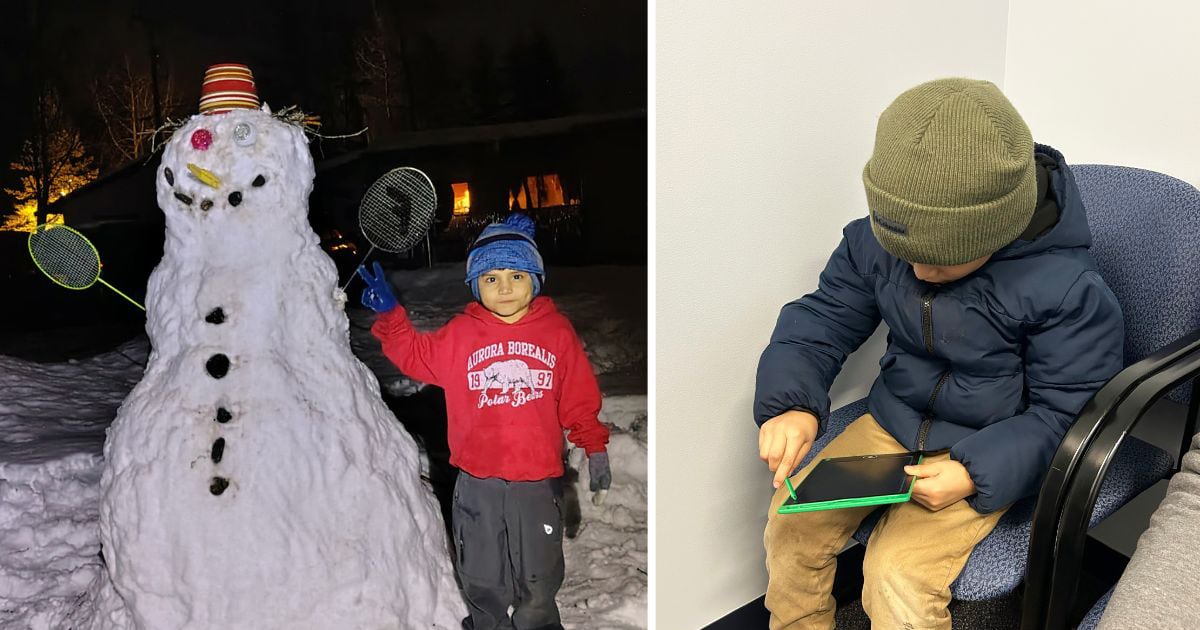
News of the violent capture of Sonia Arriaga and her three children at her home in Soldotna on Tuesday has swept the state, with members of the faith community raising alarm that the action and treatment of children presented a “moral crisis” in the country, but it was apparently new information to the state’s junior senator. Still, he stood by the efforts, claiming that they were about removing violent criminals from the state – even as a kindergartener sat in detention.
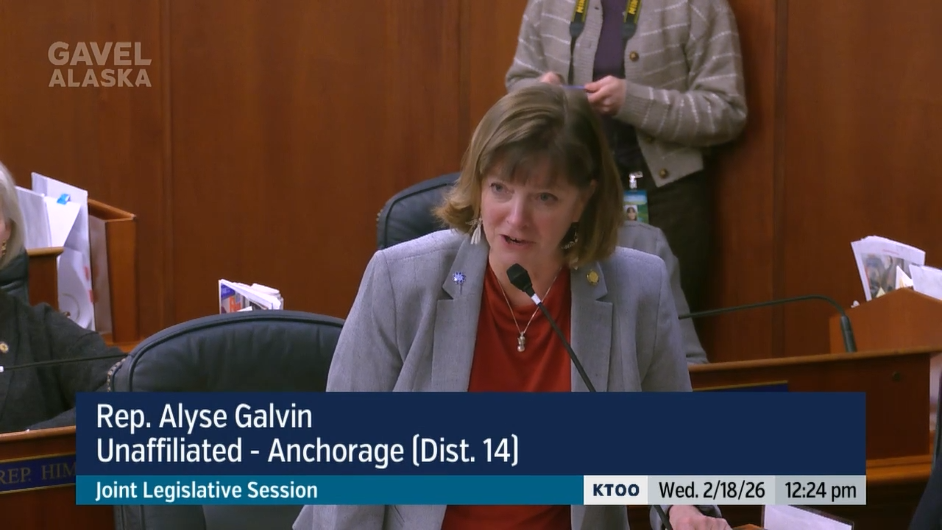
“I can promise you, she’s not a rapist, she’s not a murderer," the normally cheery Gavlin said in her question, choking back emotion. "Apparently, there’s not any evidence of even a criminal record. The question is: how can you help us work together to let our families here know we’re going to have a safe place? Apparently, they didn’t. There’s no prison here or detention center for the children, and so I’m hoping you can help us work on this issue together.”
While Sullivan said he wasn’t aware of the case, he did use it as an opportunity to tout his record of “getting things done with the federal government, whether it’s funding or, you know, other issues on immigration even.”
As of today, the family has been deported to Mexico, where Arriaga's family says she fears violence, while the 18-year-old remains in the Anchorage jail.
In an abbreviated press conference where reporters were barred from asking follow-up questions, Sullivan was able to muster some glancing criticism for ICE’s training policies, but ultimately turned the blame for the deaths of Alex Pretti and Renee Good on local law enforcement’s refusal to work hand in hand with ICE.
“What happened in Minnesota, as I mentioned in my remarks, you know, I weighed in with the administration. I put out statements, but also, importantly, weighed in with senior folks in the administration, saying, look, it’s really important to bring the temperature down on both sides, by the way, and which ended up happening,” he told reporters. “It was horrendous, regardless of you know, the situation, in my view, that two Americans were killed, horrendous, and that should not have happened.”
But questions about what, if anything, he'd do if Trump were to deploy ICE in Alaska, as they did in Minneapolis, were never answered.
Other questions were softballs.
Minority Republicans who signed onto last year's letter showed what they thought was good, respectful question-asking by asking questions that essentially boiled down to "Why are you so great?" What can the Legislature do better to help Sullivan on his wonderful mission to unleash Alaska's energy potential? What can they do about all these enemies of the state? What can we expect if all those hateful Democrats you keep talking about take the Senate?
Why it matters
It's a good reminder of why the junior senator has stuck to carefully curated audiences in the time of Trump, pitching his measures to chambers of commerce and other groups more likely to rally around resource extraction and less concerned about losing access to health care or social safety nets. While he claims he's held 60 town halls over the last year, it's unlikely any made him as uncomfortable as Wednesday's annual address did.
Follow the threads: A snarky play-by-play of the annual address and the presser
Additional coverage: The Alaska Current, Alaska Public Media, ADN, Juneau Independent, Alaska Beacon, KTUU
Senate passes bill to help Mount Edgecumbe with stubborn maintenance issues
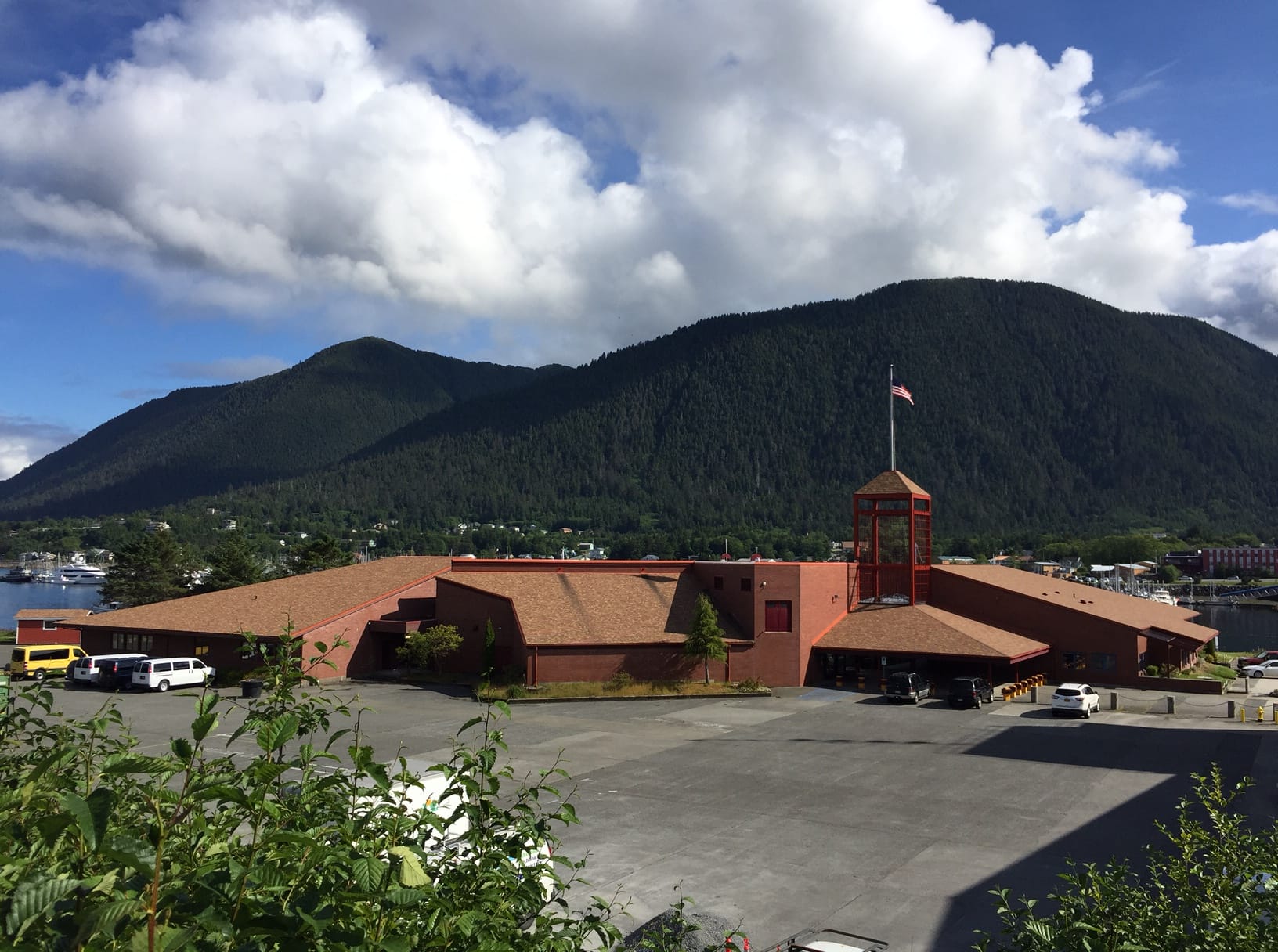
The Senate gave another shot at legislation aimed at smoothing out the maintenance needs at the state-run boarding school, Mount Edgecumbe High School. Senate Bill 146 would make the school eligible for funding through the Regional Education Attendance Area (REAA) maintenance program, which serves schools that lack local, tax-collecting governments to support them. It would also enable the fund to cover teacher housing, a common pressure point for rural districts in recruiting and retaining teachers. Together, both measures are designed to spare the schools from relying on piecemeal budgeting by the Legislature – the kind that is frequently vetoed by GOP Gov. Mike Dunleavy.
"That'll take Mt. Edgecumbe out of being the third wheel in a two-wheel system," said Sen. Bert Stedman, the Senate Finance Committee co-chair who has been an ardent supporter of the boarding school. "The organized communities have one classification of dealing with school funding, and the unorganized boroughs have another, and then Mt. Edgecumbe is out there in the wilderness."
The measure passed the Senate 17-3 and has an excellent shot at passing through the House, but faces an unsurprisingly gloomy outlook with Dunleavy.
That's because he vetoed an identical measure just last year.
In his veto message at the time, Dunleavy claimed elevating the funding for the boarding school or teacher housing "diminishes the equity across school districts." He also complained that lifting the $70 million cap on the fund – allowing legislators to put more money into rural school maintenance in times of abundance – would create an open-ended liability for the state.
Asked why they're bringing up the same measure again, Stedman said at the Senate Majority's weekly news conference that "We don't want Edgecumbe to be ignored. We're trying to make the game level and fair to everybody. It's not fair to Mt. Edgecumbe High School, and you can see that by looking at the condition."
To be clear, there's a massive backlog of maintenance in just about every single corner of the state. Students in rural communities have it particularly tough, with leaky, moldy and structurally unsound buildings being shockingly common. Just this year, a school abruptly closed its doors after the gym roof started cracking.
The state of Mt. Edgecumbe High School, which primarily serves Alaska Native students from rural communities, has been of particular concern this year after about a quarter of students disenrolled. After a rare in-session trip, legislators said they were aghast at the status of the once-prestigious school. In follow-up hearings, the school superintendent outlined his hope to have a couple of spare mattresses on hand, suggesting it'd be nice to have the funding to replace 10 a year (which would put the entire dorms' replacement schedule on a 40-year cycle).
 Matt Acuña Buxton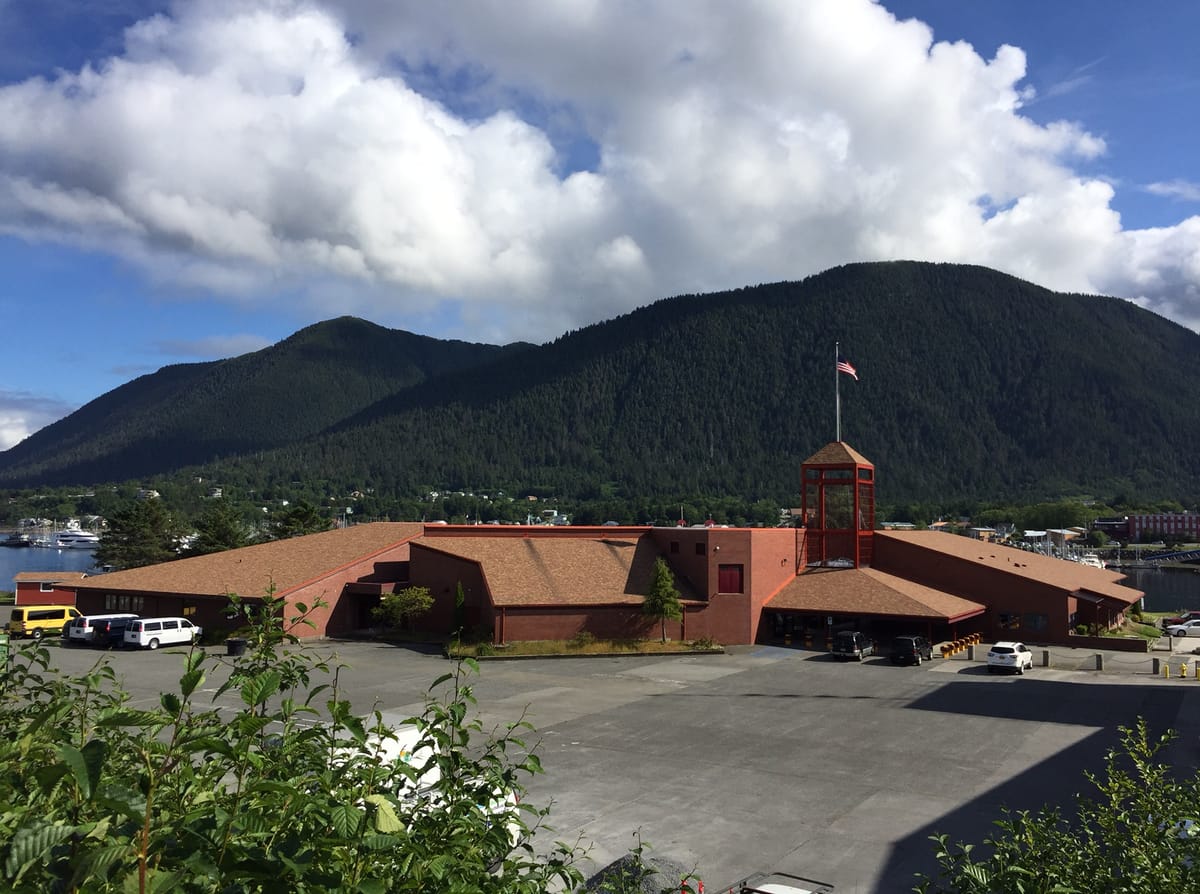
While Senate Bill 146 likely won't become law until there's a change in the governor's office, Stedman said he hopes that the administration is willing to be a partner to address what they can this year.
"I'm hoping that we'll come up with some action plan jointly that can be executed so we don't have to just butt heads, and the school ends up continually deteriorating. That's unacceptable, so we can appropriate, but the executive branch has to execute, and we're standing by ready to do our part now," he said at the presser. "We want the Department of Ed to step up and do their part, and I think they will, because frankly, it's an embarrassment for everybody, and the kids end up losing. So let's all work together and try to come up with something that works."
Stay tuned.

The Alaska Memo Newsletter
Join the newsletter to receive the latest updates in your inbox.