The Enshittification Year
On the state level, the enshittification formula is all too familiar over the last seven years under Republican Gov. Mike Dunleavy.

It's Monday, Alaska, and it's been too long.
In this edition: The past few months have been a hard, dark and chilly way to cap off the year, and that's before we factor in Alaska's colder-than-usual winter. But the days are getting longer and the happiest time of year for the wonks – the Alaska legislative session – is right around the corner. In this edition, I want to take a look back at what was, on the whole, a particularly bleak year that put a fine point on Republicans' mission to transform government into the expensive and inept beast that they've always claimed it was. And then look ahead to why 2026 is a critical opportunity to get things right.
Current mood: 🥳
Programming note: Sorry for the prolonged hiatus. It's been a tough year, and I'm forever grateful to everyone who stuck through it. Here's to next year.
The Enshittification Year
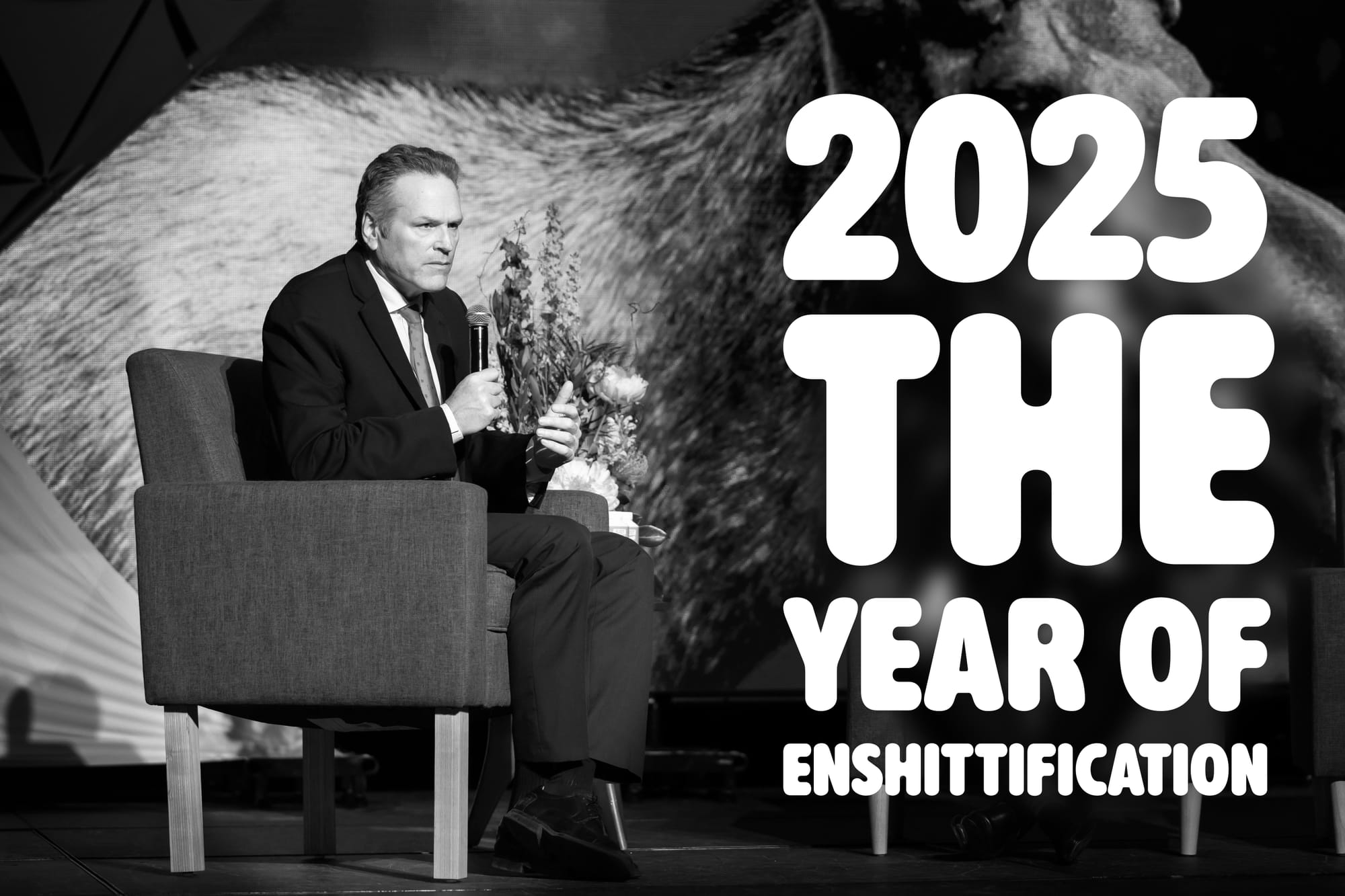
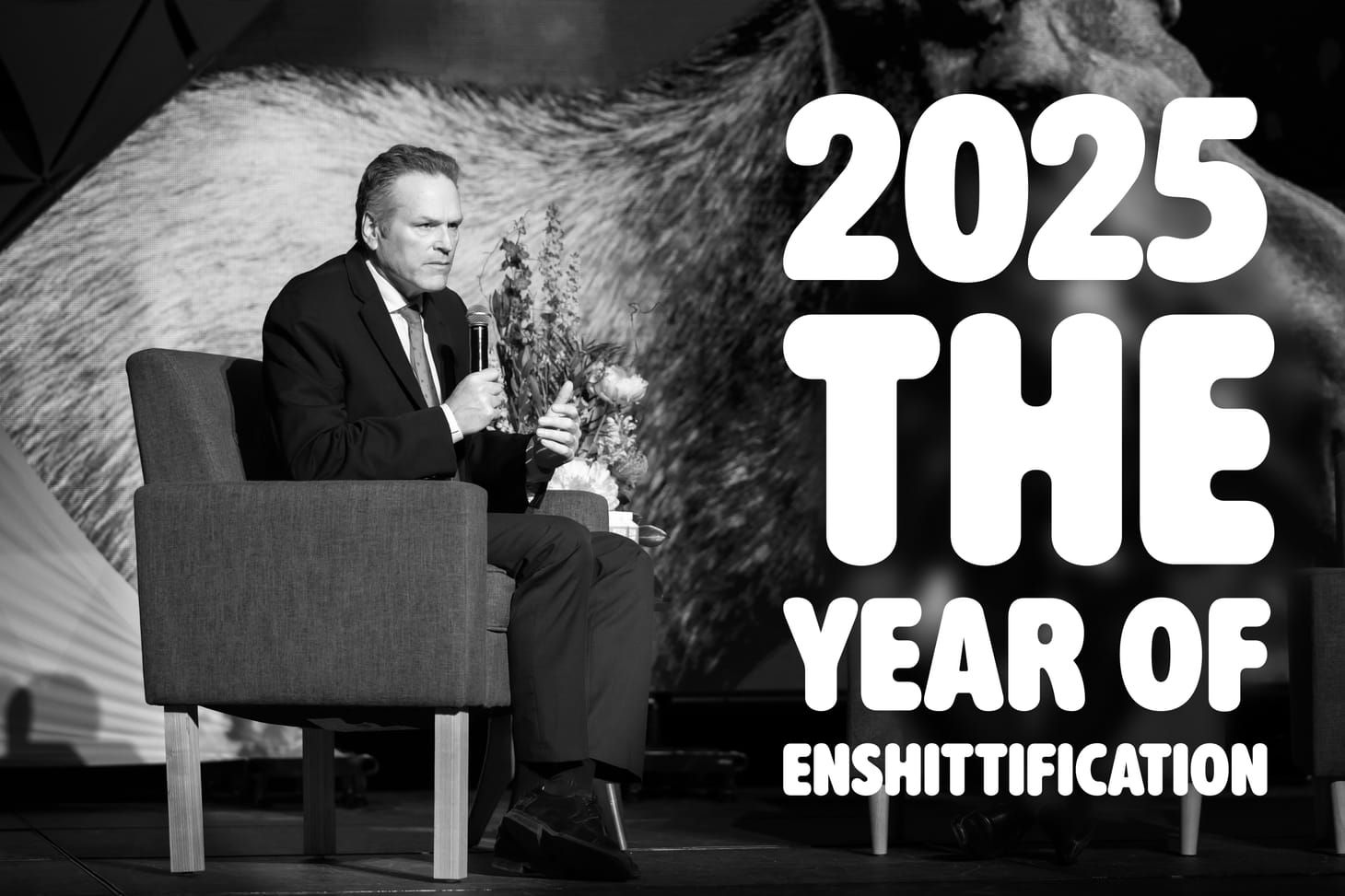
The word that keeps popping into my head to describe 2025 is "enshittification."
Also known as "crapification" or, more politely, "platform decay," it describes the process of taking something people like and making it terrible by extracting maximum profit with no long-term vision. While it's typically used to describe social media platforms and e-commerce, the return of President Donald Trump this year – installing cruel, talentless goons into just about every corner of the federal government – gave it renewed meaning.
In Alaska, the actions of Trump and his Republicans have resulted in the loss of millions of dollars in federal funding for everything from public radio stations to infrastructure projects to weather forecasting. Meanwhile, tariffs wreaked havoc on businesses, deliberately heartless immigration enforcement upended families and scared away tourists, and health care is set to become even less affordable for broad swaths of working-class families. Republicans' attempts to sidestep the release of the Epstein files and Democrats' demands to do something about health care led to the longest-ever shutdown of the federal government.
The headlines have often felt like the sort of thing that would be playing in the background in the opening act of a monster movie – from the rubble of the East Wing and food bank lines to the extrajudicial killings of purported drug runners and the domestic deployment of troops – a bit of world-building to let us know that everything isn't right in the world.
And yet the claimed purpose of this entire exercise – cutting federal spending – isn't even holding up. Despite cutting more than 270,000 federal employees, massive increases in Defense, Homeland Security and the Department of Justice – frequently in ways aimed at our neighbors and us – mean that federal spending is up nearly 6%.
Unless you're already fabulously wealthy, a mining company, or simply take pleasure in the suffering of others, it's hard to see how the first year of Trump's second term has made life better, more affordable or created new opportunities for those without.
On the state level, it's a formula all too familiar over the last seven years under Republican Gov. Mike Dunleavy. Similarly driven by spite and a distinct lack of curiosity, the Dunleavy administration has presided over a steady enshittification of state services, underlined by the vapid deployment of AI throughout state government. Chronic understaffing throughout the state has left social safety net programs unable to keep up, contributed to critical delays for infrastructure projects and created a costly revolving door of employees everywhere from schools to the Department of Law.
His veto of a hard-fought increase to public school funding – falling back on the argument that, essentially, he alone can fix the problems created by a lack of funding (notably, by funneling money to selective programs that also happen to be a conduit of public funds into private and religious education) – cemented his legacy as a short-sighted, self-serving politician who, at best, has left the state stuck in neutral.
Much of it is driven by a refusal to take on the unpopular work of balancing the state budget and resolving the enduring structural budget deficit. Anyone who has been paying attention over the past decade could see that we're on a crash course with reality; that something needs to be done to correct the inherent conflict between what our laws bring in and what they say we should spend. The same goes for education funding, where the steady beat of shuttered schools, axed programs and stagnant test scores is becoming an impossible situation to ignore.
It's why we've seen a growing number of Republicans ditch the blind party loyalty and knee-jerk opposition to government to pursue realistic, workable efforts to invest in our state. Don't for a minute think any of them are turning into bleeding heart liberals, but I see a growing interest in adult-in-the-room governance, where the goal is a functioning government.
Yet, earlier this month, Dunleavy proposed a budget with his largest deficit yet, an ain't-gonna-happen full PFD and no plan to pay for any of it. While he gave some hollow lip service to really being interested in a fiscal plan – sounding a lot like the last time he teased a sales tax and fiscal plan before pulling the plug on it altogether – he's seeking a massive cut in property taxes for the natural gas pipe dream while other documents suggest that his plan to raise "new" revenue is to funnel money away from the oil-rich North Slope communities.
It's not just a non-starter of a plan, but a recipe for bitter, divisive fights that pit one community against another. And not just that, but he's proposing to do this all in the tail end of a largely ineffectual stint as a notably disinterested governorwithout a legislative majority in his corner. It's too little too late, but it may at least let him get out the door before it all comes crashing down and claim that he tried to do something, leaving behind a mess for the next person to clean up.
Or, in other words, it's precisely the kind of plan we've come to expect from Dunleavy.
As we look back at what Dunleavy and Trump have done to Alaska, and ahead to 2026, the race for Alaska's next governor is critically important to our future.
The field is already crowded with candidates promising to double down on his "enshittification" with more hollow promises of easy, pain-free answers to the problems facing us. More promises of big cash payouts and no taxes, with fanciful promises that everything can be done for less. Far fewer are promising a pivot toward a more functional, adult-in-the-room approach to governance, but it's what Alaska desperately needs.
Stay tuned.
The Alaska Memo Newsletter
Join the newsletter to receive the latest updates in your inbox.