What does Trump's vow to 'indefinitely' run Venezuela's oil fields mean for Alaska? Not much, at least for now
Even setting aside the geopolitical implications of Trump's regime change in Venezuela, the economic and logistical challenges don't make it a particularly attractive investment.

It's Friday, Alaska!
In this edition: Let's turn away from the abject horror of the current political moment to nerd out a bit over everyone's favorite subject, the internal rates of return on oil and gas projects. In the wake of Trump's capture of Venezuela President Nicolás Maduro, the president is pledging to take over the country's oil reserves "indefinitely." With current production about twice Alaska's, one Alaska economist says it is still a small drop in a large and increasingly complicated global oil market, unlikely to roil the state's industry, but that doesn't mean it's all sunshine for the oil industry. Also, the reading list and weekend watching.
Current mood: 😬
What does Trump's vow to 'indefinitely' run Venezuela's oil fields mean for Alaska? Not much, at least for now
President Donald Trump’s invasion of Venezuela and his pledge to control the country’s oil sales “indefinitely” raises massive geopolitical issues and unleashes new uncertainty on Venezuelans. But, it’s not likely to have a big impact when it comes to Alaska’s oil industry.
At least for now.
That’s the takeaway of Alaska Institute of Social and Economic Research's Brett Watson, who studies Alaska’s energy industry and how it fits into the world market. It’s an important area of study because Alaska’s oil industry plays a key role in the state economy and the taxes it pays fund a sizeable chunk of state services, outpaced only by investment income from the Alaska Permanent Fund.
With legislators set to return to session in less than two weeks, the price of oil will be closely watched, as a small change can mean hundreds of millions of dollars in tax revenue.
But, as of this week, Watson said the global market appeared largely unmoved by the news.
“While there’s been some volatility in commodity oil prices, either West Texas Intermediate or Brent, whatever index you want to look at, the market’s reaction has been mostly a shrug,” he said, explaining that all indicators are suggesting relative stability in prices. “Markets may be waiting to see exactly how this materializes, but their immediate reaction, again, is kind of a shrug.”
Watson attributed that relative indifference to the increasingly complex global oil market, where prices have already been slumping due to larger factors beyond Venezuela. The biggest issue is that the world is already producing plenty of oil and faces a surplus thanks to tepid economic growth and increased production from Middle Eastern OPEC member countries, who have an advantage of sitting on sweet crude oil reserves that are much cheaper to produce and process than Venezuela’s heavy crude, as well as record production in the U.S. and Canada.
While Trump has signaled interest in having the U.S. and its energy companies take over Venezuela’s oil fields, saying this week that he plans to “indefinitely” run the country’s oil sector, oil development is not nearly as simple as flipping a switch. (Though there's a glut of about 50 million barrels that could be sold immediately, that's expected to be more of a blip than a long-term disruption.)
And that's not to mention the fact that much of the existing Venezuelan government still remains intact under acting President Delcy Rodríguez, creating even more uncertainty about precisely how Trump's vision for the U.S. takeover of the country's oil can and will be implemented.
'Measured in years, not months'

As we’ve seen in Alaska, which has its own challenges and additional development costs compared to low-cost regions like OPEC member countries, these big oil infrastructure projects have five- or ten-year timelines before oil starts flowing, a point highlighted in the analysis by Canada-based TD Securities.
“Investment to drive any significant increase in Venezuela’s capacity is measured in years, not months,” the analysis explained, adding that the expected costs for energy infrastructure will be considerable.
That’s because Venezuela’s oil industry infrastructure is not just aging, but because it sits atop reserves of heavy crude oil, which is more expensive to produce than, say, the sweet crude produced by OPEC member countries. Heavy crude, for example, needs to be mixed with other chemicals so it can flow through pipelines and needs specialized processing facilities (which the Gulf Coast refiners have in spades, mostly dedicated to processing Canada's tar sands crude).
“At least $20 billion worth of investment and a timeline spanning towards 10 years would be needed to add an incremental 500,000 barrels per day worth of production, with some $50 billion — $60 billion of investment required to return to 1998 levels,” it explained. “Such production increases would also require the U.S. oil majors to buy in, which is far from certain given current weakness in prices and the elevated risk profile.”
That means on a purely financial basis, the already low oil prices – sitting around $56 to $60 a barrel (with Alaska North Slope crude selling at a slight premium over the standard U.S. crude benchmarks) – will make it a hard sell for investors to come in and dramatically increase production from Venezuela’s oil fields. Venezuela’s breakeven point is estimated to be about $80, according to Claudio Galimberti, the chief economist at independent research firm Rystad Energy, who told NPR that it’s currently not an attractive field for investment.
“These companies would not go there if they know that the breakeven is $80 per barrel and that the prospects are for the next two, three, four years, oil prices stay between $60 and $70 per barrel,” Galimberti says. “They won’t do it, because it makes no sense.”
Watson added that Trump's stated target of bringing oil down to $50 per barrel will make it difficult to produce oil profitably beyond just Venezuela. He pointed to the Federal Reserve Bank of Dallas' energy survey from last year, in which firms reported they needed a $60 to $70 price per barrel of oil to profitably drill new wells. He said the $50 price could even make it difficult for firms to operate existing wells profitably.
And while Venezuela is often cited as one of the world's largest oil reserves, he noted that there's concern that the estimates are inflated.
Watson also noted that, along with the high cost and the long timeline to a return, there's also the overall political uncertainty in the region to contend with. He said there’s been a trend in recent years of investors turning away from oil toward tech investments, which are seen as offering faster, more surefire returns, and that's not likely to change. At the very least, risk and uncertainty factor into decision-making.
“If there’s any risk to that capital, either because of some geopolitical event or a natural disaster, that sort of thing that puts that capital at risk, you’ve got to discount the potential payoff of that investment,” he said. “That’s something that companies will be thinking about as they weigh investment in a global market – of Venezuelan opportunity versus an opportunity in the Lower 48 or Canada or Alaska or anywhere in the world.”
He said, as far as Alaska's concerned, it's important to remember that oil and gas development has changed a good deal over the last two decades. Projects have far more competition for increasingly wary investors. The Alaska LNG project, for example, will have to compete with data centers, hospitals, and other major projects.
Still, with everything stacked against a surge of Venezuela's oil disrupting the global market in the near or even mid-term, he cautioned that things can always change. U.S. subsidies for development in Venezuela, for example, could dramatically change the calculus on investments.
Don't miss the forest for the trees. It's still a regime change.
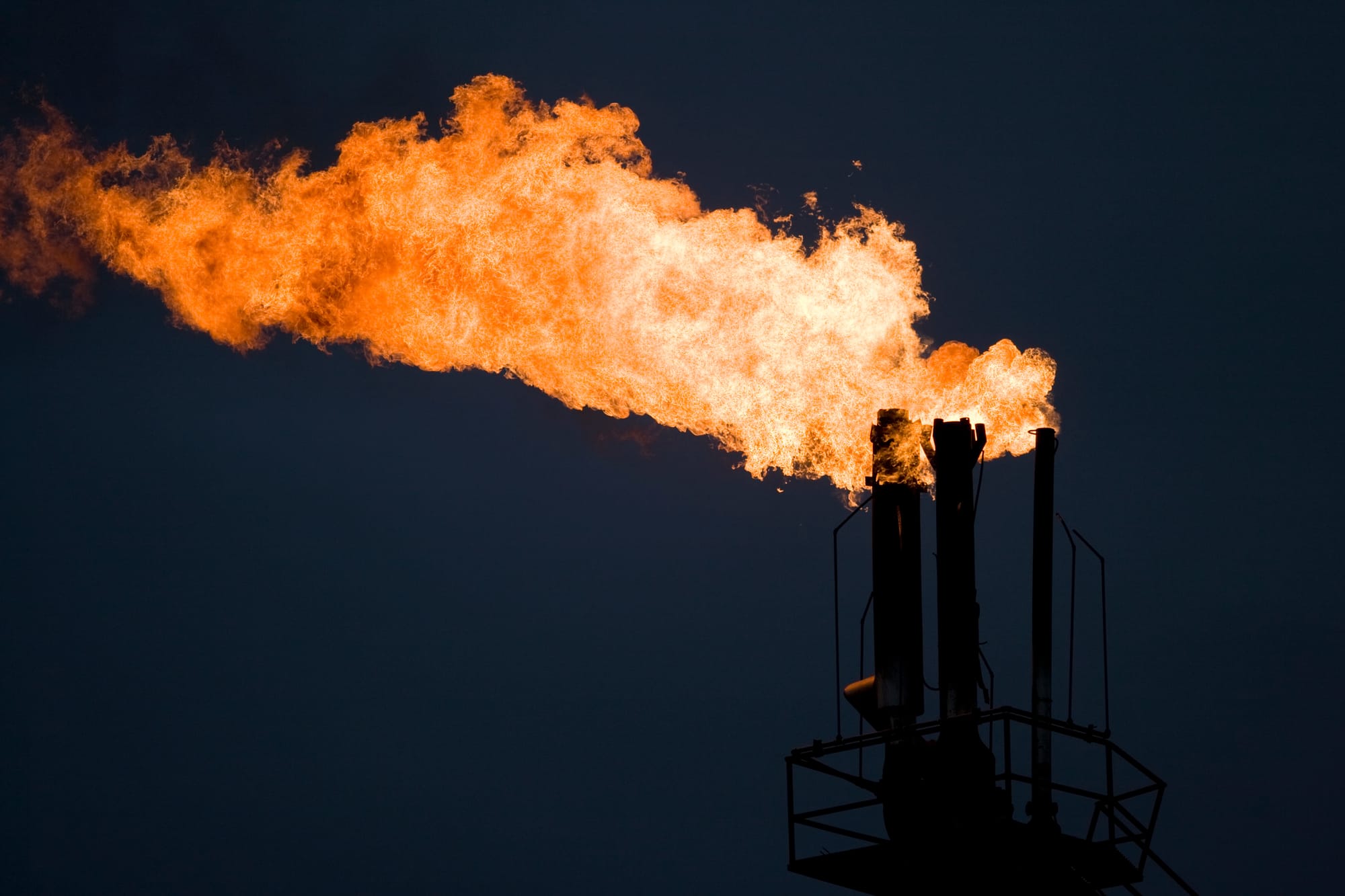
While Alaska’s oil industry isn’t likely to be upended by the anticipated U.S. takeover of Venezuela’s oil industry — good news to those who’ve been watching the oil prices ahead of this year’s budget process (though that's not to say it won't be disrupted by a whole litany of other forces) — Watson stressed that it doesn’t discount the importance of what’s happening there.
“It’s not that this is an inconsequential event, but it may not be consequential for Alaska’s oil market in the short-term, medium-term,” he said. “There are many reasons that it might be consequential for regional oil markets, for people in Venezuela and maybe Gulf Coast oil refiners in the United States, but it’s difficult to see the impacts of that on global oil markets, at least in the next couple of years.”
“I think that the most important regional impact is what this means for Latin America and what this means for Venezuela, particularly, right? This is going to have big impacts on that country, politically and economically. Oil represents something like 90% of that country’s exports, and so I think not to get lost in the sauce here is the fact that there’s been a major regime change in a large Latin American country,” he said. “This is going to have big social, political, and economic implications for that country in particular. And those are, I think, the first-order impacts here.”
Stay tuned.
Reading list
 Hannah Flor
 Matt Acuña Buxton
 Dermot Cole
 Dermot Cole
 James Brooks
 Amy Bushatz
 Matt Acuña Buxton
Weekend watching
It seems like everywhere we turn lately, we're confronted with some new awful headline, but it's critically important to remember that what we read in the headlines is just a small part of the world we live in. We shouldn't lose sight of the positive, the good and the joy in the world. OPB's Oregon Field Guide has been one of my favorite go-tos for feel-a-little-bit-better-about-the-world stories.
Have a nice weekend, y'all.

The Alaska Memo Newsletter
Join the newsletter to receive the latest updates in your inbox.