A shocking arrest rattles the Legislature and a long-overdue oil tax rewrite lands
It's a bigger problem than just the Anchorage Young Republicans or even the Alaska Republican Party.

Good morning, Alaska. It's Monday. Day 35 of the legislative session.
In this edition: The Alaska Legislature was rocked over the weekend with the news that a legislative staffer had been arrested and labeled a "compulsive child exploitation offender" by the feds. While it may be tempting to see this as an isolated incident, it's important to view it in the broader context of the lack of accountability and consequences for high-profile offenders. Meanwhile, the Senate is pushing ahead with a big oil tax rewrite that's exciting for some extremely wonky reasons. Also, the reading list.
Current mood: 😡
A shocking arrest rattles the Legislature
There are few things that can truly shock me in Alaska politics anymore, but the arrest Friday of now-former legislative staffer Craig Scott Valdez for heinous sex crimes against children is one of them.
Valdez, the now-former chief-of-staff for Sutton Republican Sen. George Rauscher and the now-former chair of the Anchorage Young Republicans, was indicted last week on four counts involving sex trafficking and the production and possession of child sex abuse material. Investigators believe the 36-year-old Anchorage resident has a history of being a “compulsive child exploitation offender” in the Juneau and Anchorage areas before an October 2025 incident – he lured a 15-year-old girl to his home on his birthday with the intention to abuse her – landed him on investigators’ radar (why he wasn't arrested at the time is a good question that needs answering). He's worked in the Legislature for years, and the feds say they believe they have identified at least 11 potential underage victims through two accounts he used. Because of the scope and callousness of the alleged crimes, the feds are asking to keep him detained without bail ahead of his first scheduled court appearance this week.
In the big picture, it'd be inviting to want to see this as the isolated actions of a sick individual, but, as right-wing Republican blogger Suzanne Downing put it in an op-ed: "It is a flashing red warning light for the Alaska Young Republicans and, by extension, the Republican Party brand in this state." She blames the frat-boy party culture around Alaska's Young Republican groups for the loose morals threatening the GOP's image of "family values, law and order, and personal responsibility."
I'd argue that it's a bigger problem than just the Anchorage Young Republicans or even the Alaska Republican Party. Look at who's in the White House, the credible allegations facing him and his administration's increasingly absurd efforts to downplay and deny red flag after red flag. When the party's leader is accused of doing the same, free of consequences, it's unsurprising to see others do the same.
And even zooming out beyond the president, to me, it speaks to a problem with the kind of environment that Republicans have constructed for themselves over the past decades, where shouting about your morals is more important than practicing them. Where winning and amassing wealth and power are the only goals. Where bad behavior was not just tolerated but actively covered up as a useful piece of mutually assured destruction for the in-crowd. Where accountability depends on your status, wealth and connections. It's not surprising to look back and see that the supposedly moral core of the conservative movement has been hollowed out.
The fact that Valdez had a troubling run-in with the police, but chose to act as if nothing happened, continuing to work for the Legislature and attend GOP events (he was reportedly on his way to a D.C. event when the feds nabbed him in Juneau), says a lot about this 36-year-old political operative's mindset.
Where things go from here isn't clear, but it looks like the charges against Valdez are not the end of it. The FBI is currently asking for victims or people with any knowledge of his actions to come forward:
If anyone has information concerning Valdez’s alleged actions or may have encountered someone using the name “Craig Scott Valdez” or usernames “NONAME20233132” or “DOCHANK” in person or online, please contact the FBI Anchorage Field Office at (907) 276-4441 or anonymously at tips.fbi.gov.
More coverage: Alaska Public Media, ADN, Alaska Beacon, Juneau Independent, KTUU
A long-overdue oil tax rewrite lands
The Senate Resources Committee last week rolled out a massive rewrite of the state's oil tax system as part of its earlier rewrite of the governor's tax bill. Not only are they doing away with the governor's proposed sales tax system, but they're also doing away with the state's long-outdated net profits tax system in an effort to both simplify the system and greatly increase the state's share of oil wealth.
The changes made by the Senate Resources Committee include a shift to a gross profits tax aimed at bringing the total government take from the oil industry to about a third. What that'd mean for revenue wasn't immediately clear, but even setting aside the budget implications, the rewrite makes a lot of sense.
Let's get into the wonky reasons why a change in the tax system is exciting.
The state's oil tax system is, putting it simply, complicated, and when it comes to complexity, the state is rarely the winner. A holdover from a time when the state was directly investing in oil development through a capital credits system, the state operates on a net profits tax, which requires a complicated, bureaucratically burdensome accounting system in which companies report their expenses and the state tries its best to audit those expenses before the statute of limitations to ensure it's getting what it's due.
Typically, this is an adversarial process that can take years to settle, with battles that reach all the way down to whether rented cars in foreign countries count toward operating costs in Alaska. And when it's the best accountants that oil money can buy versus a perpetually underresourced Department of Revenue, it really takes a bulldog mindset for the state to get what it's due under the law.
Which brings us to the unfortunate political levers in the system.
 Matt Acuña Buxton
Last year, red flags were raised about the Dunleavy administration's suspiciously secretive handling of oil tax settlements – the last step of the system's audit process where they determine just how much the oil companies need to actually pay in taxes – amid allegations that then Revenue Commissioner Adam Crum directed the state to take an industry-friendly reading of the law. During the time that the allegedly friendly approach was in place, the state's tax settlements plummeted; that much we can say for sure. While there may have been external factors behind that fall-off, the administration's secrecy isn't helping.
Last year, Sen. Bill Wielechowski – who had a hand in the latest oil tax rewrite – said that the precipitous fall-off in oil tax settlements was fishy, given the way the state's oil and gas tax system is designed.
"It would almost have to be for the first time in state history that the oil industry is providing us with completely clean accounting information, and that’s not to diminish the industry or anything … But historically, when you look at the numbers that have resulted from the tax settlements and royalty settlements, what you find is that, yeah, the industry has taken an oil industry-friendly interpretation of the law every time," he said. "And now, all of a sudden, in the last three or four years, they're not doing that anymore?”
So, while legislators are still trying to get to the bottom of what happened to the settlements, the move to a gross tax system would simplify tax collection from the industry while taking away a lever for bad actors to use in the future.
Conflicted consultants
Interestingly, the Senate Finance Committee released and advanced the changes without the rigamarole of inviting highly paid, possibly conflicted consultants to give a bland, nonspecific overview of the system. It's a point that oil industry folks are already screaming about, but I think it reflects growing dissatisfaction with the drawn-out, supposedly analytical process that seems designed to hamper change.
Companies are always going to oppose any form of taxation, issuing ominous warnings about its impact on investment and the economy (a point that carries less weight given that about 40% of oil industry workers are non-residents). That's not a surprise, and legislators on the Senate Resources Committee have been hearing this for years. But I think there's also growing skepticism that the consultants hired to help guide decision-making are working in the state's best interest.
At the start of the legislative session, the Senate Resources Committee held a particularly tense hearing with consultants from GaffneyCline, who have long advised legislators on oil and gas matters and the governor's AKLNG project. The hearing started with an acknowledgement that GaffneyCline's parent company, Baker Hughes, is now a direct investor in the AKLNG project and has a vested interest in seeing that pushed through on favorable terms. The consultants insisted that there were adequate ethical barriers, but legislators didn't seem keen to take their word for it.
"I'm struggling to feel comfortable that there's actually a separation," said Sen. Cathy Geissel, the Anchorage Republican who chairs the Senate Resources Committee, at the Jan. 23 hearing. "That you are actually advising us to the benefit of us, versus Baker Hughes, who owns you."
While consultants insisted they could fairly help the state advocate for itself in the negotiations, it was notable that some of their initial analyses focused on cutting local property taxes – a key priority for the AKLNG project's investors.
All that may be adjacent to oil and gas taxes, but I think it's sent a clear message to legislators that only they can be counted on to act in the state's best interest.
Stay tuned.
Reading list
 Corinne Smith
 Iris Samuels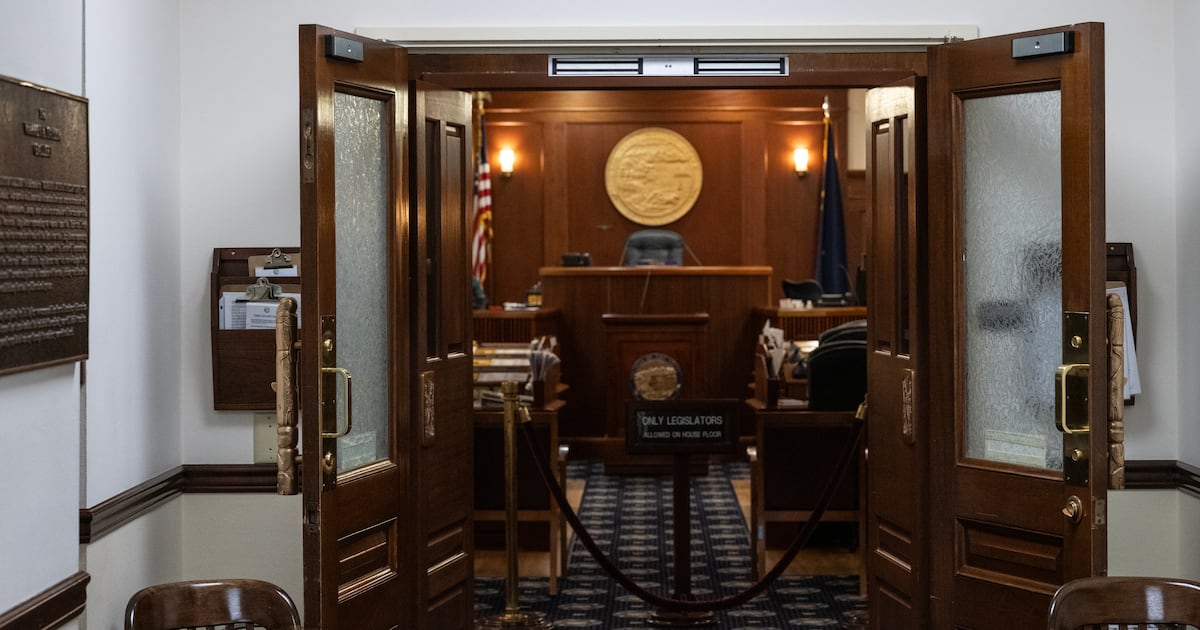
 Alex DeMarban
 Amy Bushatz
 Augusta McDonnell
 Guest contributor
 Corinne Smith

The Alaska Memo Newsletter
Join the newsletter to receive the latest updates in your inbox.