Republican infighting, the fiscal scree slope, and the troubling practice of exporting inmates, importing gangs could resume
It's the 90th day of the session, and have we really figured anything out?


Hello, Alaska! It's Monday, Day 90 of the legislative session.
In this edition: The Alaska Press Club's annual conference was this weekend, delivering a much-needed infusion of passion for and optimism about Alaska's media landscape. There's a new episode of Hello Alaska out. Meanwhile, let's take a deeper look into Republican infighting over a frankly milquetoast elections bill, as well as the latest efforts to ship inmates out of state and what happened the last time we did that. Also, the reading list.
Current mood: 🤔
Helloooooooooo Alaaaaska!
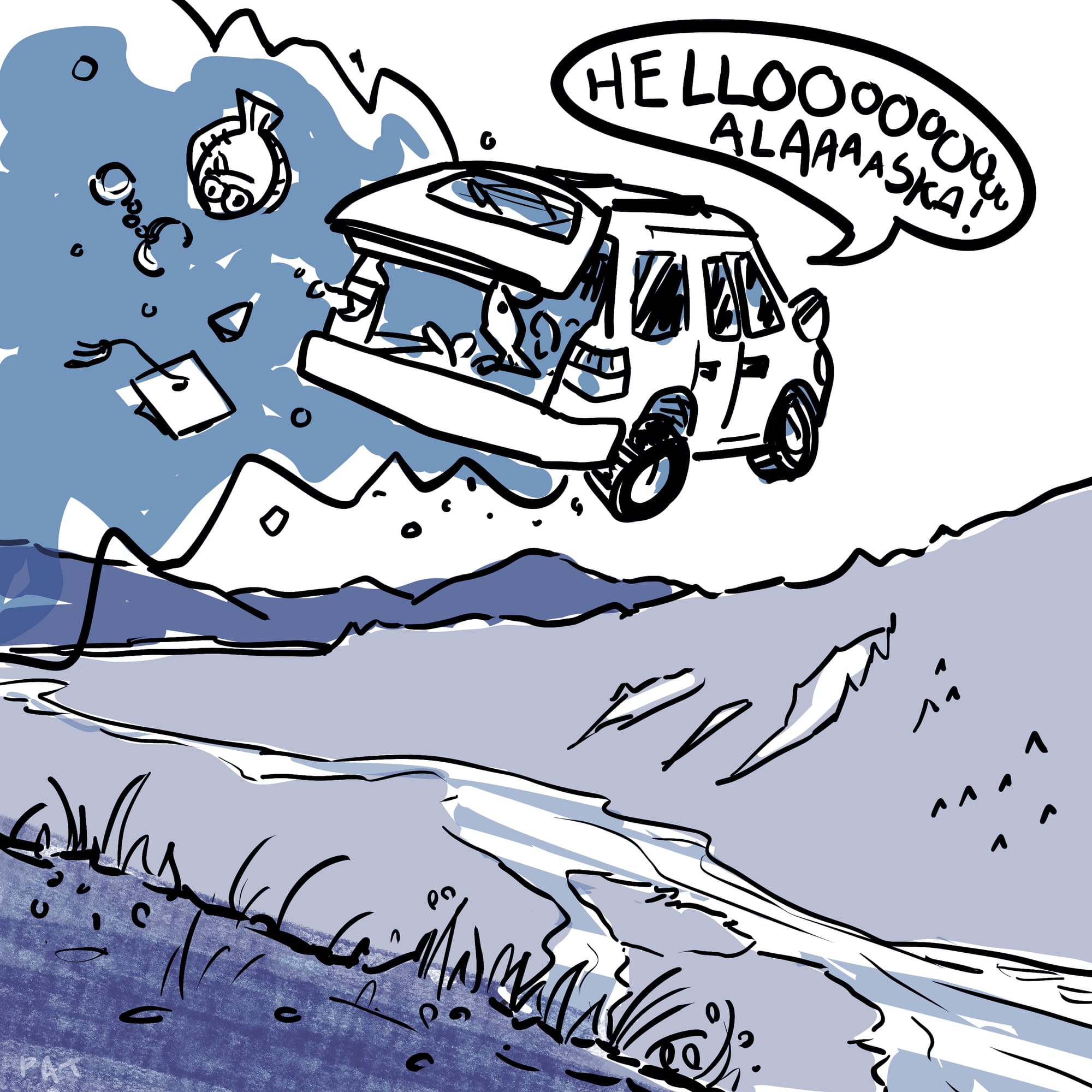
The reboot of Hello Alaska! continued on last week with our second episode, where Pat and I broke down the House passing the operating budget before taking a wide zoom out to the larger budgetary problems facing the state, finding it's a little less a fiscal cliff and more a fiscal scree slope.
Extreme-right Republican takes nasty friendly fire over support for bipartisan election bill
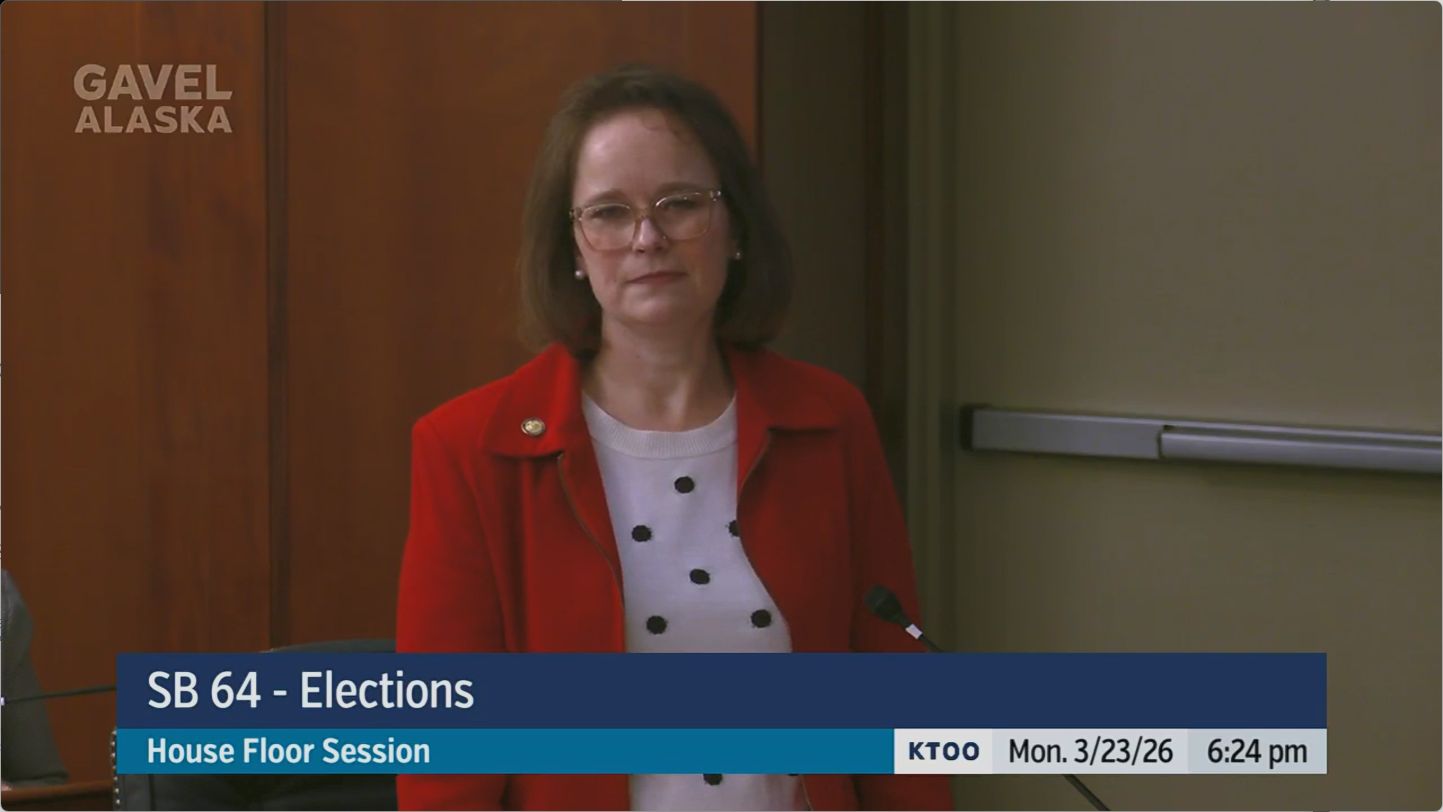
Let's be honest. The elections bill approved by the Alaska Legislature earlier this year isn't some revolutionary step forward. In fact, it sidesteps one of the biggest barriers to voting facing predominantly Alaska Native voters in rural communities – the meaningless witness signature that, coincidentally, leads to an outsized rejection of by-mail ballots from rural Alaska – with the ostensibly noble goal of reaching a bipartisan consensus. Nor does it wade into conservative bugaboos like killing automatic voter registration, ending ranked-choice voting or enacting strict, poll tax-style ID requirements that are the latest rage among right-wingers.
Instead, the frankly painfully centrist Senate Bill 64 tries to split the difference, advancing broadly acceptable things like making it easier to deactivate voters who've clearly moved to other states, providing postage for mail-in ballots and creating a tracking and curing system for ballots. It also throws a bone to rural communities by creating a position whose job would be to ensure polling places actually open on election day – something rural voters cannot always rely on.
Ultimately, the changes didn't win over many Republicans, who remain convinced that anything Democrats can stomach regarding election reform is verboten.
It did get the vote of Homer Republican Rep. Sarah Vance, who's been working on election reforms for many years and argued it's a well-intentioned, narrowly focused measure largely based on Republicans’ earlier attempts to find some common ground on elections, along with Reps. Jeremy Bynum and Kevin McCabe.
Her support has landed her – not Bynum or McCabe, which I'm sure is just an oversight – squarely in the crosshairs of Republican media, with some particularly salacious personal attacks on Vance as the bill awaits action by Dunleavy.
“Rep. Sarah Vance, once a conservative Republican, got drawn in by Sen. Bill Wielechowski, a clever Democrat, to cosponsor this bill,” wrote Suzanne Downing, the former owner of Must Read Alaska and de facto mouthpiece of a large faction of the Alaska Republican Party, on her website The Alaska Story. “(Another writer critical of the bill) was too kind calling this bill a love child of the hallway hustlers. SB 64 is the equivalent of a legislative demon child of Vance and Wielechowski.”
Wielechowski, Downing reasons, must have quite literally wooed Vance, writing that the Anchorage Democrat knows "how to make the women feel pretty."
Vance fired back in a particularly defiant video posted to social media.
“I never thought that I would hear misogyny come from Suzanne Downing, but here we are,” she said. “She has published several hit pieces against me, and today takes the cake. She not only insulted me as a legislator, as a woman, but she essentially wrote that I was convinced that I was pretty enough to vote for this bill. That’s insulting on so many levels, and I’ve had enough.”
She criticizes Downing's breathless and inflammatory reporting, suggesting it might be tied to the party's broader struggles.
"To the Republican Party, you need to do some soul searching, because you wonder and you ask yourself, Why people aren’t joining the party? … It’s because of these political games," Vance said. "Alaskans are tired of it, and I’m going to continue this fight representing good Alaskans who could give a rat’s rear end about the party, because they want good law.”
What's going on?
The battle of words marks yet another fracture within the Alaska Republican Party as the various factions clash over how to adapt to the voter-approved open primary system. One of the biggest impacts of eliminating semi-closed partisan primaries is that parties and their highly mobilized primary voters can no longer play the same gatekeeping role in selecting candidates, meaning they have less leverage to keep legislators in line. That’s given way to legislators who are generally more interested in making incremental progress on areas that are broadly agreed upon — like last year’s school funding fight — than in playing hyper-partisan, zero-sum politics.
It also reflects some rather outdated thinking about elections.
Downing’s main complaint about Senate Bill 64 doesn’t seem to be with any of the mechanisms, but the idea that helping Alaska Native voters with the structural barriers they've long faced to vote would “tilt the playing field to left field” and “institutionalize new layers of influence for rural Alaska in the election process.”
That, of course, relies on the assumption that rural voters are solidly progressive, when 2024 showed some pretty dramatic shifts to the right.
The same argument was behind Republicans killing an elections bill in 2024 (a move that Vance supported at the time), when then-House Speaker Cathy Tilton said fixing the high rejection rate of rural by-mail ballots predominantly cast by Alaska Native voters was unacceptable because it could buoy Democratic U.S. Rep. Mary Peltola’s chances at re-election. Peltola ultimately lost, coincidentally seeing a drop-off in support from rural communities as they shifted to the right.
So, in simpler terms, the fundamental issue between Vance and her detractors is whether election reforms should be advanced only if they help Republicans.
Stay tuned.
More coverage: The Alaska Current, Rep. Kevin McCabe's editorial telling Dunleavy to sign SB 64
Lawmakers pitch shipping inmates Outside — a practice that once helped gangs establish footholds in Alaska
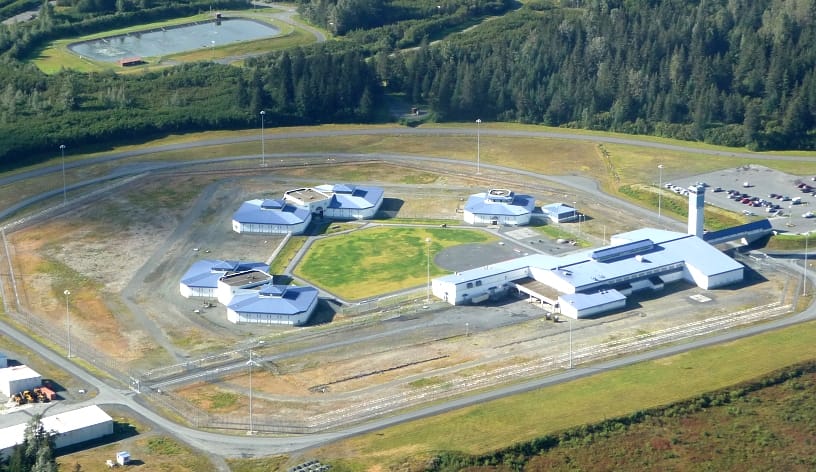
Alaska once sent as many as a third of its inmates to private Outside prisons — a practice that wound down in 2012 because it cut off connections to communities and served as a key inroad for violent prison gangs — and it may do so again.
The Senate Finance Committee on Wednesday heard Senate Bill 126, by Wasilla Republican Sen. Rob Yundt, that would allow the state to resume the practice. The proposal would allow the state to move any prisoner with a term of over seven years to an Outside prison, where it costs a third to a quarter of the $200 it costs to keep them incarcerated in-state.
“We could save a lot of money,” he told the committee during the bill introduction, noting that the rules would impact about 800 of the state’s more than 4,000 prisoners who are mostly serving for violent crimes. “It takes some very bad behavior to get that much time.”
While much of Alaska’s state budget has been stagnant or seen cuts during Republican Gov. Mike Dunleavy’s time in office, the state’s prison budget has grown by an eye-popping 60%, a matter that wasn’t helped by the governor requesting $24 million in additional funding this spring to cover thousands of hours of overtime due to chronic understaffing.
The idea has some momentum, backed by Senate Finance Committee co-chairs Sens. Lyman Hoffman and Bert Stedman, who floated it earlier this year.
“I don’t want to sound cold-hearted or cold-blooded about all this, but quite frankly, in my opinion, I have no real issue with sending them out of state, as long as we can protect our prisoners from bad habits learned,” said Stedman, a Sitka Republican. “We have come to a time in our budget on cost controls. We need to have a serious discussion on this issue and encourage control of that department … It’s alarming the growth in the Corrections Department over the last 10 or so years.”
But not everyone is a fan.
Alaska has a long and problematic history of warehousing inmates in private prisons in the Lower 48, and wound down the practice in 2012 out of growing concerns that the savings weren’t worth the harm it was doing to the state. Opponents argued that severing inmates’ connections to their home communities makes rehabilitation and reintegration more difficult, increasing the likelihood they’ll commit new crimes on release.
Others have warned that the practice of warehousing inmates alongside Lower 48 prisoners was largely responsible for the arrival of violent gangs like the 1488s, the Lo Lifes and the Native Brotherhood. Alaska inmates would get initiated into the groups, which saw Alaska as fresh turf to expand.
In 2019, the FBI arrested 18 members of the violent white supremacist 1488s gang for murder, kidnapping and racketeering, leading to a life sentence for its leader, a 45-year-old man who legally changed his name to “Filthy Fuhrer.” According to the prosecutors, the gang specifically gained a foothold in the state when Alaskan inmates were being housed in Arizona and Colorado.
Much of that was of concern to Juneau Democratic Sen. Jesse Kiehl, who warned that the Legislature could be setting itself up for broader unintended consequences.
“We imported gangs to Alaska that we didn’t have here before,” he said. “Our past experience with private prisons is more severe crime in Alaska, more severe drug problems in Alaska, and we, we paid to import that.”
To that end, Sen. Yundt has included a provision in the bill requiring any contract with an Outside prison to prevent Alaska inmates from mingling with other inmates. Whether that’s actually realistic and what it’d mean for the hoped-for cost reductions wasn’t discussed at the hearing.
“The last thing we want to do is send our Alaskan inmates down, put them into a facility, or a wing of a facility with folks from other states, where they could possibly start to learn about other things they didn’t know,” Yundt said. “I think it would be important to keep our Alaskan inmates together and then bring them home when they have two years remaining, so that we can start getting them into the workforce again.”
The committee heard only opposition during its short testimony session on Wednesday, which included opposition from the head of the ACLU of Alaska as well as two former inmates who experienced out-of-state incarceration firsthand.
“We were housed with Oregon, New Mexico, the American Virgin Islands and the Washington DC prisoners. From all these people, we learned how to be prisoners. We learned how to live by the founding code,” said Chet Adkins, who served nearly 30 years in prison. “When we got to the Red Rock Correctional Center, where we were housed with the California contract, is when the real teaching got started, because we were housed with MS-13, we were housed with 1488, so that’s where a lot of the gang issues that you have here came from.”
He noted that private prisons are run to maximize profits, which means pay can be extraordinarily low for corrections officers, sometimes as low as $10 an hour. That, he warned, makes it easier for gangs to bribe and corrupt corrections officers to sneak in things like drugs and other contraband.
“If you’re talking about sending people back out, you’re about to throw gas on the fire,” he said. “You might be saving money in the short term, but you can cause yourself a whole lot more problems in the long-term … If you want to start saving money, start dealing with the problem.”
He said the Legislature would be better served by investing in things that prevent people from committing crimes in the first place or from committing new crimes.
Yundt seemed to be convinced those problems could be avoided.
“I don’t think any (contract) should be allowed to go forward if it includes cross-pollination,” he said, stressing that he didn’t take pleasure in disrupting the lives of the prisoners and potentially exposing Alaska to more problems, but that it made sense to keep the budget in check. “There’s nothing enjoyable about this for me. I don’t enjoy this. This is just where we are, and this is the reality, reality of which our budget exists, and it’s an option.”
The bill is currently in the Senate Finance Committee and would still need to be approved by the House and signed into law before it becomes official. That said, the Dunleavy administration has already tried to restart shipping inmates Outside but was largely opposed by legislators, with several noting that the budget director who was driving for the change had close connections to the private prison industry.
More coverage: Alaska Public, Alaska Current, ADN Editorial Board

This story was edited with help from Victoria Petersen and The Alaska Current. Everything else is mine, including the typoes.
More from the Current
 Holly Todd
 Rachel Levy
 Dermot Cole
Reading list
Haley Lehman Hannah Flor
 Amy Bushatz
 Dermot Cole
 Dermot Cole

The Alaska Memo Newsletter
Join the newsletter to receive the latest updates in your inbox.