Alaska's U.S. Senate primary will have two Sullivans — but will it have two Dans?
At no point did it seem like the state's case was a winning one, but ruling doesn't quite close the book on the Division of Elections' efforts to minimize the perceived threat to GOP control of the U.S. Senate.

Good morning, Alaska!
In this edition: Petersburg Dan Sullivan is back on the ballot after a Superior Court judge ruled the state was wrong to block him from running over allegations that he was trying to confuse voters, and the Alaska Supreme Court affirmed the decision after a weekend appeal. At no point did it seem like the state's case — which is so clearly cobbled together in defense of U.S. Sen. Dan Sullivan — was a winning one, but ruling doesn't quite close the book on the Division of Elections' efforts to minimize the perceived threat to GOP control of the U.S. Senate.
Current mood: 🫣
Alaska's U.S. Senate primary will have two Sullivans — but will it have two Dans?
Alaska's primary election ballot will have two Sullivans.
It's not clear whether it'll be two Dan Sullivans.
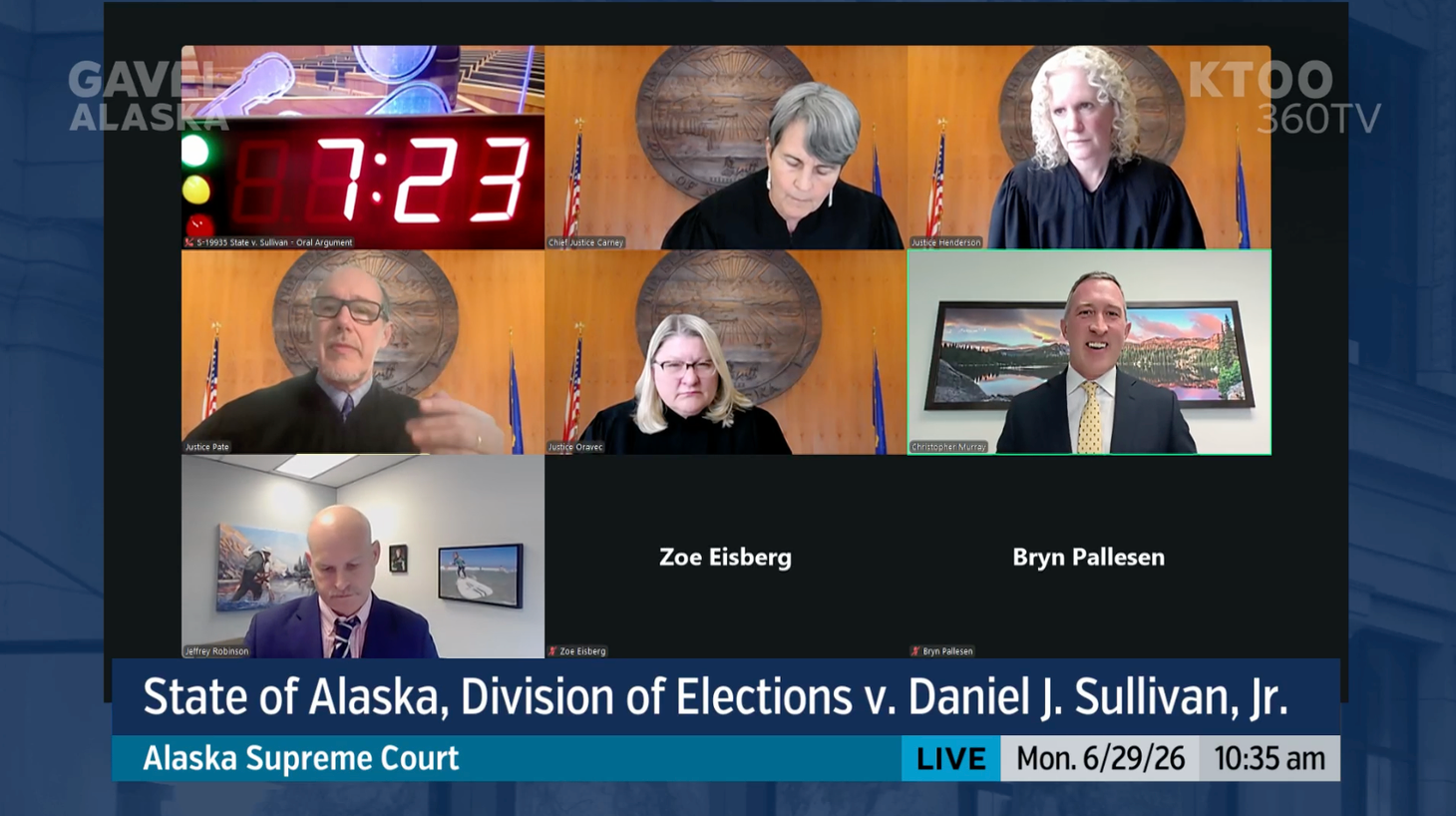
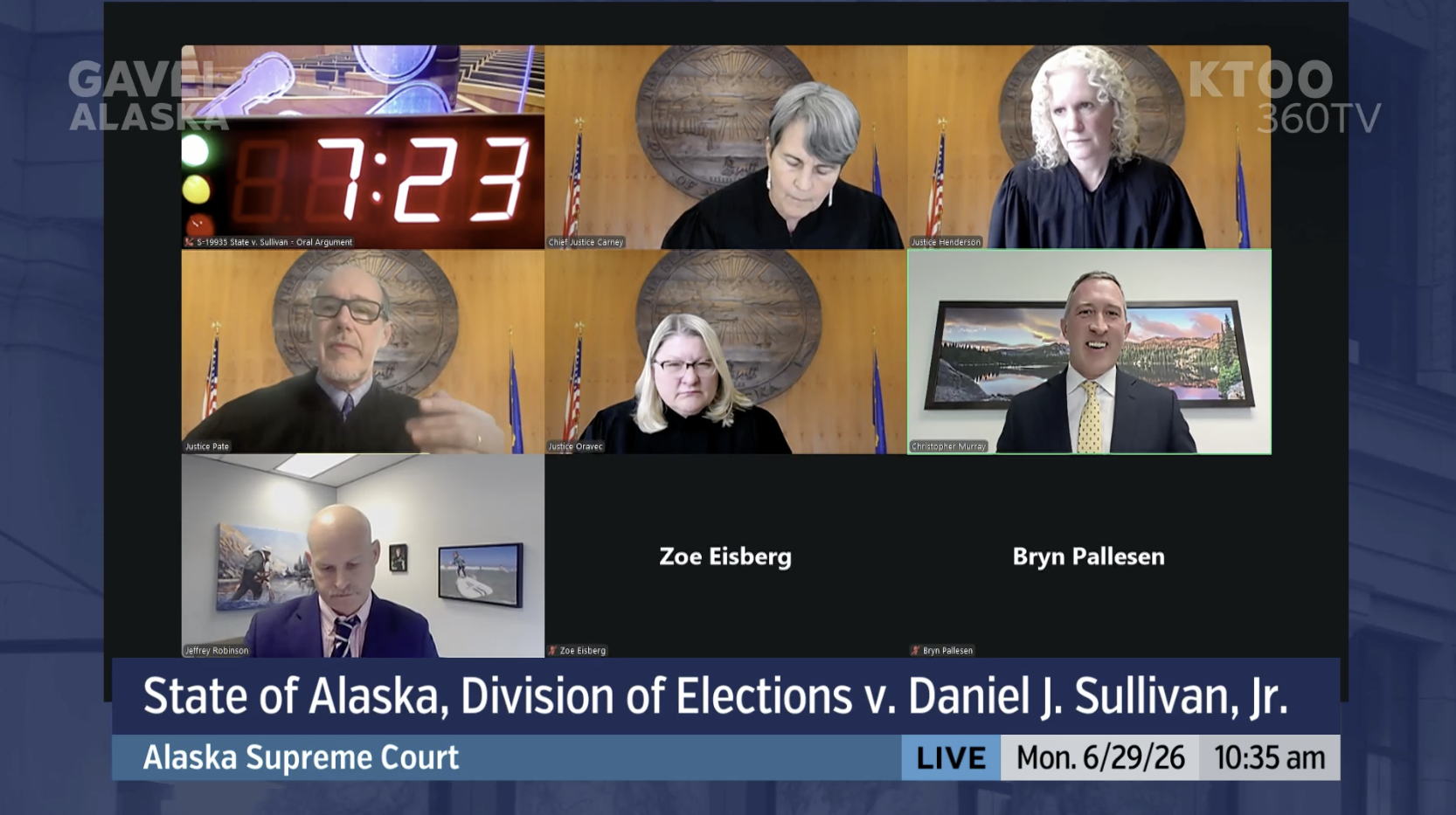
The Alaska Supreme Court on Monday upheld the Superior Court ruling ordering the state to reinstate a Petersburg man named Dan Sullivan to the race against U.S. Sen. Dan Sullivan, finding the state lacked the legal authority to remove him. Just minutes into Monday morning's oral arguments, it was readily apparent that the Supreme Court justices were skeptical of the state's connect-the-dots reasoning behind blocking Petersburg Sullivan.
“Where’s the statutory authority to divine the intent of a candidate?” asked Justice Aimee Oravec, echoing questions of several justices during the roughly hourlong arguments. “There’s no statute that guides the division as to what they should be considering.”
With Sen. Sullivan heading into what's expected to be a competitive race with former Democratic U.S. Rep. Mary Peltola, he and Republicans have been quick to claim that Petersburg Sullivan is part of a sprawling conspiracy by congressional Democrats to confuse voters. No evidence of coordination ever materialized, but that didn't stop the Division of Elections from finding that the circumstances — such as Petersburg Sullivan going by "Dan" or registering as a Republican — suggested he was running for the wrong reasons, thereby justifying his removal.
Justice Jennifer Henderson called the state’s apparent standards for determining whether a candidate is acting in good or bad faith “amorphous.”
“It seems frankly like a broad amorphous concept of what a candidate’s intent needs to be,” she said. “It seems like it’s very appropriate for us to worry about what is encompassed by that.”
The state has struggled to explain its authority to take such a drastic action as blocking someone from running for office, especially when far more real rules suggest the issue of confusion could be fixed, say, by using a middle initial.
"The remedy that the division has chosen is the most extreme possible remedy," asked Chief Justice Susan Carney. "Why not use one of the lesser?"
Chris Murray, a conservative Lower 48 attorney whose notable cases include shielding the RNC from the J6 investigations, conceded that while the state has alternatives to differentiating two people with the same name, it is under no obligation to do so if it believes the candidate is running with the intent to confuse.
His legal argument is cobbled together from a handful of what Justice Jude Pate called "inferences" that largely rely on a section of election regulations focused less on intent and more on paper color, font sizes and legibility.
"I think that we could certainly concede that ... you have to agree with our read of the statutes to get there, right?" he said.
They did not.
Just hours after oral arguments, the court affirmed Superior Court Judge Thomas Matthews' ruling that reversed the Division of Elections' disqualification.
But that's likely not the end of it.
A Dan by any other name
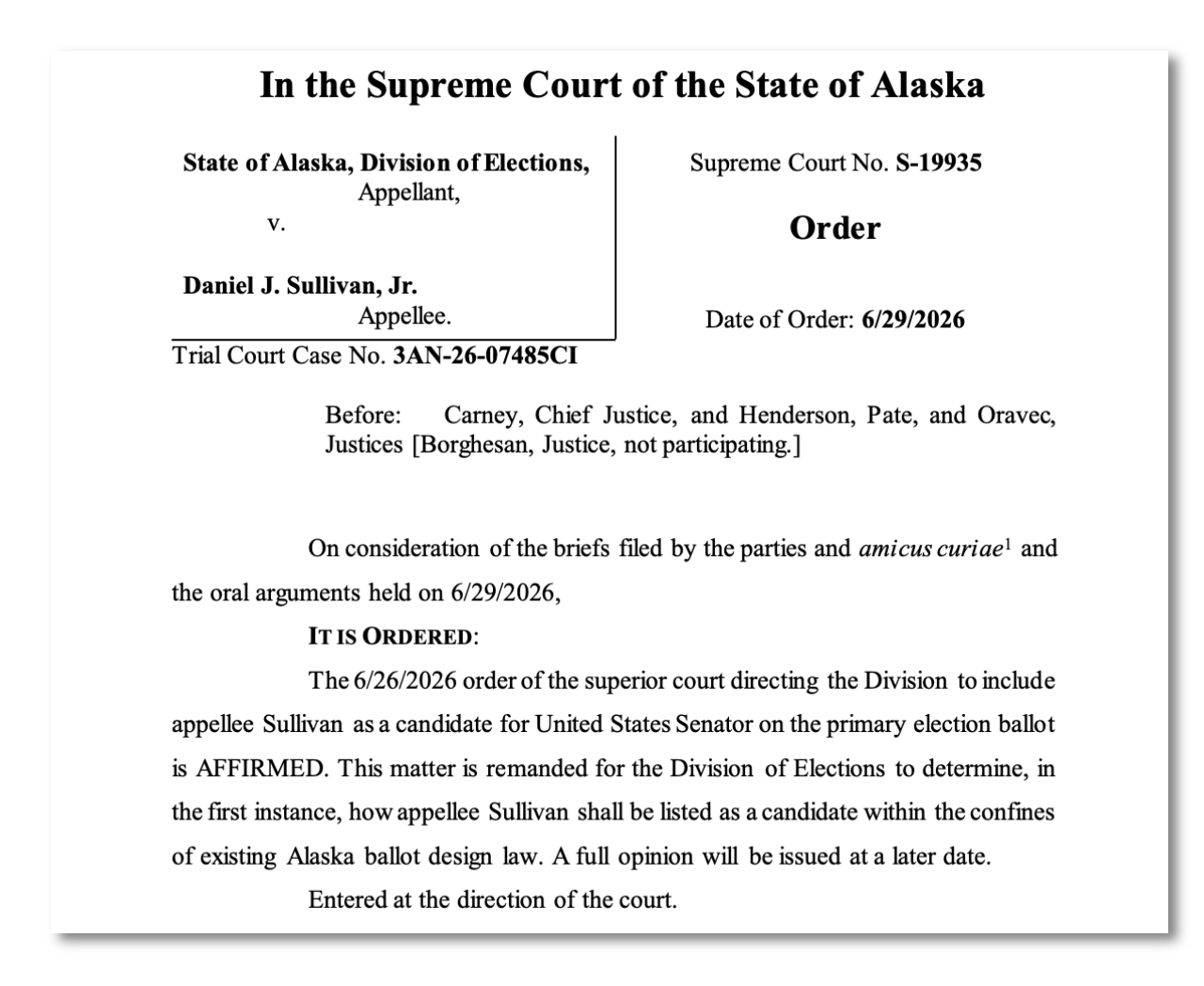
The ruling leaves it up to the Division of Elections to determine how Petersburg Sullivan will appear on the ballot, an issue that, given the foregone nature of the underlying case, dominated much of Monday's oral arguments. While the team for Petersburg Sullivan argues that whatever is done is done fairly — that, basically, the state doesn't have the right to list Petersburg Sullivan as "Daniel" if it lets U.S. Sen. Sullivan remain "Dan" — the state argued that it should be left to them.
The justices seemed largely inclined to follow that process.
“The problem is the Division hasn’t acted,” Justice Oravec said. “The division has all the authority to make the initial determination. … Maybe it’s Daniel J. Sullivan Jr, maybe it’s Daniel James Sullivan Jr. non-incumbent, but we don’t know what the division would do if they were required to include him on the ballot.”
That uncertainty seems to be the last hope that the state is holding onto in its effort to minimize whatever perceived harm that Petersburg Sullivan will have on Sen. Sullivan’s re-election bid. Murray argued the state should be given the first opportunity to design the ballot without court oversight, then Petersburg Sullivan or another group could appeal that decision in another round of court proceedings.
It’s unclear how this latest potential round of uncertainty works with the state’s claimed deadline of today for printing ballots, though playing out the clock may very well be the goal.
In prior correspondence, the state had suggested listing him under his full name, Daniel James Sullivan, Jr., with his party — Alaska Republican Party — and a non-incumbent label.
At last week’s oral arguments, Murray argued that a middle initial wasn’t good enough — even though he seemed to indicate it would be good enough if the candidate were deemed to be running with the right intent.
That has since shifted, and in the latest court filing, the state suggested it may even go so far as to change or hide his party affiliation on the ballot. In one filing, the state suggests it would label Petersburg Sullivan as a nonpartisan candidate — which the justices noted wouldn’t accurately reflect his affiliation — but Murray said they may just remove his political party affiliation altogether.
Jeffrey Robinson, the Alaska-based attorney representing Petersburg Sullivan, argued that the Alaska Supreme Court should provide clear guidance to the Division of Elections to ensure it’s at least fair. He said what he’s worried about is the state continuing to pull the strings to give Sen. Sullivan an unfair advantage on the ballot, as it has already been doing with trying to block Petersburg Sullivan from the ballot.
“We trust that they will exercise good faith in doing so in a manner that doesn’t elevate a particular candidate or prejudice a particular candidate,” he said when asked if both men would have to be listed as Dan or whether one could be listed as Daniel.
But he added that the whole thing stems from what he believes is an illegal and unconstitutional effort by elections officials to set an additional “good-faith” standard for candidate races. The whole process questioning Petersburg Sullivan was wrong from the get-go, so he argued that it shouldn’t continue to guide the Division of Elections’ handling of his candidacy.
“That goes down to the basic fact that what the division has done here is added a substantive fourth qualification to the qualifications clause that just doesn’t exist, is impermissible under the US Constitution,” he said, “and there’s no statutory or regulatory support for it. Period.”
The Alaska Supreme Court wasn't entirely silent on the matter in its ruling, writing that while the ballot design is up to the Division of Elections, "Sullivan shall be listed as a candidate within the confines of existing Alaska ballot design law."
Stay tuned.

The Alaska Memo Newsletter
Join the newsletter to receive the latest updates in your inbox.