Dan J. Sullivan case may boil down to a technicality — even if the state's case is baloney
There's a bit of a wrinkle in the case that could make what looks pretty cut-and-dried a little more complicated

Hello Alaska! It's Thursday.
In this edition: If Alaska election officials were looking for a homerun case that they were right to remove a Petersburg man named Dan J. Sullivan from challenging Republican U.S. Sen. Dan S. Sullivan, they are going to need a better case than they put on in Anchorage Superior Court today. The proof is still a lot of "seems" and "appears," while the legal authority essentially boils down to a "c'mon, trust us." But there's a bit of a wrinkle in the case that could make what looks pretty cut-and-dried a little more complicated. Let's dig into the hearing and the Alaska Division of Elections' rather overtly partisan choice for representation.
Current mood: 😬
Juneau LGBTQ+ advocate Lin Davis on living life openly and joyfully
The Dan J. Sullivan case may boil down to a technicality — even if the state's case is baloney
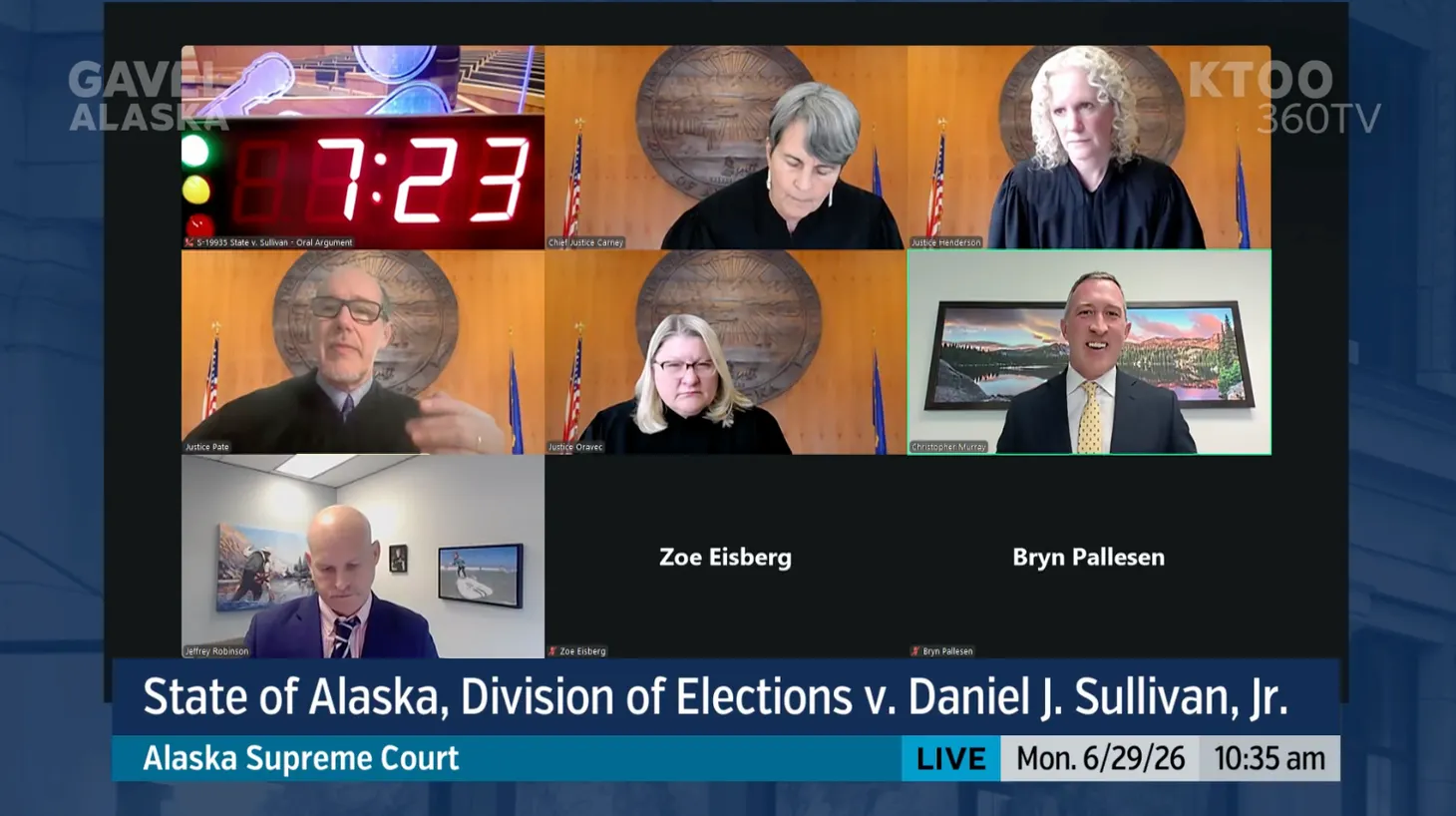
After an hour of oral arguments in the Anchorage Superior Court, it's pretty clear Alaska election officials are on precarious legal footing over their decision to block a Petersburg man named Dan J. Sullivan from running against Republican U.S. Sen. Dan S. Sullivan.
Their evidence that he's running as a "sham candidate" is largely based on words like "seems" and "appears" rather than hard proof; they can't point to another case where a U.S. Senate candidate was disqualified for having the same name and they couldn't really articulate the legal framework that gave them the right to disqualify a candidate due to confusion rather than, say, using a middle name.
But none of that may ultimately decide whether a second Sullivan appears on the 2026 primary election ballot.
That's because a major question in the case isn't about whether Petersburg Sullivan is running as a "sham" candidate — as Sen. Sullivan, party Republicans and election officials have suggested and accept as true — or even whether the state overstepped the bounds of the U.S. Constitution's strict and straightforward requirements for holding a U.S. Senate seat, but a technical issue that stems from the case being an appeal rather than a traditional lawsuit.
As Anchorage Superior Court Judge Thomas Matthews said at the outset of arguments, the appeals process positions the state and the court differently than a traditional lawsuit.
"This is an appeal. It's not a straight civil case," he said. "Both parties have argued about the standard of review that I should apply, and the parties don't seem to agree."
That's something he'll need to figure out fast. Given that ballots are set to begin printing early next week for the Aug. 18 primary election, he said he will issue a full decision by the end of Friday, allowing the inevitable appeal to the Alaska Supreme Court to play out over the weekend (fun).
In simple terms, this appeal means that the deliberations of the Division of Elections essentially served as the initial trial. That means the evidence and issues at hand are largely limited to the Division of Elections' record, with the legal issues focusing primarily on whether the law was applied appropriately, given the record. Importantly, the appeals process also essentially gives state officials the benefit of the doubt that they know what they're talking about when it comes to running an election and the procedures surrounding it.
The state is using the appeal to argue that Judge Matthews should essentially defer to Division of Elections Director Carol Beecher’s expertise on what makes for a qualified candidate. In her estimation, he was obviously a sham candidate because he wasn’t registered as Dan but as Daniel (for the record, so is Sen. Sullivan), that he registered as a Republican, that his website uses some similar Alaska State Flag motifs to Sen. Sullivan’s (though both prominently feature photos that clearly distinguish themselves) and that he worked with a non-GOP consultant.
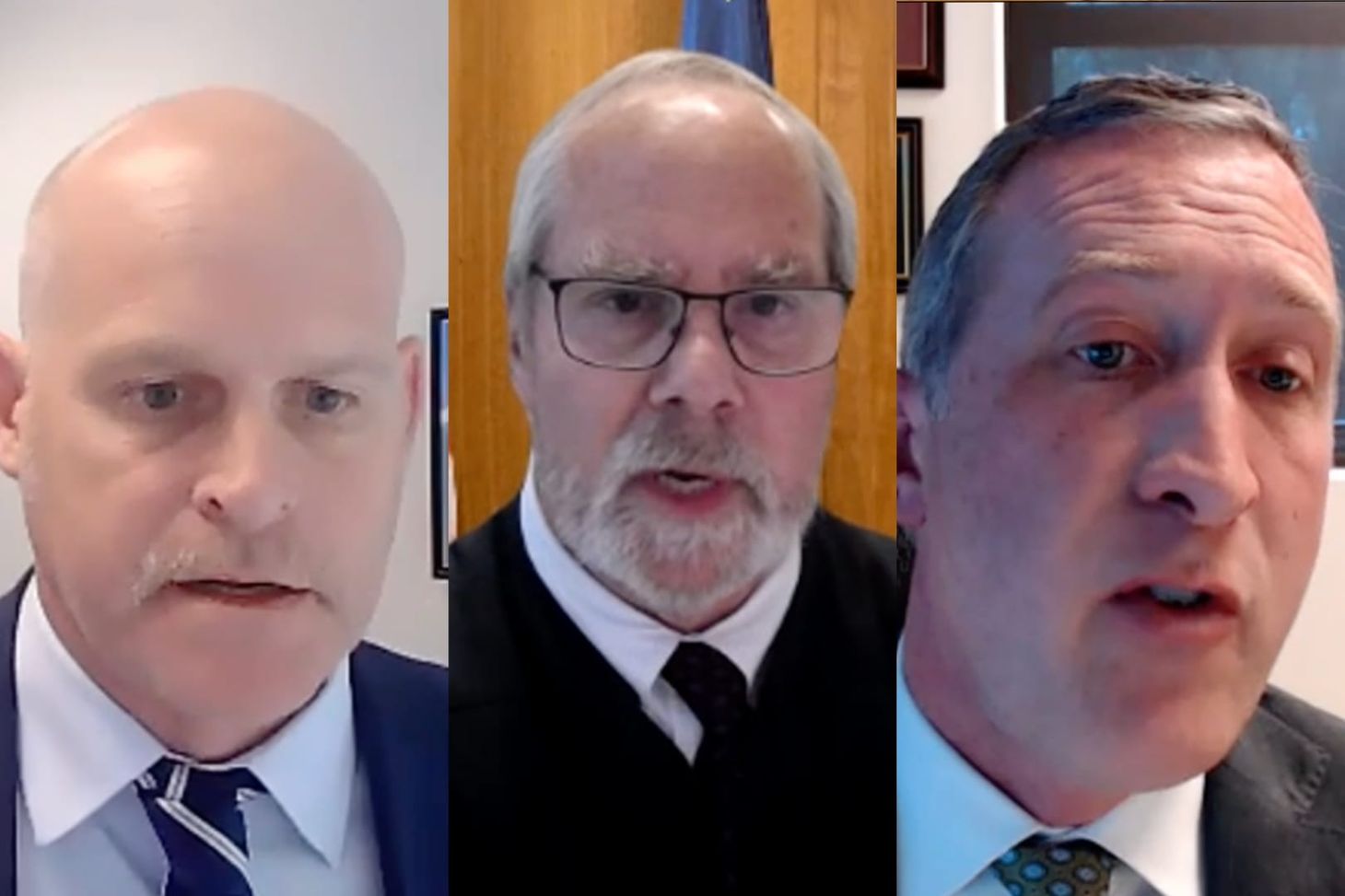
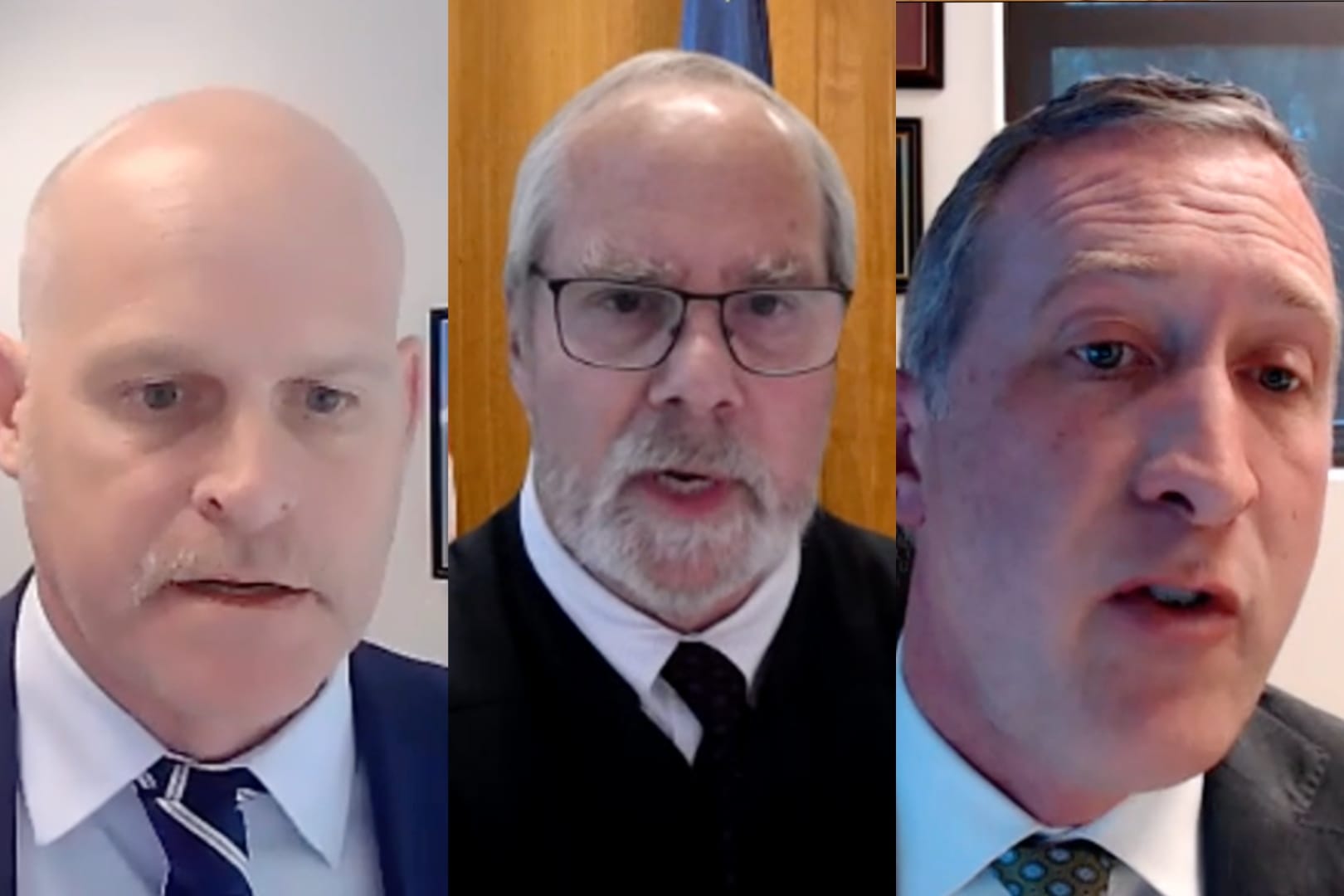
“All of that is incredibly suggestive of an intention not to genuinely seek office, not to distinguish himself from Senator Sullivan, as any other challenger that Senator Sullivan would do, but to confuse himself with Senator Sullivan, and that's the problem here,” said Chris Murray, a private attorney hired by the state from the conservative law firm First & Fourteenth (more on this later). “The problem here is that the division cannot prepare a ballot that is inherently confusing, because the division has a legal duty to issue a ballot that can accurately ascertain the will of the public. … The division refused to not notice what was happening here. It felt obligated to notice.”
Jeffrey Robinson, one of the attorneys representing Petersburg Sullivan, argued that the case requires a higher standard of scrutiny under the U.S. Constitution and that the state was wrong to apply this new so-called good-faith standard, which he contends isn’t clearly laid out in any part of state law or regulation.
"This is an election case involving fundamental rights," he said. "Given that it's an election case and involves important constitutional considerations, an additional layer of scrutiny is required here because obviously this case implicates the voters' fundamental rights to choose who they may wish to vote for."

Robinson’s case is more simple and argues that the entire process was wrong from the get-go. He argues the only grounds for the state to review the eligibility of a candidate for the ballot are the requirements as laid out in the U.S. Constitution — that he’s over 30, a U.S. citizen and intends to live in the state he’s elected to represent. So, he argued, even if there were evidence of a plan to confuse voters — which Robinson and Petersburg Sullivan maintain is unfounded — the state has no legal authority to remove him from the ballot.
While he agreed the state has an interest in ensuring the ballot isn’t confusing, he insisted that there are less severe remedies for the problem than blocking someone from running. He also noted that the courts have previously found that political parties have no special status in the election process that would allow them to direct the Division of Elections’ decisions, leaving issues regarding confusing or misleading candidates to be addressed through a campaign.
“The division can take steps to distinguish the two names on the ballot, and then it's up to the candidates to campaign and appeal to voters,” Robinson said. “Certainly, Sen. Sullivan is capable of running a campaign that informs his prospective voters which candidate they're voting for on the ballot, but here the division has no authority to investigate a candidate's motives in running for office or use that as a basis to exclude.”
While the appeals process may limit Judge Matthews’ ability to review the fundamental legal issues of the case, he seemed skeptical of the state’s arguments that it had the authority to conduct the investigation and to disqualify Petersburg Sullivan for his motives. He frequently asked the state’s attorney for the specific legal basis of the authority, but was often met with vague gestures at legal precedent and ultimately an admission that, no, the state doesn’t have such spelled-out standards anywhere in regulation.
About Chris Murray
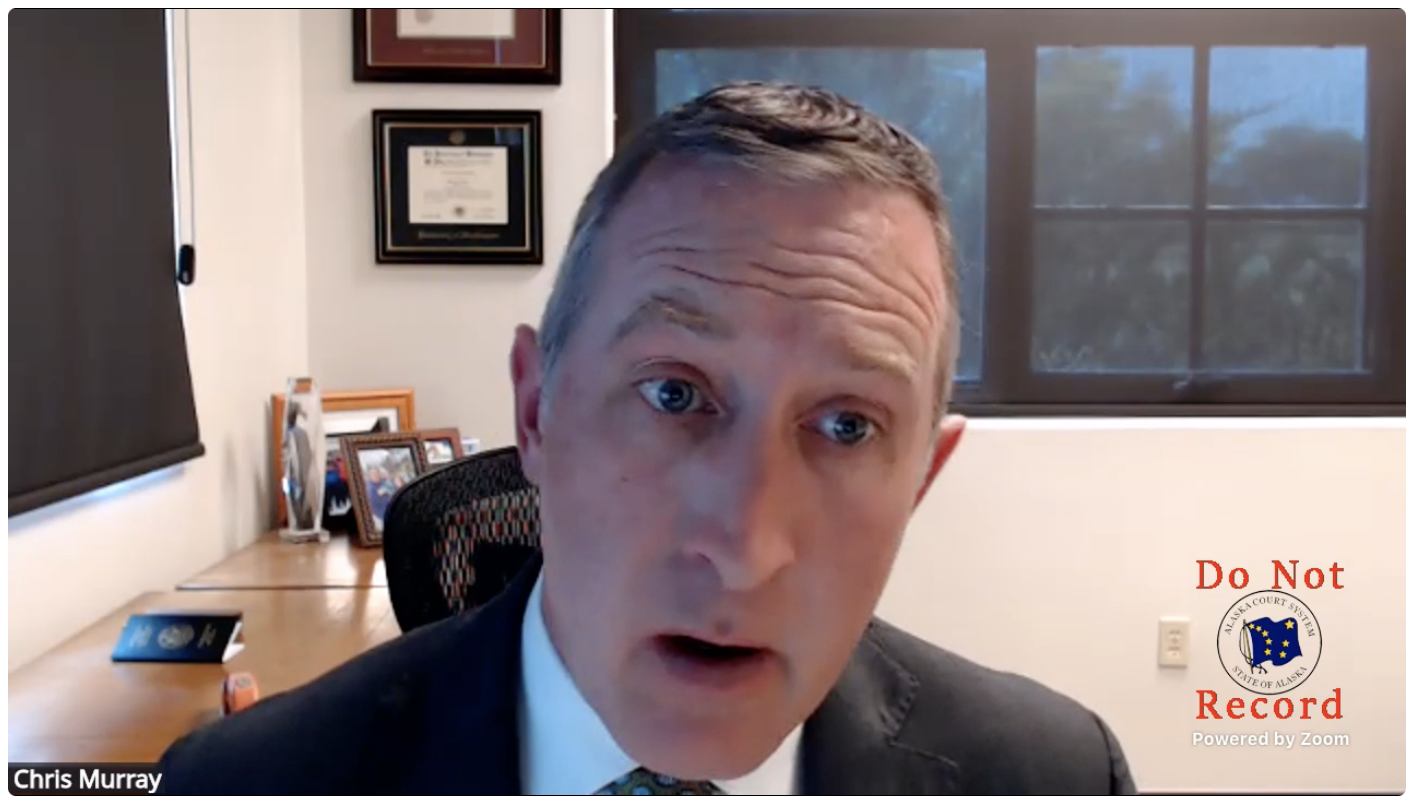
Murray is the latest in a long line of attorneys hired by the Dunleavy administration who hail from conservative Lower 48 law firms (see also, former Attorney General Stephen Cox, who just so happened to be on the court call today as counsel for Gov. Mike Dunleavy).
Murray is your prototypical conservative lawyer, with a membership in the Federalist Society and a bio that includes the fact he helped block the U.S. House from investigating the Republican National Committee’s involvement in the January 6 riots. The firm, of which he's a partner, has a website that includes in its creditentials that it “obtained a complete dismissal of a sexual misconduct lawsuits against Catholic dioceses, leaders, and schools in California, Kansas, Missouri, and Texas” as well as a win in another case shielding the Church of the Latter Day Saints from legal liability for failing to conduct a background check on a Sunday school teacher who had been convicted of sexually abusing a 15-year-old student.
So, just so we're being clear, the law firm tapped by the Alaska Division of Elections worked on a case establishing, in its own words, that “there is no fiduciary relationship between a Sunday School teacher and a visiting student with regard to their off-premises, after-hours conduct, and a church has no legal duty to supervise a Sunday School teacher’s after-hours, off-premises conduct.”
Just thought that might be interesting.
During the hearing, Murray frequently echoed talking points that Republicans have presented as evidence of some sort of underhanded tactic at Monday’s legislative hearing, at one point suggesting that if another former Anchorage Mayor, Dan A. Sullivan, were to “decide against his better interests” to run against Sen. Sullivan, it would be legitimate because he’d be legitimately trying to run — something he insisted Petersburg Sullivan is clearly not doing.
“What do genuine political candidates do? They try to distinguish themselves, they try to find any way to draw contrast between themselves and the people that they are challenging,” he said, suggesting that Dan A. Sullivan would be fine with a “challenger” or “non-incumbent” label. “That's not what happened in this case.”
But when asked whether that would work to distinguish Sen. Sullivan from Petersburg Sullivan, Murray quickly backed away, insisting that the state has no obligation to help out someone once they’ve been determined to be a bad-faith candidate — even though he conceded there are no such standards. As for how the ballot could be handled if Petersburg Sullivan’s status is restored, Murray was not accommodating.
“I'll say right now, we don't think a middle initial is sufficient,” he said.
Murray, like many conservatives talking about Alaska's political landscape, also notably took the trial as an opportunity to blast the state’s open primary and ranked-choice voting system, warning that it has invited this kind of bad activity. It largely mirrors what Big Lake Republican Rep. Kevin McCabe argued at Monday’s legislative hearing, where he said the open primaries prevent political parties from filtering out such alleged bad actors — again, something that's not actually been proven.
“We're going to be inviting more of this, your honor,” Murray said in closing. “In Alaska, there will be more of this, especially considering the advantages to other candidates within the ranked choice voting system of getting, you know, of getting similar or confusing candidates through the top four primary.”
It should be noted, however, that if both Dan S. Sullivan and Dan J. Sullivan advance from the primary to the general election, the ranked-choice voting system is the perfect way to resolve any confusion.
Any voter intent on re-electing Sen. Sullivan rather than his key challenger, Democrat Mary Peltola, could simply rank both Dans above Peltola.
Rank the Red and Rank the Dans.
Stay tuned.
Follow the thread: Bluesky coverage of the oral arguments
Check out the filings: Most Requested Case Files (Sullivan, Dan J vs. Division of Elections)

The Alaska Memo Newsletter
Join the newsletter to receive the latest updates in your inbox.