Juneau-bound, AKLNG faces pushback, election veto override fails
The session is barreling to its messy conclusion with plenty of unknowns about big things.


Hello, Alaska! It's Wednesday.
In this edition: The end of the legislative session is coming into focus, and it looks like it's all-hands-on-deck with the governor's 11th-hour push to advance a natural gas pipeline project. And like a child telling his parents on Sunday night that he has a papier-mâché island project due the next day, the rush is both self-inflicted and unlikely to yield the best product, no matter how late everyone stays up. That's to say, legislators are putting in a lot of work while essentially working blind, save for assurances from those involved in the project that, yes, they really need the subsidies and, no, you can't see how much it'll cost. Also, legislators came up frustratingly short in overriding the governor's veto of an election reform bill that would have made some progress in easing the barriers to voting that Alaskans living in rural communities have faced for years.
Current mood: 😎
I'm coming to Juneau!

Hey Juneau! I've been lured out of my basement office for Alaska Robotics Mini-Con this weekend and have a bunch of time to kill on Friday. I plan on swinging by folks up at the Capitol to shoot the shit and swipe some snacks, but if you want to say hi or get your legislator boss into an interview on whatever you think would be interesting, let me know! (As always, you can just hit reply to this email.)
I'm planning on doing an informal office-hours-style hangout Friday evening at Devil's Club Brewing Company, starting at about 5:30 p.m., and probably migrating somewhere after that.
-Matt
Surprise. Legislators are skeptical of the industry that cried lower taxes.

There was a lot in the House Resources Committee's amendment markup of the governor's bill to advance the natural gas pipeline project that reminded me of the amendment process for Senate Bill 21, the tax cut that former Republican Gov. Sean Parnell set us up with back in 2013.
Then, like now, much of what was coming across the table was deeply technical – focused on a few percentage points there, a few years there – with a great deal of deference given to officials from the private companies that'll can make or lose hundreds of millions, if not billions, of dollars based on a few percentage points. Their input on the tweaks sounded remarkably similar to the SB 21 debate, with sweeping promises of jobs, economic growth and cheaper energy that they warned would only materialize with significant tax cuts. The problem, of course, is that most people remember how it went last time – and the time before that.
An excellent breakdown by the Alaska Beacon's James Brooks looks at the different subsidy levels legislators have before them:
- Gov. Dunleavy is, unsurprisingly, asking for the farm, with a $7.2 billion tax break over the next 36 years.
- The House proposal is still working through the process, but before the amendment process, the subsidy was around $5.9 billion over 36 years.
- The Senate seems the most wary of the backers' claims, pushing for a bill that would not only not subsidize the pipeline project, but raise an additional $14 billion over the projected lifetime.
- And then, of course, there's the position of "If it's such a great project as everyone claims, let them build it," which leaves the existing laws that already enable the construction of a natural gas pipeline as is.
Lawmakers are in a tricky spot, ostensibly supporting what most acknowledge would still be a long shot, yet lacking enough insight into the project to gauge whether it's truly needed to advance it or whether it's making a profitable project even more profitable. And for all the assertions that tax breaks are there to increase the chances the project is successful and to keep prices lower for in-state users, they haven't exactly papered over the concerns.
Legislators want numbers.
Numbers like how much the pipeline is actually expected to cost, but even on that front, they've been left in the dark. What they've heard, though, is that the project is far more expensive than the project's backers claim, which seems logically true given the $46 billion figure was generated before, well, everything.
Figuring out the cost to Alaskans, who will be expected to be the project's anchor customers, has also been difficult, and what legislators are seeing isn't a big selling point either. At a particularly testy exchange in the Senate Resources Committee, longtime industry critic Sen. Bill Wielechowski, D-Anchorage, laid out how the savings to the average household would be about $55 if the pipeline were built with a subsidy amounting to a loss of $500 per Alaskan per year.
"That's not a good deal," he said, and he was willing to stick with it. "I feel perfectly comfortable going back to my constituents, and say, 'We'll pay forty-three cents more, but you're gonna get five hundred dollars per person more in value.'"
He warned that the small decisions they make now will have major, long-term effects on the state and on Alaskans.
"If we don't get this right, we stand to lose hundreds of millions of dollars," he said, "and the people of Alaska stand to have locked into rates that are twice as much as they are now, and going up from there."
It should be noted that many of the provisions in Alaska's oil tax structure that Wielechowski has long pushed to change in order to raise more revenue – like the minimum tax floor and the per-barrel credit – were dialed up in the House Resources Committee back in 2013 under the scant scrutiny that the amendment process affords.
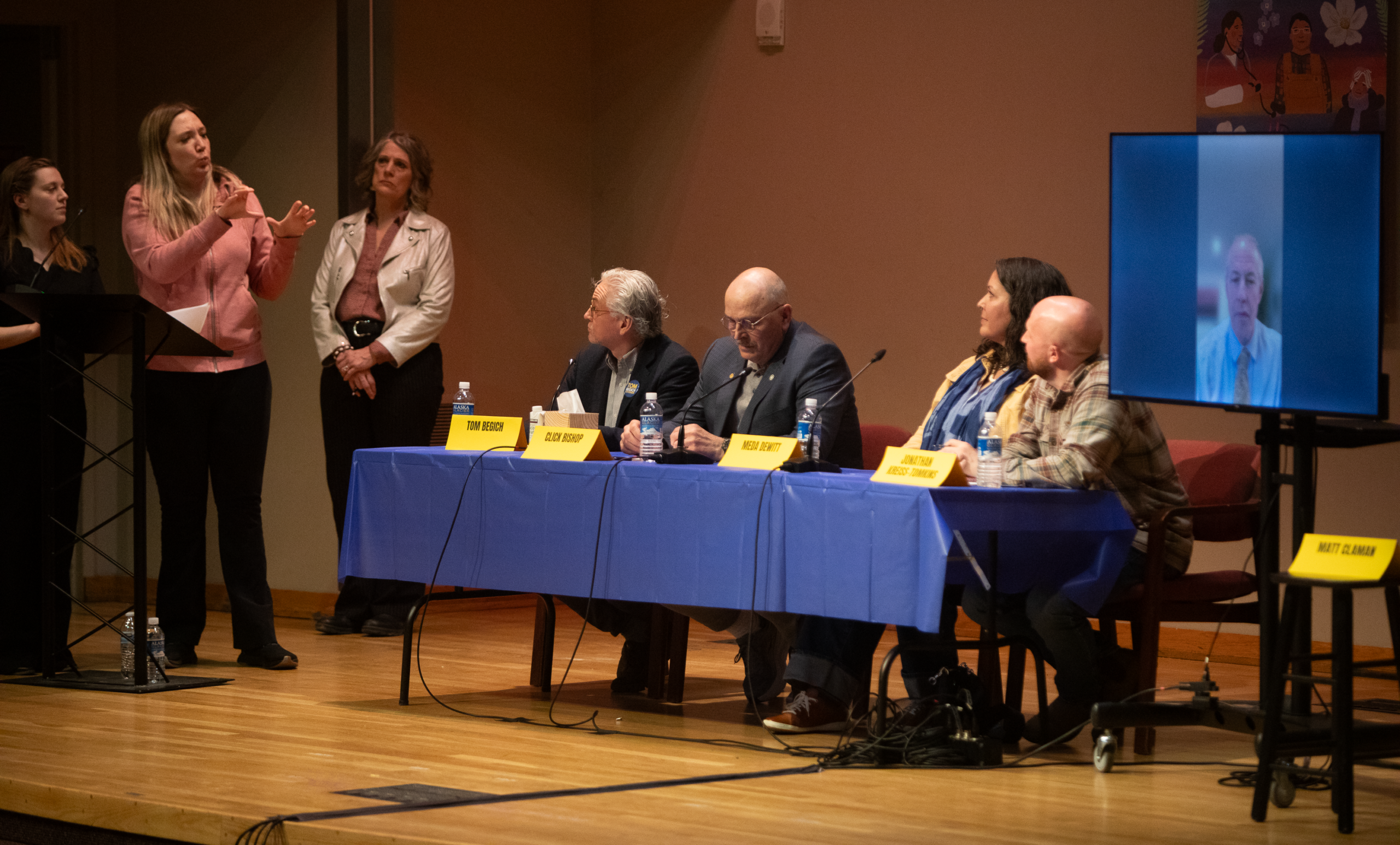
But, as Dunleavy's special contractor, Mark Begich, a former U.S. senator and one-time opponent to Dunleavy, shot back at Wielechowski, none of it matters if they kill the project.
“All the money you're talking about is irrelevant,” he said. “They will not collect it because you will not have the pipe in your jurisdiction.”
Will that be a winning strategy? Stay tuned, but legislators don't sound particularly confident they'll get anything passed before the session runs out on May 20.
More coverage: The Alaska Beacon, Juneau Independent, Alaska Public
🎙️ New podcast episode alert!
🎙️How often have you heard that the state's budget problems are simple? Just treat it like a household budget and tighten your belt! Run it like a business! In this episode, Matt and Pat get into the nitty-gritty of budget metaphors to understand where they're helpful and where they're not.
Amid GOP anxiety over easing rural voting barriers, Dunleavy gets two key votes backing his SB64 veto
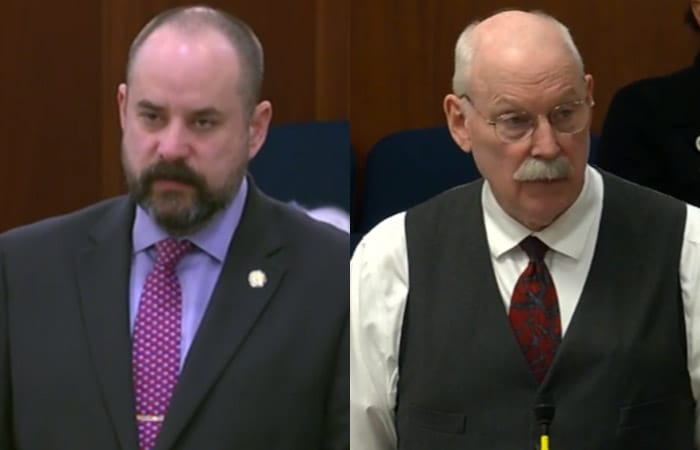
The Alaska Legislature was poised to override another one of Republican Gov. Mike Dunleavy’s vetoes on Monday, but Southeast Alaska’s two Republicans legislators reversed course on the measure, voting against a bill they supported just weeks ago.
The vote comes amid an intense Republican pressure campaign driven largely by fears that easing barriers for rural voters would hurt conservatives at the polls.
Sitka Republican Sen. Bert Stedman and Ketchikan Republican Rep. Jeremy Bynum both voted in favor of the election reform bill, Senate Bill 64, last month, but against overriding the veto — leaving lawmakers two votes shy of the 40 needed to enact the law, which would have enacted ballot tracking and curing for the 2026 general election.
Neither Republican explained their decision to the legislation during the debate, but told the Alaska Beacon they shared the governor's newfound concerns about being able to implement the changes in time – something backers contend is an excuse to block a bill Republicans fear might not help them in 2026.
Other legislators suggested the governor was leveraging issues outside the elections bill.
“Alaskans have no interest in us starting all over again and having the football pulled away again. We’ve come too far to quit. We have a chance right now,” said Sen. Bill Wielechowski, an Anchorage Democrat who helped craft the bill. “We’re not going to be leveraged over the gas line or capital projects for a common-sense bill that Alaskans are demanding. We’re not going to quit on the Alaskans who have sent us here to get the job done.”
His comment didn’t elicit a response from either Bynum or Stedman during the debate, but it did draw an angry objection from Rep. Dan Saddler — an Eagle River Republican and party diehard — who furiously complained that Wielechowski had violated the rules by suggesting that Dunleavy and his supporters had “questionable motives.”
 Matt Buxton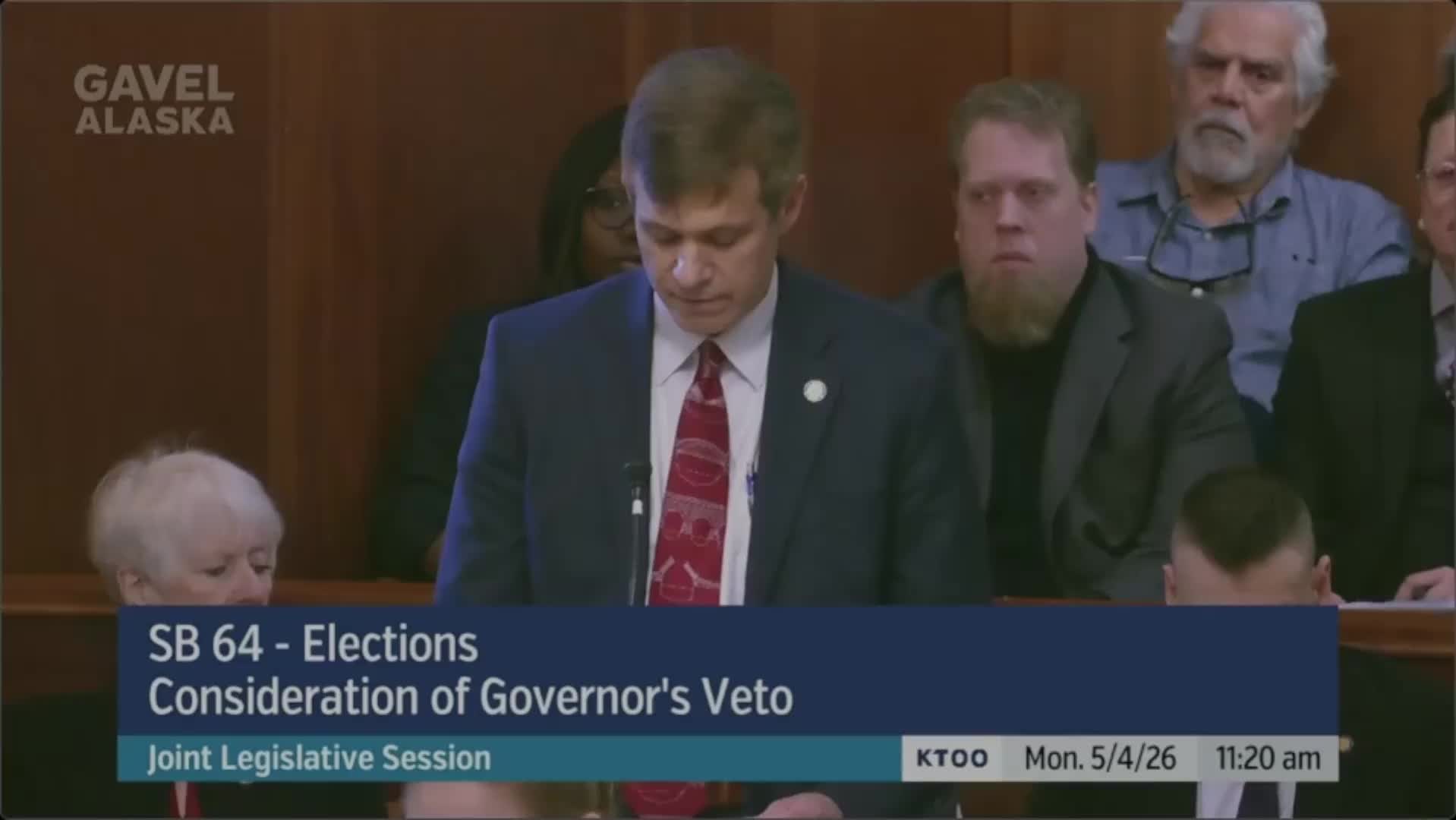
Here's a link to my Bluesky post with a video of the exchange.
Whatever non-questionable motives Republicans had were largely left a mystery. Few Republicans spoke to the bill, and at least one repeated a flat falsehood that it repealed the state's witness signature requirement for by-mail ballots.
Senate Bill 64 was the product of lengthy negotiations between the bipartisan majorties’ Democrats, independents and moderate Republicans and a handful of minority Republicans and seeks a narrow middle ground of acceptable changes. It didn’t tread into the controversial corners of election reform — like repealing automatic registration, enacting strict ID requirements or setting up drop boxes — but included measures like ballot curing, tracking and voter roll maintenance. While it didn't address one of the leading causes of rejected absentee ballots – the witness signature, which, to be clear, is never checked against anything – it tried to throw a bone to rural communities that have faced unexcusable, yet chronic barriers to voting in the form of a rural liaison whose job it would be to ensure polling places in rural communities open on time, open at all or have the right ballots (things that have all happened in the last two statewide elections).
Oh, and it would have provided postage for mail-in ballots.
While the moderates, progressives and conservatives didn't get everything they wanted on elections, those were all things they agreed would make a meaningful difference in reducing barriers for legal voters and improving election integrity.
SB 64, unsurprisingly, faced bitter pushback from the Alaska Republican Party machine, whose pundits argued that easing barriers that have historically prevented Alaskans living in rural communities from voting would ultimately hurt Republicans’ chances of winning.
As GOP writer Suzanne Downing wrote while rallying opposition to the bill, the concerns centered on the rural Alaska-focused provisions, such as a liaison whose job it would be to ensure rural polling places open on election day, would “tilt the playing field to left field” and “institutionalize new layers of influence for rural Alaska in the election process.”
While Dunleavy didn’t address those claims directly — in fact, he didn’t touch on any provisions aimed specifically at helping rural Alaskans vote — it wouldn’t be the first time that Alaska Republicans have put electoral outcomes ahead of policy.
Ahead of the 2024 election, Republicans who held the House Majority bragged they had killed an election bill because they worried it would have helped U.S. Rep. Mary Peltola, an Alaska Native and Democrat, win re-election.
Matt Acuña Buxton
But not every single Republican viewed it that way – just enough to sustain the veto.
Several conservative Republicans who had worked on the bill recognized that it was narrowly tailored and did more good, especially in areas they cared about, than harm.
Big Lake Republican Rep. Kevin McCabe, one of the chamber’s most conservative members, spoke in passioned defense of the bill on Monday. He cited a dozen concrete events and issues in the last five years that would have been addressed by the provisions of Senate Bill 64, noting that polling locations haven’t opened on time in rural communities, that some 735 people had ballots in the 2024 election could have been cured and that complaints about the slow and vague reporting of results would also have been addressed.
He followed up each group with an apology that SB 64 hadn’t been in place then and that, if the veto stood, would still be in place for the 2026 election and beyond.
“I voted for this bill. I fought for this bill. These apologies are not rhetorical. Every one of them is grounded in a specific provision of the enrolled bill or a documented failure of this process,” he said. “Every one of them represents a real Alaskan who will be worse off because this veto stands. The status quo is not neutral.”
More: Extreme-right Republican takes nasty friendly fire over support for bipartisan election bill
Some, but not all, of those Republicans faced vile personal attacks for their votes, like Homer Republican Rep. Sarah Vance, who was accused by Downing of voting for the bill because Wielechowski made her “feel pretty.” Vance, the lone minority Republican woman to split from the bill, unsurprisingly, was attacked the most by Republican pundits.
On Monday, she said none of it has changed her position on the bill.
“Election integrity and the sovereign voice of the people are a passion of mine. I would not be risking everything. I would not be taking the impunity, the accusations, the rumors, the threats and the bullying if I did not firmly believe in every Alaskan’s right to vote and to be counted. This is fundamental, as Americans,” she said. “When we start measuring policy based on outcomes instead of to the voter, we’re not exercising the trust in government. We’re playing politics. That’s not what I came here to do.”
Other Republicans, like Tok Republican Sen. Mike Cronk, whose mostly rural district is the largest state legislative district in the country, also stuck with their vote on the override, citing personal experiences with elections in rural communities.
“Has anybody ever been out to rural Alaska? Have you lived there? Have you experienced an election there? Because I think a lot of people are talking about that who haven’t been out there,” he said. “I represent a third of the state, many, many villages, some on the road, some on the river, some fly in. We obviously do have a problem sometimes in elections.”
For Cronk, the rural liaison and paid postage were common-sense solutions to long-standing problems that barred people in rural areas from having their voices heard. He got choked up talking about his dad, whose only option is to vote by mail, and asked if it was fair that his vote was rejected for a paperwork error.
He also skewered other Republicans for putting politics ahead of that.
“If I lose an election because a little old lady in Arctic Village had to cure her ballot, and that one ballot cost me my election, so be it,” he said. “Aren’t we here to make sure every vote counts? So I am going to vote to override this veto, and I think others should too, because it actually helps our elections in Alaska. It’s not a Republican bill, it’s not a Democrat bill, it’s an Alaskan bill.”
And it ultimately failed on a 38-22 vote.
Add it to the list of issues that need to wait for a change in the governor's office to become law, along with revenue for public schools, a yearlong supply of birth control, pension reform (well, technically, he has until May 18 to veto that one) and any tax on vapes.

This story was edited with help from Victoria Petersen and The Alaska Current. Everything else is mine, including the typoes.
More from The Alaska Current
Holly Todd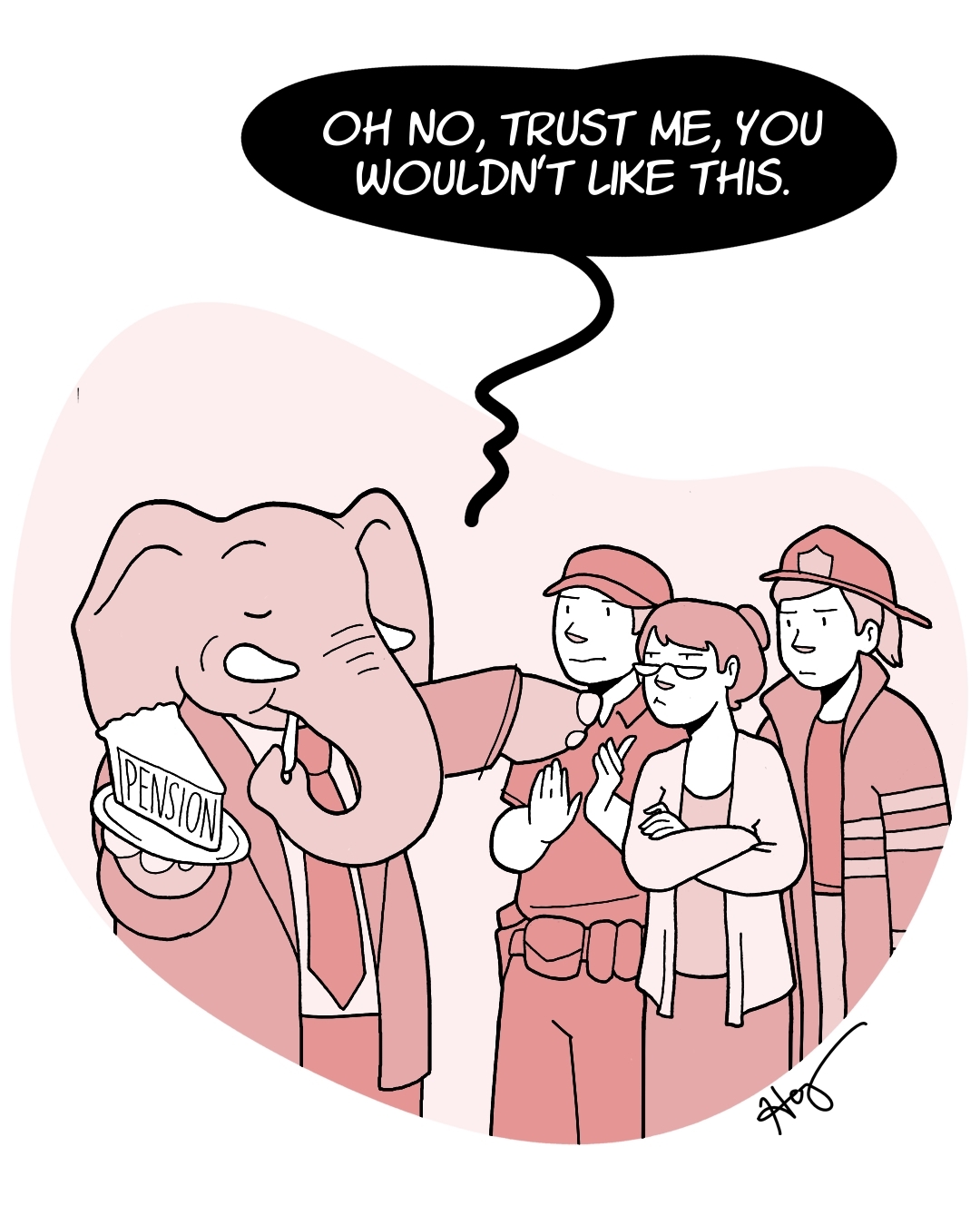 Matt Acuña Buxton
 Emily Mesner

The Alaska Memo Newsletter
Join the newsletter to receive the latest updates in your inbox.