Public pension bill passes, legislators get mixed messages on AKLNG beyond ‘less taxes’
Republicans stood by their bold claim that people nowadays just want to work forever.


Hello Alaska! It's Wednesday, Day 100.
In this edition: The Alaska Senate on Tuesday approved a bill to restore a pension system for public-sector employees, a move that backers say is a key fix to some 20 years of chronic vacancies and experience issues across the state. While some opponents argued against the risks of a defined benefit plan, plenty of others insisted that young people (AKA people under about 40) would rather work forever than be tied to a boring pension. Retirement? Yuck! Meanwhile, legislators are under intense pressure to quickly pass a massive tax break for the gas pipeline project that Gov. Mike Dunleavy made his top priority in the waning days of his administration, with a do-or-die pitch framing the megaproject as a necessary fix for the state's near-term energy issues. But a lot has changed since the days of Senate Bill 21, and lawmakers are taking a firmer stand against giving away the farm, which has led to some muddled messaging on the part of the industry, undercutting the claim that such deep cuts are really needed. Also, the reading list.
Current mood: 💯
Public pension bill clears Senate, marking the first time it's cleared both chambers
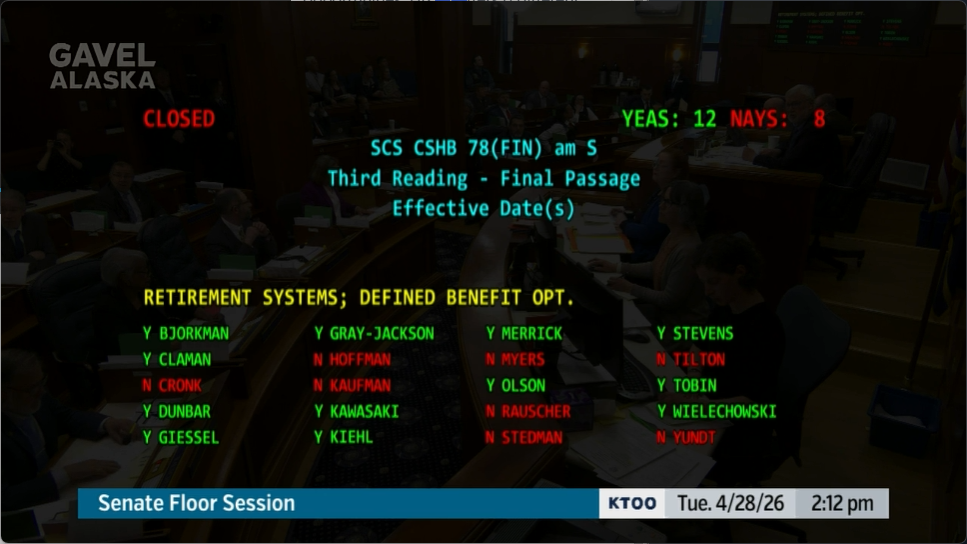
On a 12-8 vote, the Senate on Tuesday approved legislation to reinstate a pension system for the state's public-sector employees. The passage of House Bill 78 marks the first time that such a bill has cleared both chambers of the Legislature since lawmakers ditched dependable pensions in favor of a 401(k)-style retirement plan, a change that pension backers say has driven off younger workers (AKA, people under about 40) and contributed to the costly and chronic turnover of experienced workers (the current plan makes it easy to leave for greener pastures right about the time employees are getting settled in). The lack of a pension is compounded by the fact that public-sector employees in Alaska don't accrue Social Security benefits because the state opted out of the system back when its pensions, which many legislators on both sides of the current issue have, were really good.
Almost everyone concedes there are, in fact, grave problems with the state's ability to attract and retain workers everywhere, from classrooms and public assistance programs to permitting offices and bookkeepers. The state regularly racks up hundreds of millions of dollars in overtime to cover understaffing – including the surprise $24 million in prison overtime – and the legislative audit recently found tens of millions of dollars in fines as well as hundreds of millions of dollars more in unclaimed federal funds due to vacancies and inexperience.
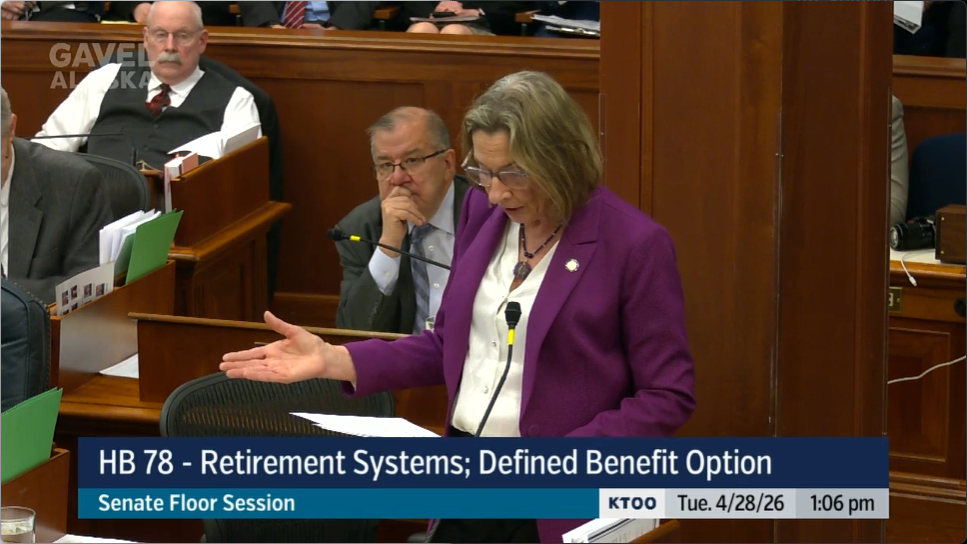
"Those costs exist today. They are in our budget. So the real question is not, does this bill cost money?" said Anchorage Republican Sen. Cathy Giessel, who has helped spearhead the issue in the Senate. "The real question is, why are we willing to keep paying more for a system that's not working?"
"Do we really want the future generations to be exposed to the whims of the stock markets? Let's give them some sort of stability," said Sen Bill Wielechowski, D-Anchorage. "Just like we hear the many businesses that appear before us about how they need we need to they need stability, they need to be competitive, or they'll take their business dollars elsewhere. Alaska employees, troopers, teachers and firefighters are making that exact same choice."
Opposition to the measure seemed to boil down to two silos: Legislators who remember the problems that led to the state's pension system getting in trouble and find any chance above zero of that happening again unacceptable, and legislators who steadfastly seem to believe that young people (AKA, people under about 40) want to work forever.
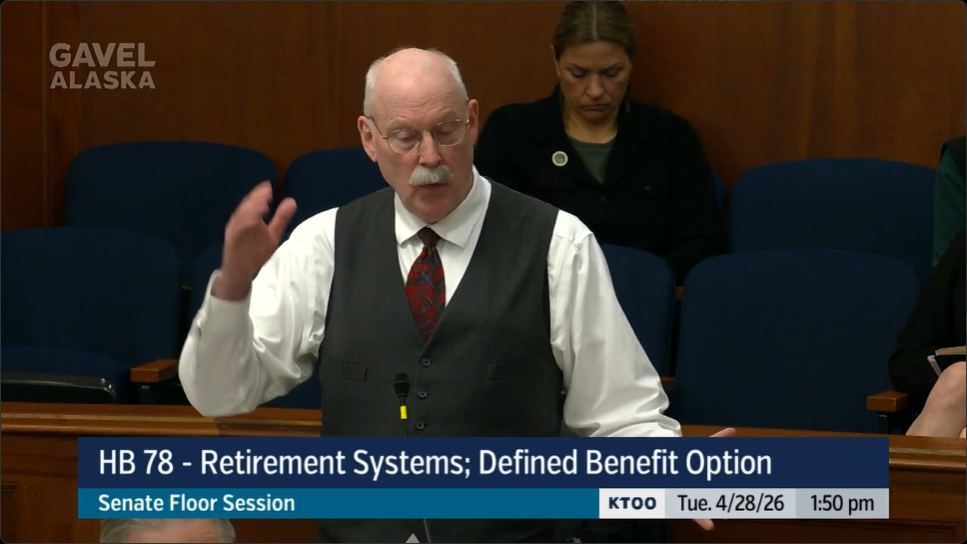
"Think of the liability protection of the future generations. Let's not do what our granddad's grandparents did to us back in the 60s and give us a liability that we struggle with for 30 years," said Senate Finance Committee co-chair Sen. Bert Stedman, whose opposition to pensions is one of the few places where he's out of step with the bipartisan Senate Majority.
While Stedman's hypercautious approach to the state's financial position is at least somewhat believable and is largely consistent with his steadfast opposition to overspending from the Alaska Permanent Fund, the other side of the opposition strained credulity with claims that younger workers (AKA, people under about 40) simply aren't interested in retiring or have already accepted that retirements will be a thing of the past by the time they're older.
"Generation Z is growing up when these packages do not exist and therefore have been planning accordingly, or at a minimum, have no expectation of receiving such a benefit," said North Pole Sen. Robert Myers, citing a statement from the Fairbanks Police Department union, and claiming they fixed their hiring problems by offering hiring and retention bonuses. "I question whether or not this bill is going to be as effective as we may say."
But perhaps the most confidently wrong testimony came from Tok Republican Rep. Mike Cronk, who began his opposition by noting that his father had three retirements and he has a state retirement.
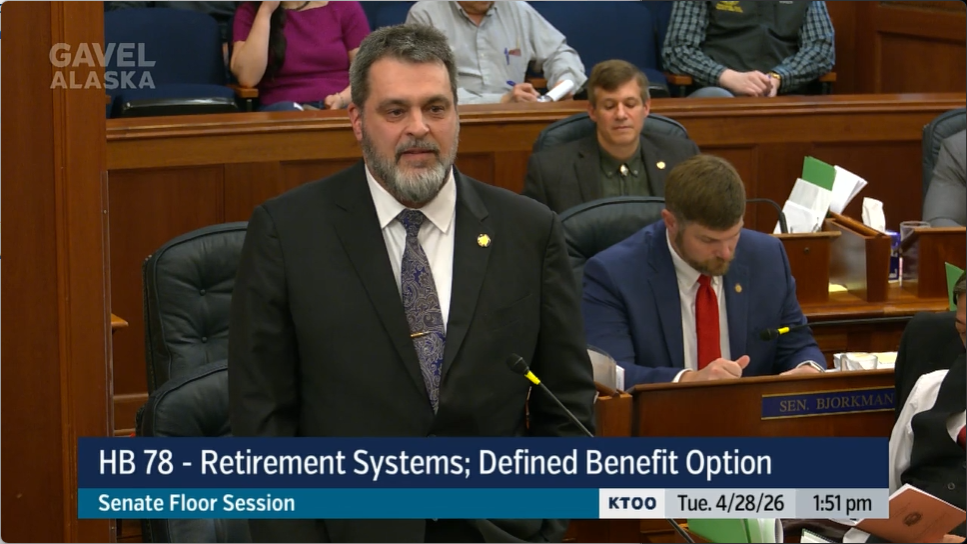
"I did my 25 years, and I, you know, have my teacher retirement, but things have changed, people have changed. Younger people are not into 'Hey, I'm just going to sit here and doing something for 30 years,'" said Sen. Mike Cronk, a Tok Republican who enjoys the plush retirement that hasn't been available to any teachers who started in the last 20 years. "My whole goal was to do my time. I thought I was gonna get out at 20 years, but I wasn't Tier I, and I needed to do 25 for the medical, so I did my 25."
Without a hint of irony, Cronk – a guy who essentially just bragged about working as a teacher precisely as long as he needed to maximize his retirement benefits from the state – continued to say the state's recruitment and retention problems have nothing to do with retirement benefits... even though it worked for him.
Instead, Cronk blamed poor leadership for the recruitment problems that seemed to be felt in nearly every corner of the state.
"The number one reason we couldn't keep a teacher was because of bad administration. When you have bad leadership, people leave," said Cronk, who, it should be noted, was also on his local school board before becoming one of the state's 60 legislators – so, you know, part of leadership.
But the mental gymnastics it takes to get to "It was great for me, but, gee, you guys wouldn't want any of this. Defined benefits and medical coverage, YUCK!" weren't shared by every legislator who already has theirs.
Some Tier I retirees, like Anchorage Democratic Sen. Elvi Gray-Jackson, don't want to pull up the ladder on younger Alaskans (AKA people under 40).
"I began my public service calling under a top-tier retirement plan, and for that, I am so grateful. But throughout this debate over the past several years, I felt a deep sense of responsibility, knowing that my own retirement is way more secure than what many Alaskans have today," she said. "These Alaskans, they're our constituents."
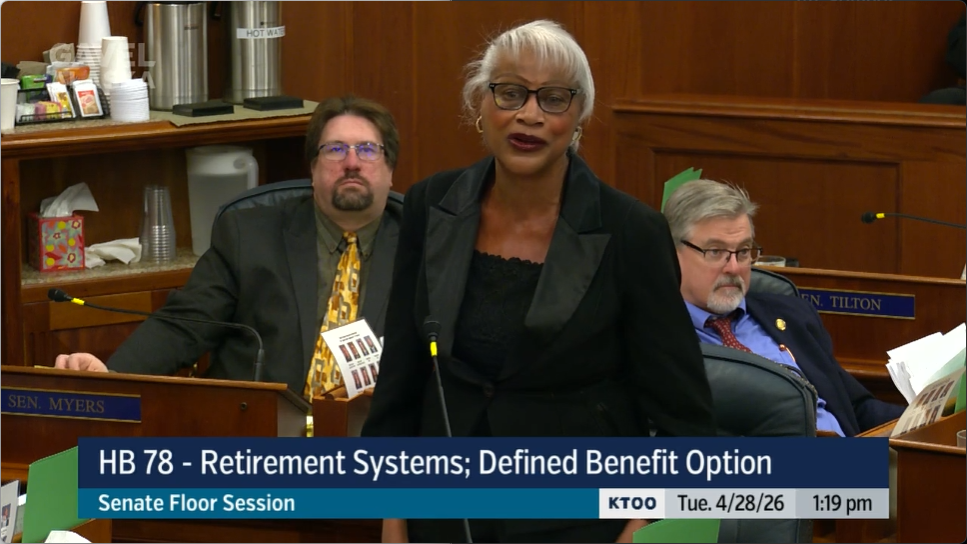
"Our hard-working men and women deserve better," she said. "They're doing a really great job for us and our constituents, and they need something to look forward to, like a paycheck every month when their time is up."
A millennial's rant: I'd just hop in here to say the grind that some of these Republicans claim all young folks (AKA people under 40) are into, pointing to shifting labor numbers, is more a matter of survival in a world where raises, retirement and general job security are constantly eroded in this race to cut costs and fluff up the bottom line than any desire for the drifter lifestyle. In the news industry, especially, one of the only times you'll ever get a raise is by getting a new job, which is likely why that talented print reporter is now getting their legs under them on the air or working in a press office. The same goes for teachers, whose retirements become portable just about the time they're starting to think about having a family and looking to the future (in my experience, around 30), and decide there's no future in relying solely on a 401(k). Believe me, most of us grew up on the idea of finding a life-long career and would rather stick around, get really good at something and hopefully share in the upside. But there's just no more upside in a system that treats us as interchangeable widgets. This mercurial hustle is a product of your system, not our desires. In fact, there's little that most of us would like more than the ability to build a stable, dignified career that includes the path to enjoying life before you run out of time and health.
On a completely unrelated note, did I mention I have a tip jar?
What's next and why it matters
The updated measure still needs to clear the House before it can be sent to notoriously anti-union Republican Gov. Mike Dunleavy. The Alaska Supreme Court previously found his administration had acted with 'abundant evidence of anti-union animus,' so it'd be surprising if he doesn't ultimately veto the measure.
If that's the case, legislators won't have the votes to override his veto, but it's still a major milestone in the decades-long fight to reinstate a pension system for public-sector employees. Not only does it prove that passing a pension bill is possible, but it also helps push the issue to the center stage of the race for governor.
A change in leadership to a progressive or labor-friendly moderate (for example, the candidates who are set to attend tonight's Alaska Medicaid Coalition gubernatorial forum in Anchorage) would make pensions – and frankly, a whole load of other issues that have languished in the eight years that Dunleavy has been governor – a near certainty for 2027.
Stay tuned.
Follow the thread: A short, after-the-fact thread on the passage of HB 78
Under pressure to boost AKLNG project, legislators get mixed messages beyond ‘less taxes’

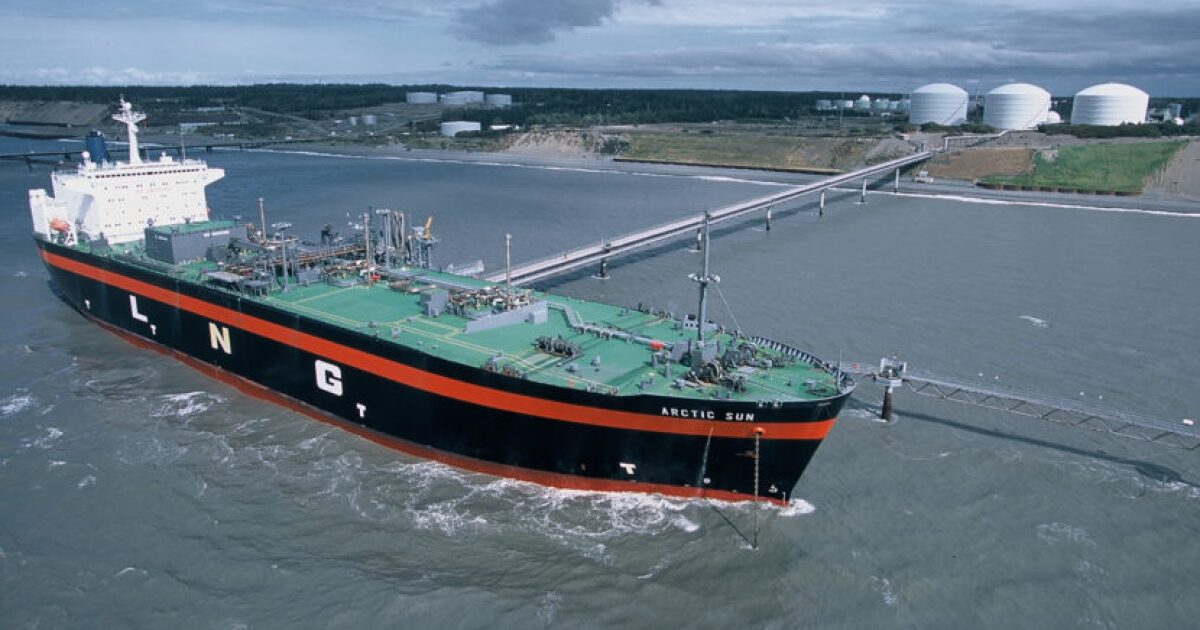
With less than a year left in his term, Alaska Gov. Mike Dunleavy has set his sights on the latest in a long line of attempts to advance an 800-mile natural gas pipeline connecting Alaska’s North Slope to export terminals in Southcentral Alaska. Last year, he handed the reins of the project to the private New York-based developer Glenfarne, renewing familiar, sweeping promises of state profits and lower-cost energy from a project that has yet to pencil out in the decades it's been dreamed of.
This year, months after he first floated the idea, Dunleavy has asked legislators to approve massive tax breaks for the pipeline, which his administration insists is a do-or-die moment for the project.
While some sort of tax breaks have been discussed well before Glenfarne or even Dunleavy became involved, the depth and perpetuity of the cuts proved to be eye-popping for local governments and state legislators who are already struggling to make ends meet. Setting new tax terms for the gasline would be the sort of ask that legislators would typically spend months, if not years, evaluating (with, frankly, mixed success because, ultimately, it's a tricky and massively expensive project for the purpose of selling less-profitable gas). But the governor and pipeline boosters argue time is of the essence, warning failure to pass tax breaks in the next three weeks could doom the project, seemingly forever cursing Alaskans with high energy prices.
And you wouldn't want that on your conscience, would you?
(It should be noted that those high energy prices aren't some surprise, but something that has been well-known throughout Dunleavy's term and, in many cases, are already here. It's something that several utilities are already working on addressing through imports and other avenues because they, too, remember all the other promises that a gasline was right around the corner.)
In round numbers, the tax scheme proposed by Dunleavy would cut local revenue from the project by about 90%, replacing their property taxes (which, admittedly, were long ago identified as a barrier to pipeline profitability) with a complicated ramped tax on gas throughput that'd go into effect well after much of the local costs are incurred. That’d leave local governments with a roughly $12 billion revenue gap over the project’s 36-year lifetime. Meanwhile, Dunleavy’s proposed gas tax system would net the state about $22.5 billion.
For local governments shouldered with additional infrastructure needs — roads, fire and rescue, housing and education, to name a few — the proposal has been seen as “a bottom offer” that could leave several already-pinched communities worse off.
Legislators on the Senate Resources Committee who are sympathetic to those concerns have proposed an alternative that would raise far more revenue. In technical terms, the rewrite would leave the property tax elimination in place but replace it with a much higher tax on throughput — with a steep cut for in-state gas, because cheaper in-state gas is a good thing for people who can access the gas or, at the very least, the electricity it generates — as well as a roughly $800 million upfront impact payment to affected communities.
In annual revenue terms, the changes would take the bill from generating about $75 million annually to raising $625 million.
Meanwhile, the House Resources Committee has introduced its own version that takes its own approach, landing about halfway between the two in terms of revenue raised (precise numbers weren't available, yet), while also giving the North Slope and Kenai Peninsula boroughs – the expected homes of the most valuable gasline infrastructure – an option of getting a stake in the project rather than collecting throughput taxes.
Unsurprisingly, both proposals have run into pushback from the governor and the industry, who have long been reflexively against taxes in nearly any form — extending to Dunleavy’s veto of a bill that would have raised taxes on vapes.
“It will create more of a challenge in terms of the economics of the project as more taxes are placed on the project,” Frank Richards, head of the Alaska Gasline Development Corp., told the House Resources Committee about its bill on Monday, according to the ADN. “The timeline is very, very short,”
But what’s been more surprising is the lack of agreement on what’s actually necessary to advance a project that is allegedly set to break ground in about a year.
While Glenfarne, the Dunleavy administration and several industry groups have panned the new versions of the bill for raising taxes (and, to be clear, they seem to like the House version more), it’s not clear whether the changes are actually a death knell for the project or simply make a profitable project less profitable.
A particularly telling set of exchanges came from last week’s Senate Resources Committee hearing, where lawmakers heard from several industry groups that had the tricky task of opposing the changes while seemingly acknowledging that, yes, there would be an impact on local communities.
“RDC encourages a tax structure that is fair to municipalities while concentrating costs to industry partners during value-generating time periods, rather than the earliest and most capital-intensive phases of the project,” Resource Development Council Executive Director Connor Hajdukovich told the Senate Resources Committee last week, adding, “I’m not sure that this version of it is moving in the right direction.”
That’s a fair bit different than what the governor’s administration said when it claimed the changes would kill the project or Glenfarne’s claims that it “could” delay the project, which, it should be noted, has already been delayed from Glenfarne’s initial schedule that would have had them making a final investment by the end of last year.
And when legislators asked what the ideal piece of legislation would look like, it was clear that the industry didn’t have much agreement beyond opposition.
“I don’t have specific language for you on that piece,” Hajdukovich said. “I realized there was a discussion that you know, how much the state gets, how much local communities get. … And again, I don’t have a solid policy on that.”
Asked about the provisions of the lawmakers’ rewrite of the bill, which still enacts most of the revenue-collecting measures when the gas would actually start flowing, he was similarly non-committal.
“We don’t have an established position on the framework that we’re looking for,” he said. “We don’t have a policy on that yet.”
Did RDC support the governor’s version? Was that the “clean” version of the bill that the industry wants them to advance post haste?
“We don’t have a stated policy on the Governor’s bill,” he said. “We’re looking for negotiations to continue between the parties that are in place to better the framework for the future of the project.”
“So,” asked Anchorage Democratic Sen. Bill Wielechowski, “do you think the Legislature should just stay out of it and let the local communities negotiate themselves?”
Hajdukovich said, no, of course, legislators should be involved, but when pressed for any details, he was still non-committal except to reiterate the need for a friendly tax structure for the industry, “ideally with long-term benefits to the state and to the municipalities.”
Ideally.
Why it matters
The rewritten bills, especially the Senate Resources one, largely reflect a different prevailing attitude among legislators toward the oil and gas industry than we've usually seen, marked by increased skepticism and decreased patience. Where lawmakers were once prone to take industry warnings about the impact of taxes at face value, the state’s worsening fiscal situation — as well as a political system that benefits centrists who don’t automatically toe the industry-friendly party line – has led legislators to push for increased revenue from the industry.
The same committee that rewrote this bill also dramatically rewrote the governor’s tax bill, ditching the deeply unpopular sales tax for higher taxes on the oil industry.
Where promises of jobs and economic growth once drove legislators to pass industry-friendly tax breaks – Think of the JOBS! – the shine of that has come off greatly in recent years. It doesn't help that a large chunk of those jobs don’t go to Alaskans, or that the state’s financial situation has continued to crumble despite the heady promises of increased production the industry and its boosters made while pitching their oil tax cuts back in 2013.
And it’s particularly notable that at the center of much of this is Anchorage Republican Sen. Cathy Giessel, who more than a decade ago helped spearhead the oil tax cuts in the form of 2013’s Senate Bill 21. A decade, a front-row seat to Dunleavy's first term as governor, a nasty primary defeat by an industry-backed opponent, a return enabled in part by ranked-choice voting and a fair bit of moderation later, Giessel has been one of the lead voices in arguing that the state needs to do a better job at investing in itself.
While we're still a long way from any finality, Giessel said there must be give between Alaskans' desire for services and their desire not to pay for them.
“If you were sitting in these seats, how would you take this forward with the same responsibilities that we hold?” she said. “Your members come to my office and probably every office sitting at this table and say to us, We need more education funding. The roads are in terrible condition. They need to be repaired. What about the Dalton, it erodes every year? What about child care? Why isn’t the state subsidizing child care so that we can go to work? You know, these are the kinds of things that we face, and that’s our authority to tax and therefore support state services.”

This story was edited with help from Victoria Petersen and The Alaska Current. Everything else is mine, including the typoes.
More from The Alaska Current
 Matt Acuña Buxton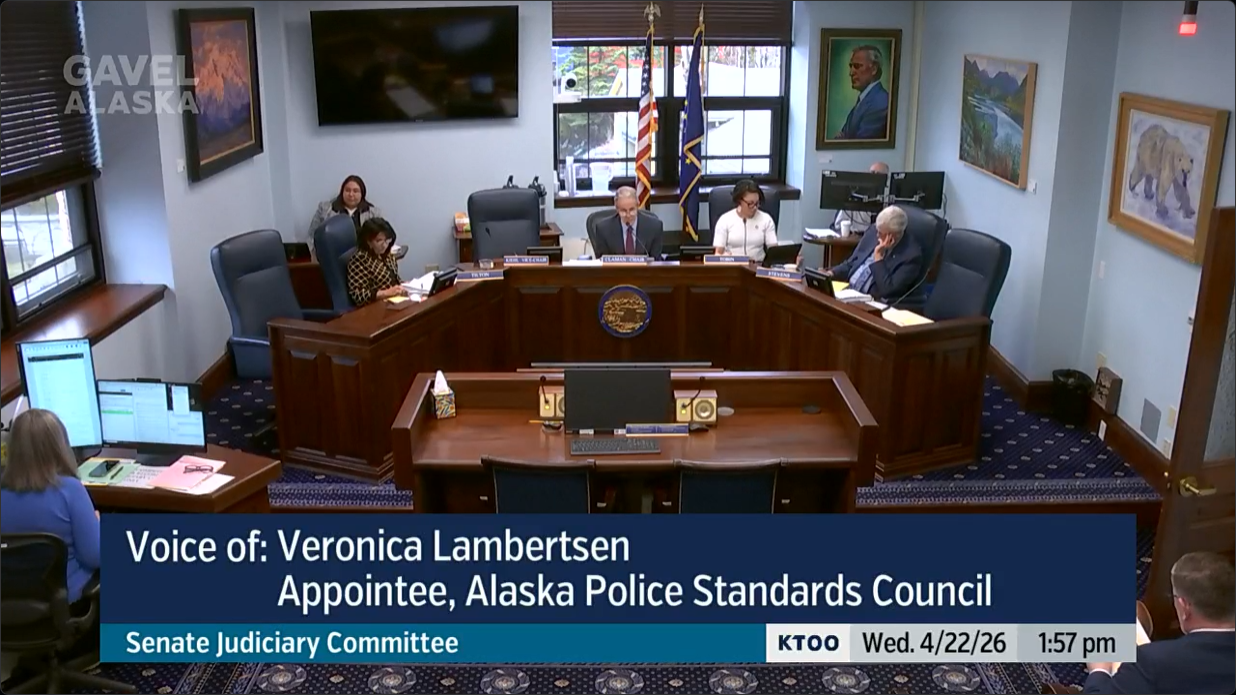
Update: After questioning the truth behind the Holocaust and whether Hollywood elites were torturing kids to create a youth potion (which I'm sure will be surprising to hear is rooted in the antisemitic blood libel trope, which has been used to justify violence against Jewish people for centuries), Victoria Lambertson ultimately withdrew from the spot.
Matt Acuña Buxton Rachel Levy
The reading list
 Nathaniel Herz
 Liz Ruskin
 Eric Stone
 Alena Naiden
 Eric Stone
 Alex DeMarban
 Corinne Smith

The Alaska Memo Newsletter
Join the newsletter to receive the latest updates in your inbox.