'We're trying.' Legislators warn AKLNG project may be too large a lift for session's final days

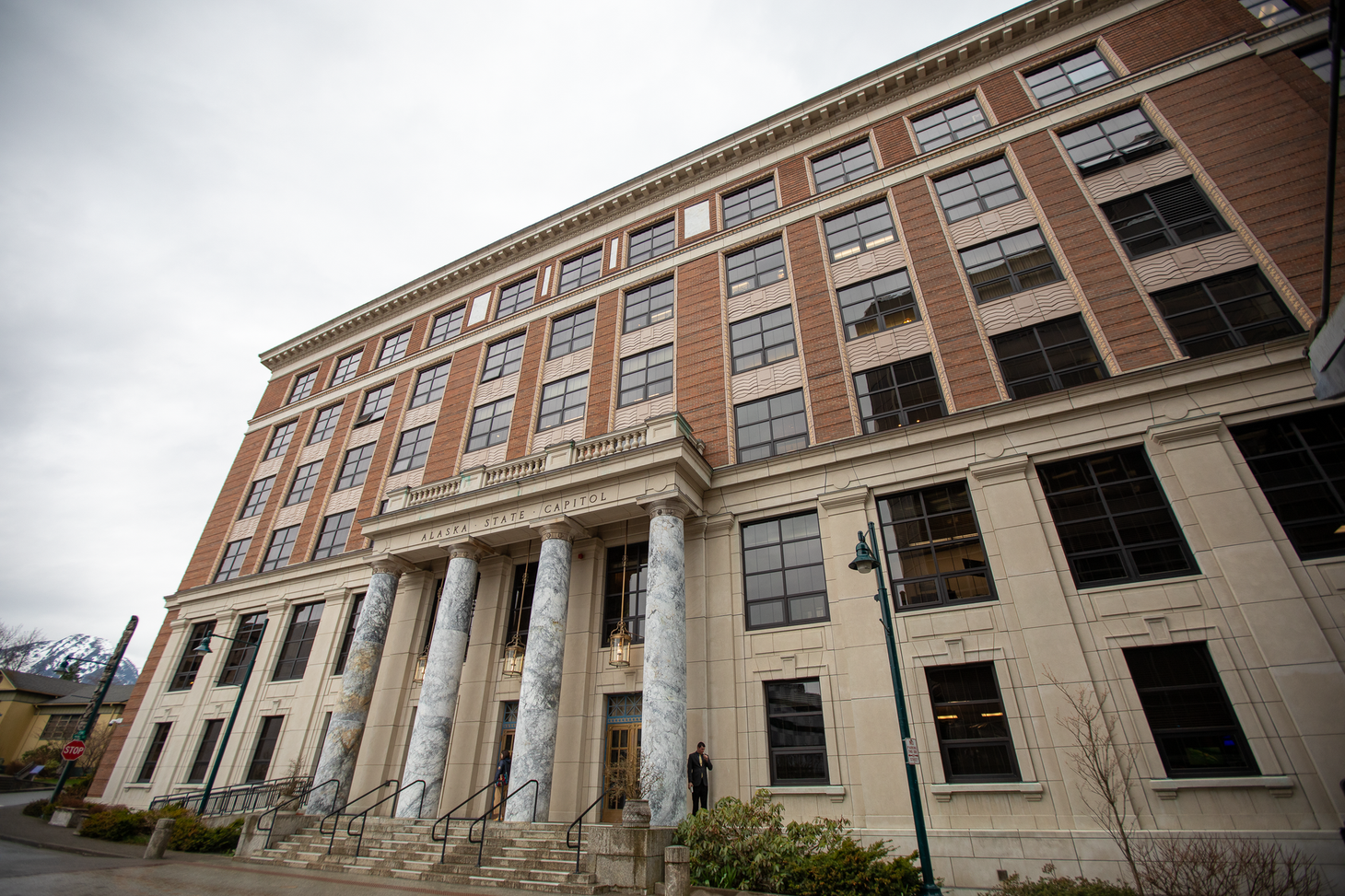
It's Wednesday. A week remains in session.
In this edition: With the final sprint to the finish line underway, the Alaska Legislature has a ton on its plate, and that's before we get to the governor's late-in-the-session demand for a multi-billion-dollar subsidy for the natural gas pipeline project. As the clock ticks down, so too does the list of what's doable this session, meaning something will have to give if they want to get the AKLNG bill out the door, whether it's other legislative priorities, due diligence on the project or their free time to a special session. Meanwhile, the House passed an education funding bill that addresses the symptoms of broader problems with shifting enrollment in the state, and a bill honoring one of Alaska's greatest statesmen advanced. Also, the reading list.
Current mood: 😬
'We're trying.' Legislators warn AKLNG project may be too large a lift for session's final days
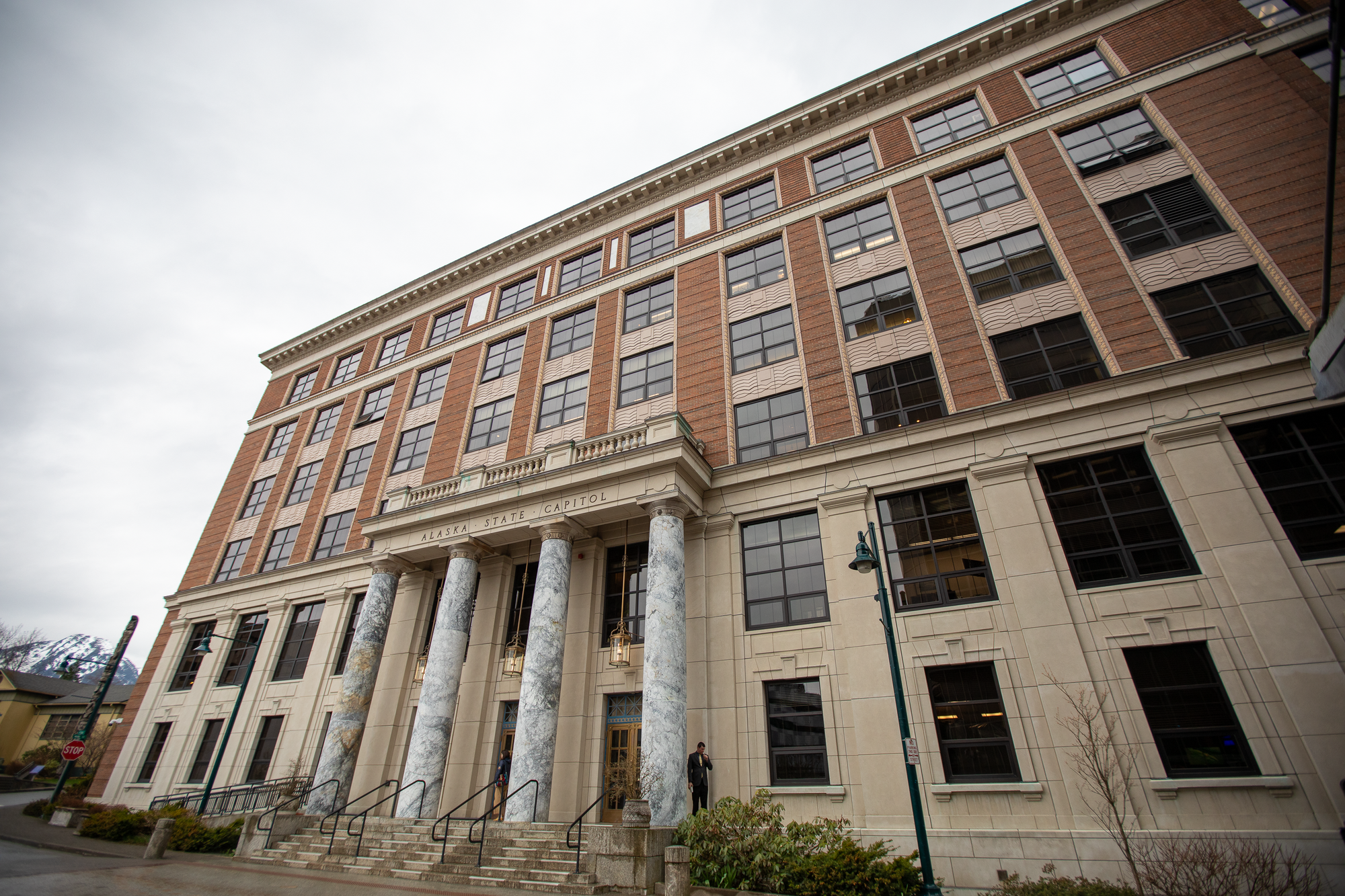
On Monday, the Alaska Legislature appointed the conference committee on the operating budget, kicking off the 24-hour period that allows meetings to be noticed a day in advance and starting the final mad dash to adjournment on May 20. As with any session, what can and will happen over the next week depends not only on political will but also on time. With less than a week on the clock until Day 121, lawmakers still need to reach deals on the budgets, pass priority legislation, hold a joint confirmation session to vote on the governor's appointees (which is scheduled for tomorrow), and, oh, they're ostensibly trying to pass a massive multibillion-dollar, multi-decade subsidy for the AKLNG pipeline project that they've only had in bill form for about a month and a half.
Legislators will need to tread carefully because each one of those is an opportunity for the minority caucuses to be difficult, whether it's lengthy amendment sessions or everyone-needs-to-say-their-piece debates.
Recall that the former House GOP Majority spent the entirety of the 2024 session's final Saturday and part of Sunday on passing its virtue-signaling trans sports ban after that year's House Minority Coalition mounted as near a filibuster as it could under the rules, jamming up the process with 90 amendments and plenty of fiery debate. As expected, the measure promptly died in the Senate, but the time had already been spent. The crunch was felt in the final days – leading to five bills, three of which were by conservative Republicans, eating a veto for passing after midnight on the final day of session.
So it's with all that to say that layering on the AKLNG subsidy bill on top of the usual end-of-session sprint is a ridiculously tall order.
Lame-duck Republican Gov. Mike Dunleavy and company waited until late March to drop HB 381 and SB 280, launching a high-pressure pitch for a $7.2 billion tax break for the 800-mile pipeline project. The strategy banks on Southcentral's energy-supply anxiety, with a dash of Iran war opportunism, to paper over a litany of concerns and longstanding skepticism about the long-ballyhooed project connecting the North Slope's vast gas reserves to Alaskans living along the pipeline corridor and hopefully lucrative foreign markets. Big issues like the project's cost, its timeline, the cost of gas to Alaskans, its profitability, whether there are actually customers beyond Alaska and its impacts on state and local governments are all big question marks that legislators have struggled to get answers on.
The place to watch right now is the House Finance Committee, which took up House Bill 381 on Friday after the House Resources Committee did its work on the bill and seems to be leading the charge on the issue – even as the Senate Resources Committee continues hearings on its own version of the bill. As it stands, HB 381 calls for a smaller, yet-significant subsidy for the project while forcing the players to the negotiating table with some of the most heavily impacted communities – the North Slope and Kenai Peninsula boroughs – while also making a push for a spur line that would deliver much-needed energy to Fairbanks (though, whether it's affordable is a big question).
That's because Glenfarne, the private company that took the reins of the project from the state last year, plans to build it in two phases. First, the large-diameter 800-mile pipeline that would run well under capacity to sell North Slope gas to road-system utilities. And at some point in the future, they would build the costly treatment and export facilities needed to sell gas to those potentially lucrative foreign markets, hopefully filling the pipeline's capacity. While the backers argue it's the best way to finance and build the massive megaproject, it also poses the risk of complete disaster for Alaskans if those export facilities don't get built.
"The only way that we end up with higher cost gas coming out of the pipeline is if there is no (final investment decision) on the LNG export facility until beyond 2029, and I can personally tell you, I think that's unlikely," Adam Prestidge, the president of Glenfarne Alaska LNG. "It's a very promising and high probability project, in my opinion."
It should be noted that Glenfarne had planned to reach that stage of the pipeline project by the end of 2025, but it still hasn't.
He also added that if the facilities aren't ever built, the AKLNG gas would be "competitive" with alternative plans, such as imported LNG that Southcentral utilities are already pursuing. So a multi-billion-dollar subsidy for "competitive" gas is within the range of possible outcomes. How possible is that?
If you take them at their word, not very.
And while I wrote that there are some similarities between the current process and the one used more than a decade ago to pass the 2013 oil tax break, there are big differences. Of course, legislators aren't quite as keen on taking industry claims as gospel as they once were, but that doesn't mean they have the answers.
The lack of transparency, information, speed and pressure tactics has left many legislators feeling as if they're operating in a fog of war.
As Senate Resources Chair Sen. Cathy Giessel told me during an interview on Friday, the state's capacity to answer questions, analyze issues and provide answers is greatly diminished from 2013. Gone are the carts full of binders for each and every legislator, seemingly replaced with a $100,000 contract for Mark Begich to spar with lawmakers as well as a corresponding ad blitz.
"They have about 30 openings," she said of the Department of Revenue and the corresponding slide in the quality of modeling, noting that the understaffing is having far-reaching consequences beyond just the Capitol. "This is horrible. This is horrible for the private sector because we're not sure. I mean, can (Chief Economist Dan) Stickle generate the credible data that he used to be able to do?"
For the process-focused Giessel, the lack of answers and the litany of issues that come loose when you start to tease out the project's details make it hard to sign on the dotted line. Still, despite broad skepticism that this project is any different from the several failed iterations before it, legislators seem willing to give it a shot.
Giessel noted that as of Friday, the Legislature had already held dozens of hearings on the AKLNG project this session. The House Finance Committee and the Senate Resources Committee, where the bills currently sit, have meetings scheduled every day this week to work on the bill.
Even if the wheels were greased, the bill still needs to go through the amendment process in several committees, floor amendment processes in both chambers and debates. While political will can carry things a long way, they are getting close to the point where the immutable nature of time will be a problem. For some, extra innings are a near-certainty, whether it's a 10-day legislator-driven extension where all bills stay alive or a narrow special session called by the governor.
"Honestly, I don't see us coming to conclusion in two weeks and a couple of days," Senate President Gary Stevens, R-Kodiak, said a week ago. "That's a lot to do for the House and the Senate to come together and to conclude this entire issue of a gas line. So what happens? Well, the governor has the opportunity to call us back into a special session immediately, or he can call us into a special session in August, or whenever he chooses."
Still, it hasn't stopped some industry-friendly Republicans from grousing that the scrutiny is an unwarranted slowroll by the haters.
At Monday's House Finance Committee hearing, co-chair Rep. Andy Josephson, D-Anchorage, fired back that the time crunch isn't the Legislature's doing.
"We've been at this for 72 hours," he said. "The bill dropped on March 20. Everyone knows what's happening. We lose authority to work as a Legislature in nine and a half days. We're going to have to do everything we can to get through this, but I don't feel any responsibility at this point for not moving expeditiously. We've just begun this exercise."
Fellow co-chair Rep. Neal Foster, D-Nome, put it a little more diplomatically.
"We're trying to push this out in a few days," he said. "I feel a lot of what you might feel, which is that it's going to be difficult to get up to speed, but we're trying."
Stay tuned.
Amid shifting enrollment, House OKs bill to smooth funding roller coaster
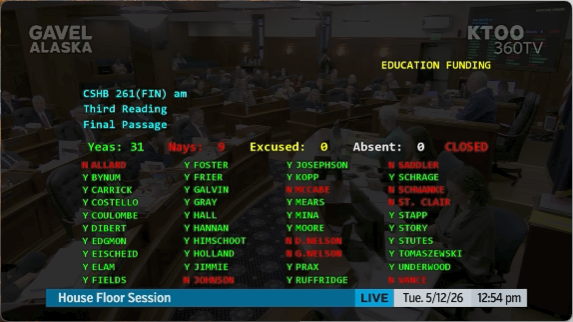
There are many factors contributing to Alaska’s chronically tight public school district budgets, but one of the big ones is an exodus of students — and their funding — to charter and homeschool programs run by school districts outside of their communities.
While lawmakers have been unwilling to clamp down on students attending programs outside their communities — a move that would likely place greater oversight on just how homeschool allotments are getting spent — the House on Tuesday approved a bill that at least attempts to address the symptom.
House Bill 261 by Rep. Andi Story, D-Juneau, would base the amount of funding each school district receives on a three-year rolling average rather than basing it on a single year’s numbers. That means dips in enrollment won’t be felt as sharply or as quickly as they have been, which she argued would give districts time to adapt to changes without resorting to hastily slashing programs — something districts have had to do for several years.
“What I feel is hurting parents’ confidence in our system is our broken timeline process, our backward funding process. We actually are pitting families against each other, within our schools, about what programs are we going to not have or have, and that’s really hurting our student achievement,” she said during the floor debate. “I think it is really critical that we provide budget stability and allow for a smoothing of the enrollment numbers.”
The legislation would also increase funding for special needs students, limit the amount that local governments can contribute to schools to 2% of the area’s total property value (essentially shifting more costs to the state), and increase funding for the state’s reading assistance program and career training.
In total, the bill would deliver about $110 million more annually to school districts.
House Minority Republicans were surprisingly split on the measure.
Several conservative Republicans parroted longstanding Republican talking points against funding schools, arguing that money doesn’t make much of a difference in the classroom. Others argued that the urban school districts grappling with budget gaps are in a problem of their own making because they can’t keep up with the popularity of the lightly regulated homeschool and charter programs.
“Why are we trying to put a band-aid on a situation when we could be addressing the root cause? Parents are walking away from our brick and mortar public schools because they are not happy with what’s happening,” said Glenallen Republican Rep. Rebecca Schwanke. "Could more money fix some of those reasons? Sure, we could fully fund the theater programs. We could fully fund the sports programs. Yeah, we could throw more money at some of those things, but there are other issues that are happening in our schools that we are just not willing to talk about and address with good policy.”
Rep. Sarah Vance, a Homer Republican who used a vigil for Charlie Kirk to launch a local private school associated with the slain bigot’s political organization, Turning Point USA, and used coverage of said vigil to silence a local newspaper reporter, agreed with Schwanke’s estimation.
She said families are turning to alternative publicly funded schools because they offer more opportunities than the traditional brick-and-mortar schools (which, again, are grappling with ongoing budget problems).
“We have this mentality here, that if we just give them more money, that everything will be better,” she said, before conceding that one of the problems facing the current system is teacher pay, which, you know, takes money. “A significant aspect of (a story about a local charter in her district) is that teachers left because they didn’t feel supported, they went and taught other homeschoolers and actually made more money and were able to have the flexibility that they needed and respect.”
However, most Republicans supported the idea.
Several said it was a sensible approach that returns some of the costs to run local school districts to the state, effectively lowering the growing tax burden on local communities. Others said it helped provide some key certainty for districts, hopefully lessening the need for disruptive pink-slip notices that occur during many budget years.
“This bill does give more certainty to the teachers there. They’re the ones that really are taking the hits here,” said North Pole Republican Rep. Mike Prax, who has long argued that K-12 funding should come entirely from the state rather than local property taxes based on his reading of the Alaska Constitution.
He noted that some rural communities, like Rep. Schwanke’s, may have stable enrollment that allows them to avoid the annual uncertainty, but that’s simply not the case for many larger districts with more transient populations.
“It works differently, at least in the Fairbanks North Star borough, there just is no certainty about funding education, and it can go on and on and on and on well past October, before it dies down,” he said, “and that makes it more difficult for teachers, if they stay on, to focus on their work, because there’s an ongoing debate.”
HB 261 passed the House 31-9 (enough that, if it also passed the Senate, it'd have enough votes to override an all-but-certain Dunleavy veto, but given the track record of Republicans flipping on bills once they're vetoed, passing with a veto-proof vote total means nothing nowadays).
The bill now heads to the Alaska Senate, which had been considering far more strict rules on homeschool and charter programs before shelving the idea due to pushback.
The legislative session is set to expire on Wednesday, May 20.

This story was edited with help from Victoria Petersen and The Alaska Current. Everything else is mine, including the typoes.
More from The Alaska Current
 Holly Todd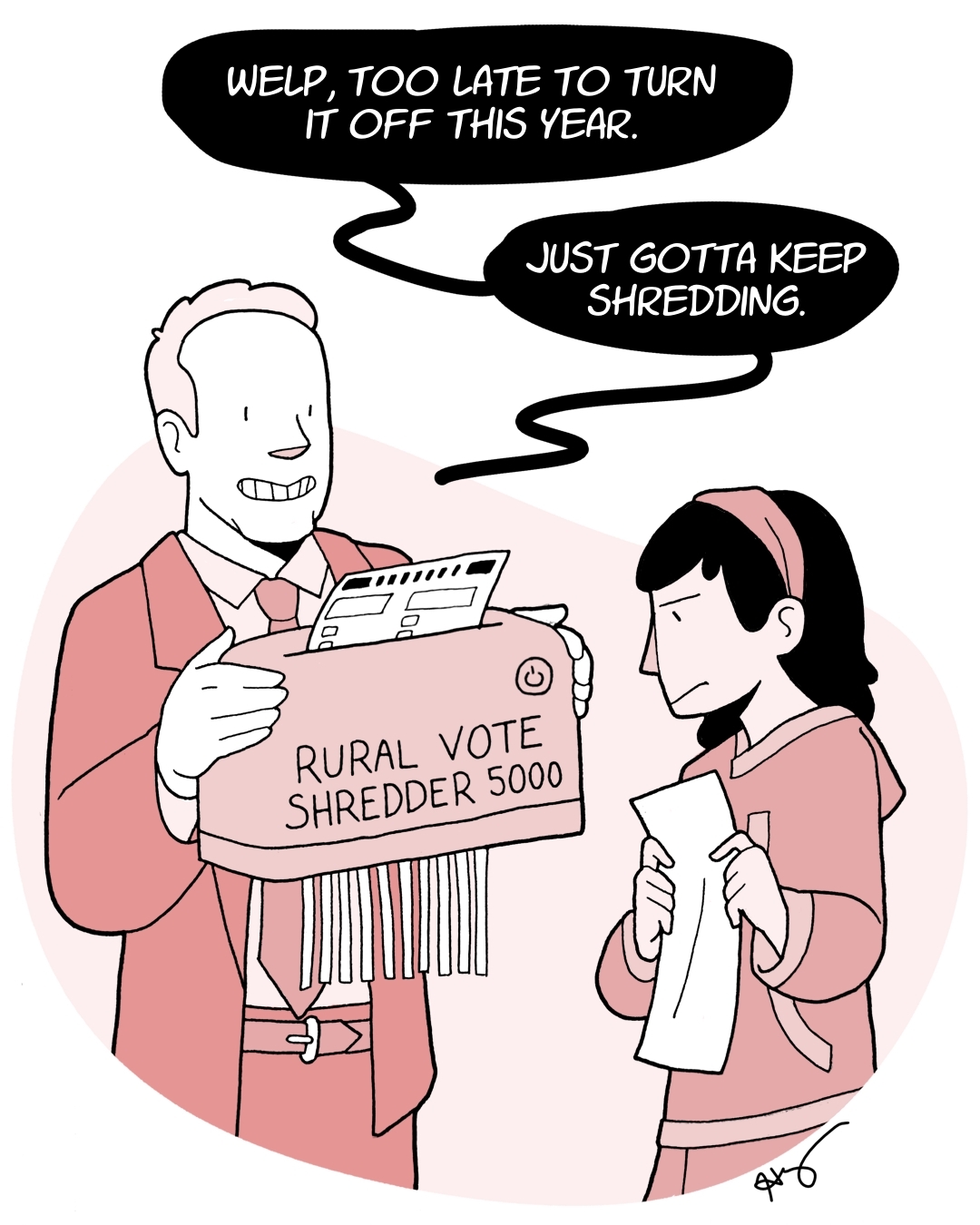
 Rachel Levy
 Lauren Windsor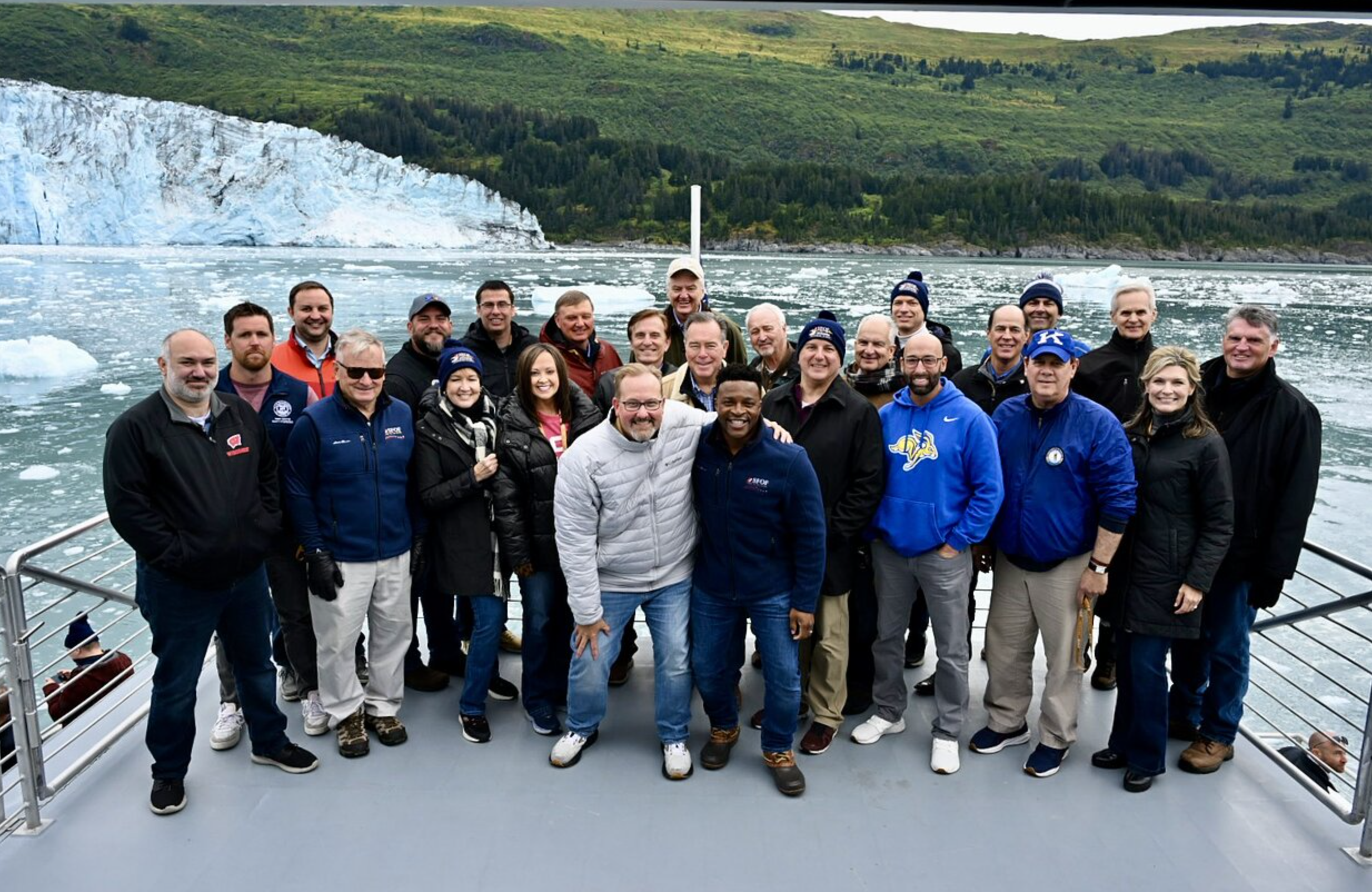
Vic Fischer remembered
In its 54th meeting of the legislative session, the Senate Resources Committee advanced Rep. Zack Fields' House Bill 79, which would name the Shoup Bay State Marine Park in Valdez after the late Alaska Constitutional delegate Vic Fischer. Fischer lived a long and storied life, including helping with the reconstruction of Valdez after the 1964 earthquake and recreating in the area as a sea kayaker.
In Alaska State Parks Recollections From The People Who Shaped Alaska’s State Park System (PDF copy here), Fischer wrote about the park: "I kayaked right into some of those places that we helped create, and I said, 'Wow, we have preserved this for recreation.' That is such a good thing. It's great to know that somebody can kayak through the inland waters, through Prince William Sound, and know that there are state parks; that there is a good, secure, safe place to camp out, to come ashore or even if you're with a boat, a safe place to anchor.
"It’s good from a recreation standpoint and as an Alaskan to know there are these protected areas."
The bill also emerged from committee with a second purpose, renaming UAA's Institute of Social and Economic Research – a storied organization that Fischer also played a key role in forming – the Vic Fischer Institute of Social and Economic Research.
The bill's next stop is the Senate floor.
Reading list
 Corinne Smith, Alaska Beacon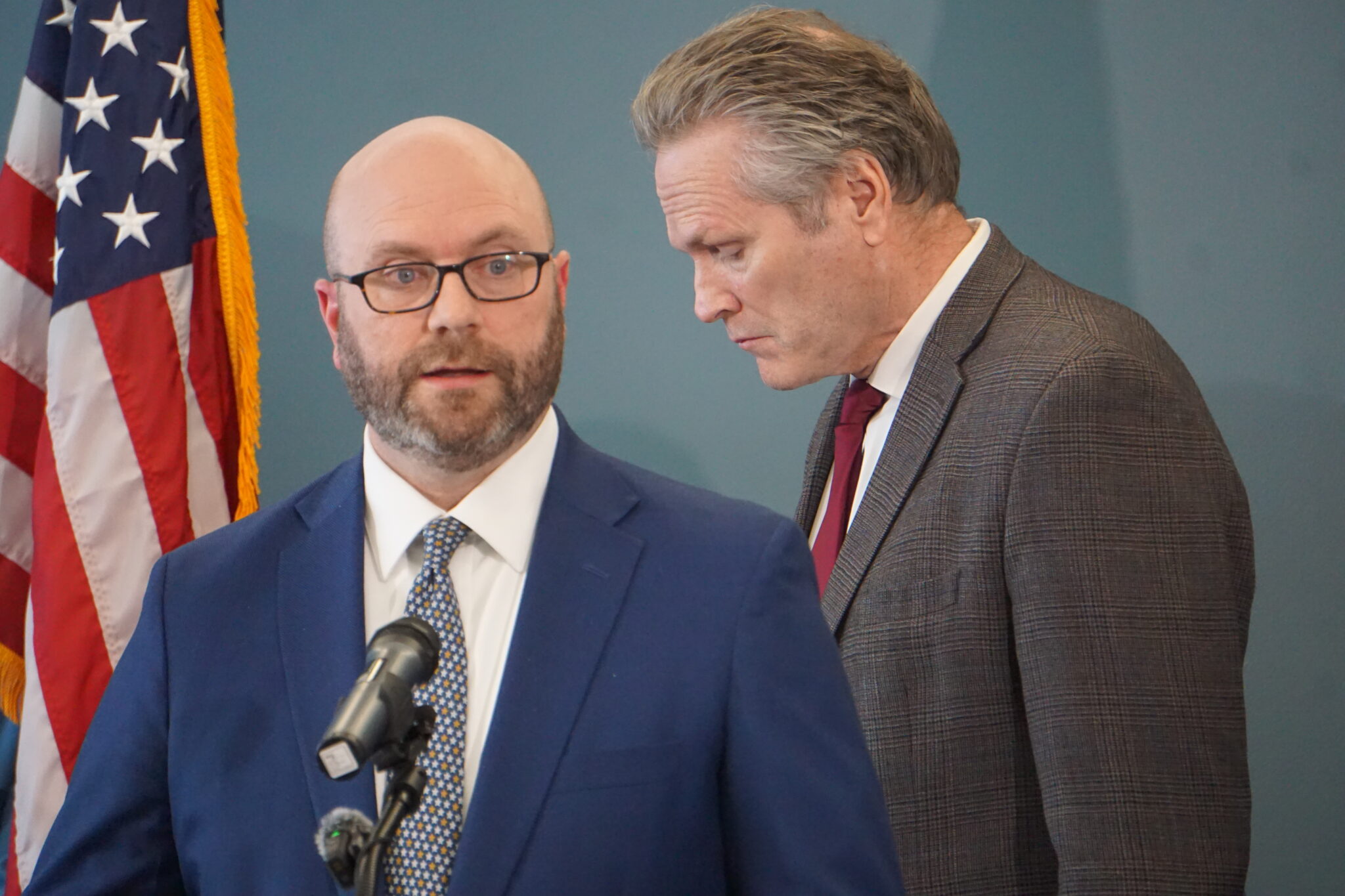
The vote's Thursday, with rumors swirling that at least one Democrat is flirting with supporting the right-wing legal activist.
 Liz Ruskin
 James Brooks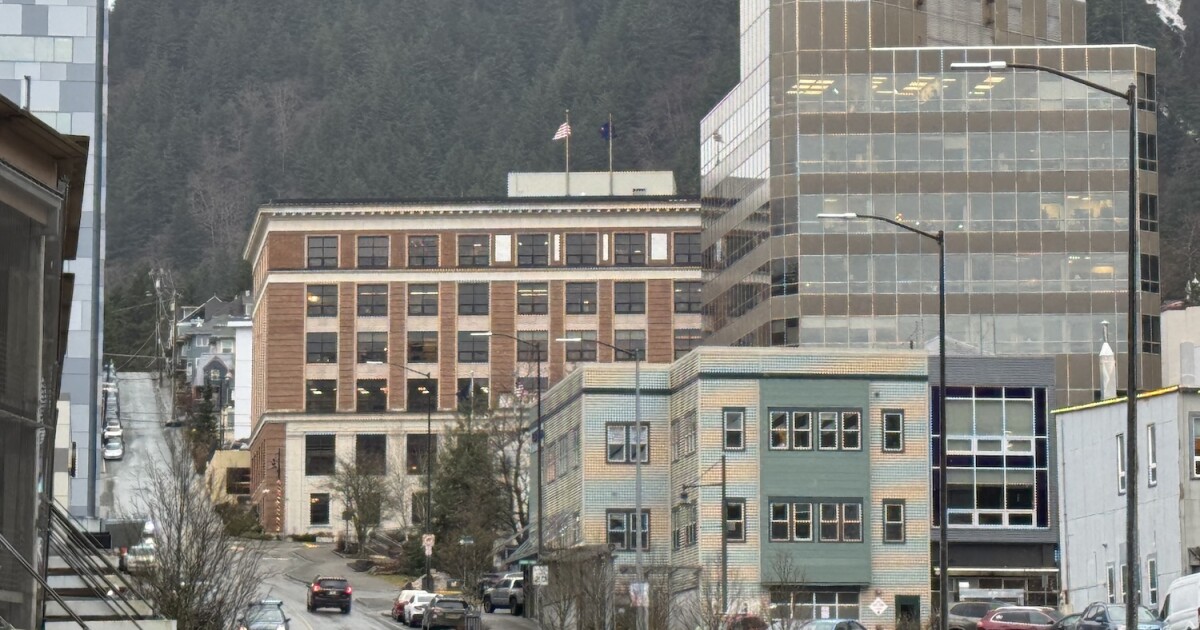
 James Brooks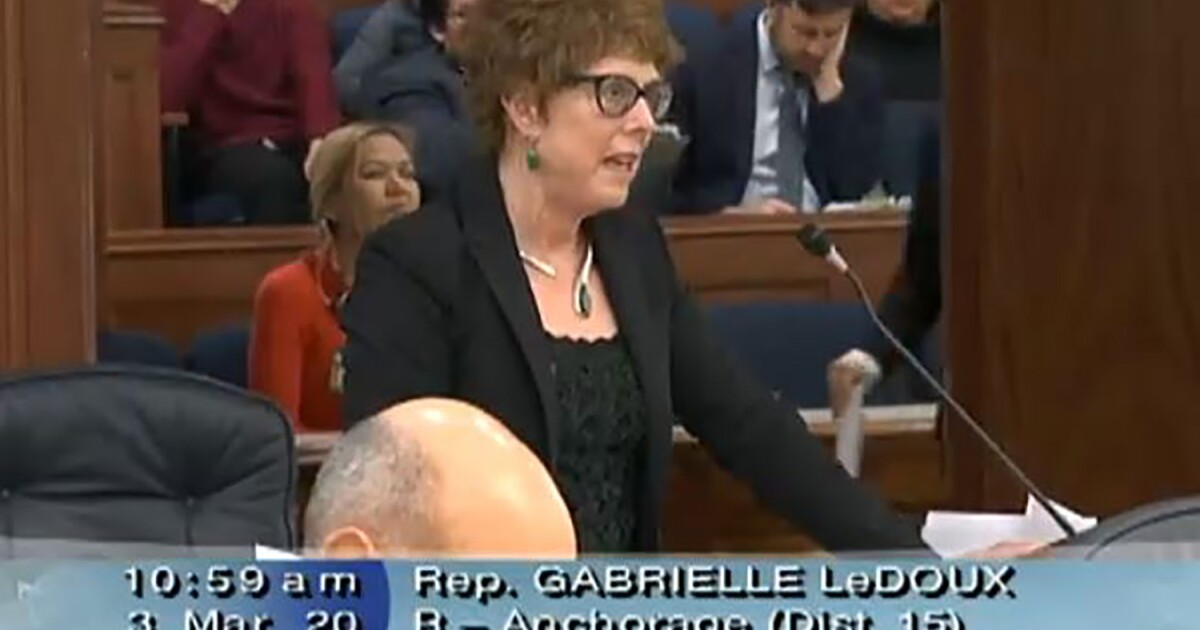
 Corinne Smith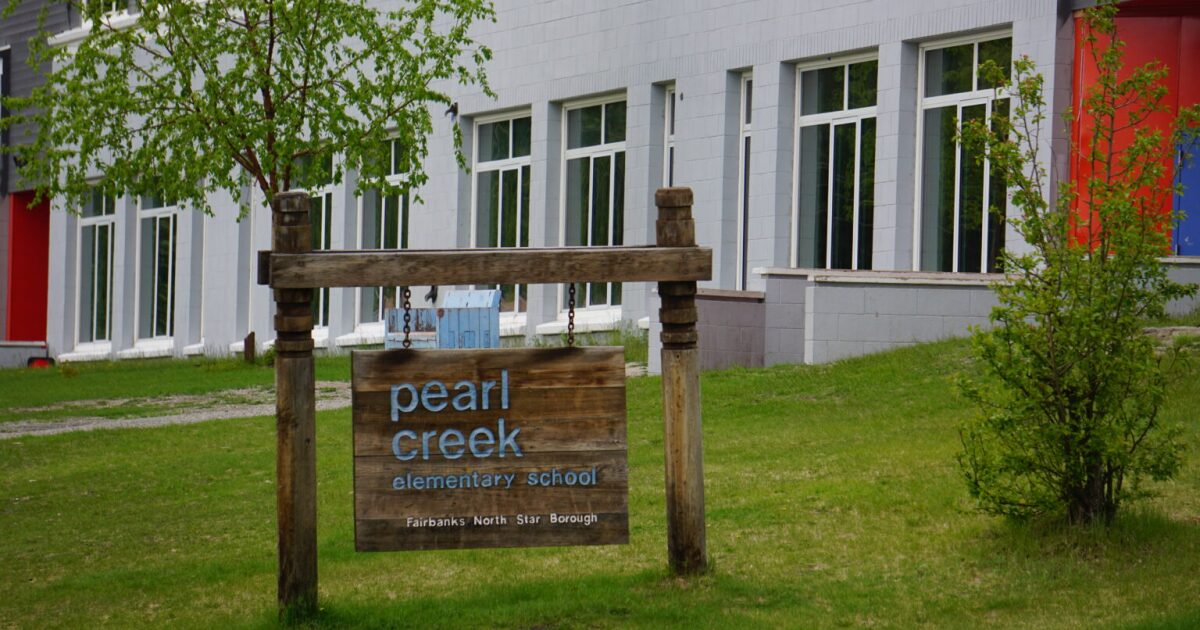

The Alaska Memo Newsletter
Join the newsletter to receive the latest updates in your inbox.