My way-too-early gubernatorial tier list and AKLNG grinds on
Tired of all those issue-based candidate surveys? Snoozer! Then I've got you covered with my V.I.B.E.S.-based system.

Happy Friday, Alaska!
In this edition: This Monday marked the closing of the filing period for Alaska's next governor, setting up a sprawling 17-candidate field that has someone for pretty much everyone. While there are plenty out there who'll offer straight-laced breakdowns of policy, I'm here with my entirely V.I.B.E.S.-based system, where I'll break down the candidates into tiers, outline what it might take for them to make a splash and provide a handy guide about just who each candidate is for. Also, the reading list and weekend watching. But first, an update on the special session.
Current mood: 😎
The special session grinds on with some new details on the AKLNG pipeline

The AKLNG special session continued this week, giving more clarity on what will be an undeniably difficult project, no matter the subsidy lawmakers ultimately approve. And it also showed just how hard it is to build any large-scale energy project that counts on Alaskans as its primary customers.
From the 30,000-foot view, the project and its phased approach remain in the realm of "It Could Work" with a foundational belief that if you simply build it (an 800-mile, large-diameter natural gas pipeline connecting the North Slope to Southcentral Alaska), they (the demand needed to support the costly export facilities needed to make the project pencil out for Alaskans) will come. The issue for lawmakers continues to be: what happens if they sign away billions of dollars in tax breaks, build the pipeline, and the demand never comes?
The answer's contained in the details of a proposed contract between AKLNG developers and Enstar, the gas utility serving much of the Southcentral region, that was released this week. In simple terms, it shows that the big benefits to Alaskans' energy bills are realized only once the project's second, much more costly export terminal phase comes online.
The contract starts at a fixed $16 per thousand cubic feet (MCF, which is also roughly equivalent to an MMBtu, if you're keeping track of energy capacity), which is not quite double what Enstar currently pays for gas (it charges an additional $3.75 to deliver it to residential customers). But that's not what AKLNG developers are targeting; they're just trying to be competitive with imported natural gas, which is expected to offset dwindling Cook Inlet supply in the coming years. That $16 price point would be a dollar less than the forecast price for imported gas.
For some lawmakers, the promise that it would, at the very least, not be more expensive than imported LNG was a huge selling point.
"That is really huge news for us to get that," Rep. Alyse Galvin, I-Anchorage, said during Tuesday's hearing (it should be noted that Galvin's partner works at a natural gas explorer that, at one point, hoped to be the primary source of gas for the AKLNG project). "It means that ratepayers do not bear the risk of cost overruns or periods of low throughput."
The big goal, though, isn't to put as much as $16 billion into a pipeline (the total all-in cost of which Alaska could contribute 25%) to save a buck on natural gas (which also assumes costly imported gas will be their only competition).
For the AKLNG project to deliver gas that would be competitive with today's prices – about $10 – or to reach truly cheaper energy, it would need to find a lot more customers. Developers hope that potentially lucrative contracts with utilities in Asia will be that missing demand. That'd allow them to spread the cost of the project – the latest estimate puts the all-in price of the pipeline and the export terminals in the range of $44.5-$54.5 billion, which, if you believe it, means they've done a better-than-expected job of keeping control of costs – over more molecules of gas, thereby bringing down the cost for everyone.
But until those international buyers materialize and the export terminals go to construction, Alaskans will be the only ones paying to recoup the cost of the 800 miles of 42-inch steel pipeline.
And while developers hope they can get everything going in parallel – on paper, the treatment facilities go up faster than the pipeline – the gap between one hope and another is one that legislators have been keenly interested in because it's where things could, frankly, fall apart.
The big thing is that if the pipeline never finds those international customers and all it ever sells to are Alaska customers, it would require the demand of several additional Anchorage-sized cities and a half-dozen industrial megaprojects to even begin to touch the price dial on that $16 contract.
According to Wednesday's presentation to Senate Finance, the price levers in the proposed contract would come into play once total pipeline demand crosses 500 million MCF per day. That's technically only 50 million MCF more than the state's current total gas consumption, according to the U.S. Energy Information Administration, but that total includes gas used at oil and gas sites and in pipeline use, which accounts for nearly 70% of the state's total demand and won't ever need to take an 800-mile ride on the AKLNG pipeline.
That means today's demand for gas that'd flow through a pipeline – home heating, electricity, commercial use and industrial use – amounts to 131 million MCF.
That's a long way to go before the cost cuts would come into play, not to mention achieving the contract's maximum discount in the Alaska-only scenario of $10 per MCF, which would require a whopping 700,000 million MCF in in-state demand.
Which is all to say that legislators are understandably skeptical that enough demand will materialize during the first few years of the project for Alaskans to pay anything under that $16 figure. Power-hungry large-scale industrial projects, like the Donlin Gold Mine, would add about 50 million MCF to demand, still leaving in-state demand far out of reach of those cost-changing levers.
And that's not to mention President Trump's latest shot in the arm to a coal-fired power plant in the Susitna River watershed, which is also banking on addressing Southcentral's energy woes.
While the announcement of the $16 price point was great news to some, many skeptical legislators remain skeptical.
The biggest sticking point remains doubt about the project's cost estimates. So far, lawmakers have largely relied on back-of-the-envelope guesstimates from the Department of Revenue that simply adjusted a prior cost estimate for inflation. The working number for the project's cost has been $46 billion to 100% more, with most projections suggesting it'd stop being profitable at about 40% or more in overruns. The latest estimate offered this week narrows it to between $44.5 billion and $54.5 billion, but listen to hearings, and you'll hear about a dozen other levers legislators worry haven't been taken into account.
On the Senate Finance Committee – where a majority of the lawmakers are from districts that won't, and will never, directly benefit from the AKLNG pipeline's potentially cheaper gas — there's been a strong focus on the potential downsides for the state when it comes to the concessions needed to bring the pipeline to construction. Of particular concern is whether the state could be giving up too much for too long, with the proposed tax breaks lasting 36 years compared to the industry standard of about 10 to 15 years.
At Wednesday's hearing, Juneau Sen. Jesse Kiehl urged Glenfarne to support a fair tax rate on the project and fair prices to Alaskans, noting that there's nothing this Legislature can do to prevent future lawmakers from changing the law. That's something, he said, that will be that much more likely to happen if Alaskans don't feel they got the benefits they were promised — whether it's affordable energy or the tax revenue that helps those benefits flow throughout the state.
"If you want a stable tax, something that makes a material change in the project economics, but doesn't leave Alaskans with the sense that over the long term we're giving up value from our resources, value from taxes to foreign LNG buyers for longer than we have to is going to be important," he said. "Who gets the benefits starts to gall people, so I submit that a reasonable period at a reasonable rate gives you stability you can count on."
It should be noted that when Glenfarne backers were asked in the House Finance Committee whether they would like a lower rate on the proposed volumetric tax, officials said no because they didn't want to undermine the agreements they had made with local governments earlier this year.
There are two full weeks left in the special session.
Expect committees to start working on amendments as early as next week.
Stay tuned.
More coverage: Alaska Public Media, Alaska Beacon, ADN
My definitive way-too-early, VIBES-based tier list of Alaska's gubernatorial candidates
The filing period for Alaska’s statewide races closed on Monday, setting up an expansive, 17-candidate field for the state’s next governor — and there’s just about someone for everyone.
The filing deadline required candidates to pick their running mates, leading to a flurry of activity and announcements over the weekend. Once the dust was settled, the field is set to feature six all-Republican tickets, two all-Democrat tickets, four all-independent tickets and five more that are split tickets — three Republican-independent tickets, a Democrat-independent ticket and a Republican-Democrat ticket.
Candidates will have until the end of the month to drop out of the race or swap out their running mates.
Ahead of Monday’s filing deadline, Republican Lt. Gov. Nancy Dahlstrom dropped out of the race entirely. Dahlstrom, who also dropped out of the race for U.S. House to clear the way for Nick Begich, started the year with horrendous fundraising numbers, so her exit isn't a surprise.
Under Alaska’s voting system, all 17 tickets will compete in the Aug. 18 open primary, and the top four vote-getters will advance to the general election regardless of political affiliation. To avoid the possibility of similar candidates playing spoiler in the general election, the state then uses ranked-choice voting, in which voters can rank candidates in order of preference. If no one receives a majority in the first round of tabulations, the lowest-performing candidates are eliminated and their votes redistributed according to their rankings.
Picking through the field of candidates can be daunting, but luckily, I — Matt Acuña Buxton — am here with the latest iteration of my very serious Votable Index Based Entirely on Science (VIBES) analysis of the race, in which I ignored any and all insider advice I received while working on it. This is the latest iteration of my gubernatorial ranking — you can find a prior version here — so I’m breaking it down into tiers rather than a 1-17 ranking.
S-Tier candidates

All signs are “Go” for these candidates, who’ve been out on the campaign trail and have consistently held commanding polling leads. Campaigns can always lose steam and be derailed by controversy, but sheer inertia makes them as sure-fire bets to make the general as anyone.
Democrat Tom Begich and Democratic running mate Julia Hnilicka
Begich is low-key one of the more influential members in the Alaska Legislature’s bipartisan streak, proving to be an effective negotiator who forged a working relationship with moderate Republicans during some of Gov. Mike Dunleavy’s most damaging years. His inclination to build bipartisan consensus on issues, however, has sometimes gotten him crosswise with fellow Democrats, as was the case with his advocacy behind the Alaska Reads Act, a grudge that some still hold to today. The pick of Julia Hnilicka, who comes from a long line of promising progressive candidates trying to win a seat that was never really winnable, is a smart nod toward the next generation.
Who’s he for: Progressives, independents and moderate “Competency Coalition” Republicans
What could go wrong: He’s established himself as the Democratic frontrunner – if not the overall frontrunner – for the seat, so it’ll take something really wild to knock him out of the general election.
Republican Bernadette Wilson and Republican running mate Mike Shower
Practically the diametric opposite of Begich is Wilson, a brash and incendiary conservative media personality with no government experience. She’s certainly getting the base fired up with expansive promises of delivering the impossible, like big PFDs with little pain in what is largely a repeat of the formula Dunleavy rode to office — and then proceeded to never come close to delivering on. That she’s picked former Wasilla Republican Sen. Mike Shower as a running mate is an “interesting” choice, given that when he could be bothered to show up for his legislative job, he wasn’t exactly impressing.
Who she’s for: MAGA Republicans, Republicans who want to hitch their horse to a potential winner
What could go wrong: Wilson is the Republican frontrunner, but she’s also already expended a massive amount of resources on her campaign. According to the latest fundraising report, she had spent nearly 80% of the $305,000 she raised (Begich, by comparison, spent about 40% of his $345,000).
A-Tier candidates

These are the candidates who, if a vote were held today, would probably advance to the general election. They haven't sealed their playoff birth, but at least they are on the right side of the bubble.
Republican Click Bishop and independent running mate Greta Schuerch
Bishop is a longtime fixture of the Alaska Legislature, where he’s been a prominent pro-labor Republican with a charming, folksy flair. He’s unabashedly pro-development – something that will likely disappoint his progressive friends — but will fight tooth and nail to make sure workers are taken care of. There's a reason he never faced a serious Democratic challenger during more than a decade in office. If he makes it to the general, he should be a popular second-choice pick for both progressives and conservatives.
Who he’s for: Moderate Republicans, public-sector workers looking for a Republican who will still approve pensions, pro-industry groups, pro-labor groups, independents and Democrats who are already used to voting for the least-bad candidate (see also Democrats who vote for Murkowski).
What could go wrong: While he’s a beloved character from the Alaska Legislature, legislative name recognition carries, perhaps unsurprisingly, little weight with voters in general. While polls show he’s breaking away from the pack, he’s still not truly established himself as a sure-fire general election contender.
Republican Dave Bronson and Republican running mate Josh Church
If you’ve followed my coverage or the coverage of The Alaska Current in general, you’ll know we’re not huge fans of Bronson’s single disastrous term as Anchorage mayor. It’s a stint that was riddled with self-dealing, a marked degradation in city services, illegal spending and a whole lot of other controversies that, in a different era, would have likely been the end of his political career. Yet, the polls show that being the mayor of the state’s largest city still counts for something.
Who he’s for: MAGA republicans, pro-industry Republicans who can look past the antisemitism and incompetency to his platform on taxation and regulation
What could go wrong: More people find out who Dave Bronson is.
B-tier candidates

These are the candidates I could see making it into the general election if they run an effective campaign that finds an audience. I think that they’re close enough that their underlying appeal and/or vast sums of money that they don’t necessarily need something to go wrong for the above candidates to break into the race.
Democrat Jonathan Kreiss-Tomkins and independent running mate Zac Johnson
As a longtime Young Person in the Alaska Legislature, Kreiss-Tomkins had a pretty buzzy launch among the insiders, who see him as a brilliant mind long focused on making Alaska a better, more livable place by making necessary investments – the kind of issues that frequently get overlooked or tsk-tsked by older generations for whom the status quo is working just fine. That said, his campaign has yet to become the next Mamdani as some were hoping, but there’s still a long way to go, and it looks like his campaign's making strides. He’s probably the closest to hopping up a tier, displacing Bronson if things go right.
Who he’s for: Optimistic progressives, moderates and the nerds (also the pick of the well-respected moderate Anchorage Assemblymember, Zac Johnson, is doing wonders for his appeal to moderate Republicans)
What could go right: He’s gonna need to find a way to break through the messaging.
Republican Treg Taylor and Republican running mate Candi English
If anyone directly involved in the Dunleavy administration is gonna make it to the general election, it’s probably former Attorney General Treg Taylor. While his support has long been within the polls' margin of error, he’s also got a significant wad of cash and seems to be the chosen corporate candidate, which is to say he’s not a total wild card compared to the other right-wing candidates. All those right-wing virtue-signaling national lawsuits had to be worth something.
Who he’s for: MAGA Republicans, pro-industry Republicans who want a state government that’s in lock step and people who use the state’s homeschool allotments to pay for or supplement their private and religious education.
What could go right: Anything's possible through the power of money.
Independent Meda Dewitt and independent running mate Christopher Steere
Dewitt, a community organizer who helped spearhead the effort to recall Gov. Mike Dunleavy, is a feisty candidate who seems more willing than most to go after the governor and criticize the status quo. While she’s entering the race without the same institutional backing as other candidates, she could tap into voters’ desire for a change from the status quo and has seemingly found an audience among lefties. She also has a personal charm that few other candidates seem to have.
Who she’s for: Dunleavy haters, progressives looking for someone different
What could go right: With outsider status comes an outsider's access to resources, so there could be institutional barriers others might not face.
Republican Matt Heilala and Republican running mate Jesse Sumner
They say money can’t buy you happiness, but can it buy you a spot in the general election? That’s a question that Republican Matt Heilala — the podiatrist who tried to advance anti-trans measures on the Alaska Medical Board — will try to answer after he and his wife pumped nearly $1.3 million into his campaign. He’s been rolling around the state in a custom decked-out RV. And, if I'm being honest, I think he's got a chance of flaming out before we even get to August.
Who he’s for: People who can be won over by him golfing with Trump, so probably other conservative doctors?
What could go right: It turns out money can buy you happiness.
C-Tier candidates

These candidates have either had middling campaigns so far, poor polling, just entered the race or a combination of the three. These candidates not only need everything to go well for them in the next few months, but they also probably need something to go wrong for the above candidates.
Independent Bill Walker and independent running mate Randy Hoffbeck
Former Gov. Bill Walker was probably the right governor for the time when oil revenues collapsed, unfortunately that also meant he will forever be tied to the deeply unpopular decisions of the time. He not only slashed the PFD but also oversaw deep cuts to state services. Now, he’s seeking another term in office after losing in 2018 and again in 2022. It’s likely that the window has closed, but you never know. He's certainly made some splashes with his proposal to end the PFD with one final $10,000 payout.
Republican Lesil McGuire and independent running mate Elizabeth Rexford
McGuire is one of those complicated legislators. When she’s on, she’s one of the best, but the problem is she’s not always been on. Still, she’s a long way away from being a freshman lawmaker anymore, and is certainly willing to speak out, telling the ADN in her launch interview that she considered filing as an independent: “I’ve been struggling with it for a year because I’m sick of the Republicans."
Democrat Matt Claman and Democratic running mate Sarah Skeel
The second all-Democrat ticket in the race, Anchorage state Sen. Claman, has certainly irritated many progressives over the years as one of the more moderate-to-conservative Democrats in the chamber. Like other moderate Democrats, he’s not particularly thrilled about taxes to support the dividend and also ran roughshod over the crime bill this session – though it did ultimately land with a bill, so I guess trust the process?
Republican Shelley Hughes and Republican running mate Blake Gettys
Another longtime fixture of the Alaska Legislature, the former Republican state senator was one of the leading flag-bearers of of-the-moment conservative outrages. Hughes driving issue during the final years of the Legislature was singling out trans youth – the latest conservative bogeymen.
Republican Adam Crum and Republican running mate Bob Craig
Former Holder of Many Jobs in Dunleavy’s Administration, Crum has faced loads of controversies during his tenure, including his sketchy decision to put a bunch of money from the state’s rainy day fund into suspicious-but-technically-legal investments. While Crum hasn’t faced charges for his actions, the reports reviewing the moves don’t exactly clear him as a good, ethical steward of the state's dollars. Instead, they paint a picture of someone who was happy to bend the rules when it suited them (and specifically their connected backers).
Who he’s for: The beneficiaries of the Department of Revenue’s suspiciously secretive handling of oil and gas settlements, where he may have been giving oil companies potentially hundreds of millions of tax forgiveness.
Republican Edna Devries and Republican George Hightower
The longtime fixture of local Mat-Su politics, the 84-year-old Devries faces the same problem that most candidates do: name recognition.
D-tier

This final tier is reserved for the newcomers running without much institutional support or name recognition. Something really wild would have to happen for them to break into the race. In the ultimate outsider position, they can also be a conduit for outside-the-box messages, which could be particularly interesting, with the Parkin/Greer ticket being the only cross-party ticket on the ballot.
- Independent Destry Payne and independent running mate Cliff Silvers
- Republican Hank Kroll and independent running mate Tommy Nicholson
- Republican James Parkin and Democratic running mate Ram Greer
D.N.F.
And for the candidates who didn’t even make it to the finish line.
Nancy Dahlstrom
After being forced out of the race for U.S. House in 2024, clearing the way for Republican Nick Begich to head to Congress, Lieutenant Gov. Nancy Dahlstrom showed herself the door, withdrawing from the race for governor ahead of the filing deadline. Her low-profile approach to politics hasn’t won her many fans, as was reflected in what were frankly miserable fundraising numbers earlier this year.

This story was edited with help from Victoria Petersen and The Alaska Current. Everything else is mine, including the typoes.
More from The Alaska Current
 Matt Acuña Buxton
 Rachel Levy
 Emily Mesner
🗞️ The Reading List
 Eric Stone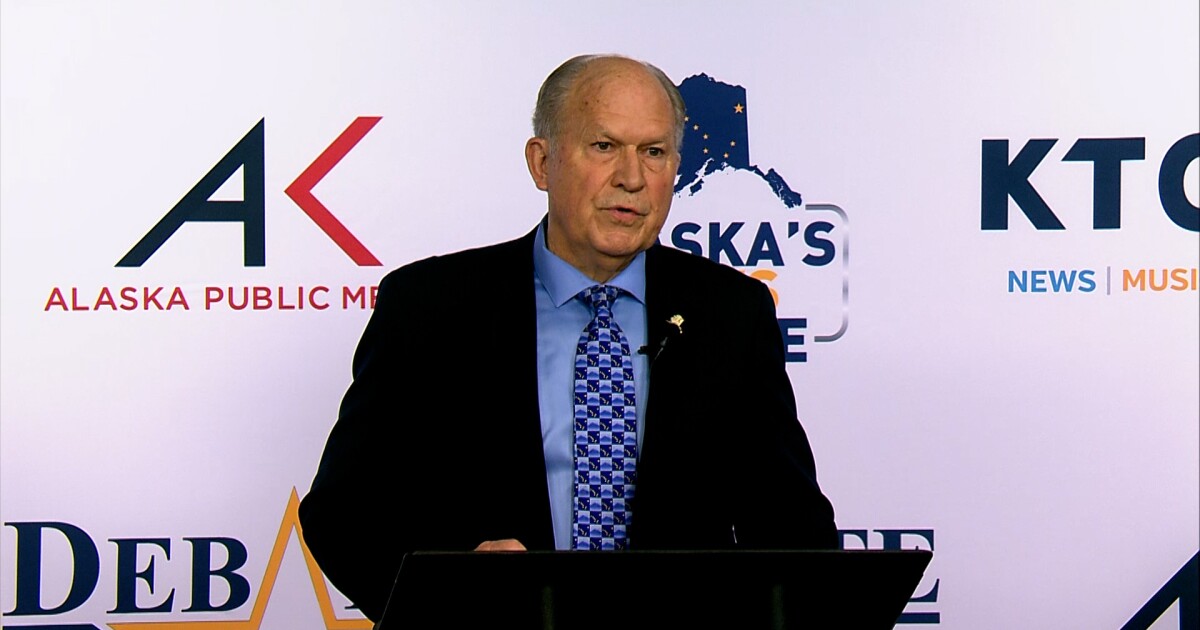
 Ellie Ruel
 Iris Samuels
 Alex DeMarban
 Wesley Early
 Hannah Flor
📺 Weekend watching
As someone who grew up watching The Endless Summer and The Endless Summer II, and whose childhood nickname is Moondoggie, after the surfer from 1959's Gidget, adventure films about surfing have always held a special place in my heart — even if I never really caught the hang of surfing — so this documentary about surfing on St. Paul and St. George Islands was enthralling. It's also nice to see filmmakers who took the time to connect and respect the host communities.
Have a nice weekend, and get outside!

The Alaska Memo Newsletter
Join the newsletter to receive the latest updates in your inbox.